
What Is the Best Way to Remove Stains From White Shirts?
What Is the Best Way to Remove Stains From White Shirts?
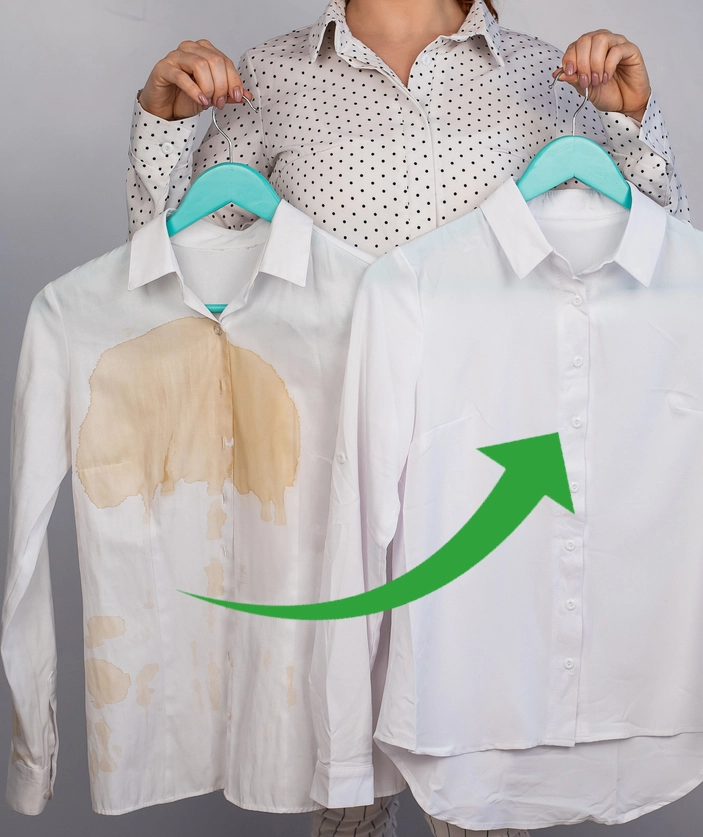
White shirts are professional armour — and stain magnets. The curry at lunch, the coffee on the commute, the mysterious yellow underarm marks that appear over time. I’ve saved white shirts from red wine, turmeric, and biro, and I’ve also set stains permanently by doing the wrong thing first. The order of operations matters enormously: the right treatment applied late beats the wrong treatment applied fast. If “what is the best way to remove stains from white shirts” is the question you’ve been asking, here’s the straight answer — practical, honest, and based on what actually works.
This is the stain-by-stain guide: what works for each common stain, the universal rules, and the mistakes that turn removable stains into permanent ones.
The universal rules (read before treating anything)
Act fast — fresh stains are exponentially easier than set ones. Blot, don’t rub (rubbing spreads the stain and drives it deeper into fibres). Cold water first, always — hot water sets protein stains (blood, egg, sweat, dairy) permanently. This is the single most important rule: hot water on a blood stain is how it becomes a permanent brown mark.
Test any treatment on a hidden area first (inside hem, underarm). Work from the outside of the stain inward (prevents spreading rings). And never put a stained garment in the dryer until the stain is fully gone — dryer heat sets stains permanently. Check in good light before drying; damp fabric hides residual staining.
The basic kit (£15 total): white vinegar, bicarbonate of soda, washing-up liquid, hydrogen peroxide (3%, the pharmacy kind), a soft brush or old toothbrush, and white cloths. These handle 90% of stains; specialist products cover the rest.
- Blot don’t rub; cold water first; never hot on protein stains
- Work outside-in; test hidden area first
- Never tumble dry until the stain is completely gone
- Basic kit: vinegar, bicarb, washing-up liquid, hydrogen peroxide
Stain-by-stain treatments
Red wine: blot immediately, cover with salt or bicarbonate (draws out the wine), then white wine or cold water, then wash. White wine neutralises red — the old trick works. Dried red wine: soak in cold water with washing-up liquid, then hydrogen peroxide on the residue. Coffee/tea: cold water immediately, then washing-up liquid worked in, rinse, wash. The tannin needs the detergent; plain water alone often isn’t enough.
Sweat/yellowing: the classic white-shirt killer — it’s actually deodorant + sweat reacting. Paste of bicarbonate + hydrogen peroxide + washing-up liquid, applied 30 minutes before washing, lifts most yellowing. For heavy buildup, soak in oxygen bleach (sodium percarbonate — Napisan or similar, £4) for several hours. Prevention: let deodorant dry fully before dressing, and consider switching to deodorants without aluminium if you’re prone to yellowing.
Grease/food oil: washing-up liquid directly on the stain (it’s designed for grease), work in, leave 15 minutes, wash as hot as the fabric allows. Turmeric/curry: the nightmare stain — sunlight is surprisingly effective (UV breaks down the curcumin), plus glycerine pre-treatment. Act fast; turmeric sets with heat and time. Biro/ink: hairspray (the alcohol kind) or rubbing alcohol dabbed on, blot, repeat — then wash. Blood: cold water only, salt paste for dried blood, hydrogen peroxide for residue — never hot water, ever.
Keeping white shirts white long-term
Wash whites separately — always. Even “colourfast” greys and pastels transfer dye gradually, greying whites over months. Use the right detergent: biological for stain removal (enzymes eat protein stains), and consider a whitening detergent or oxygen bleach booster monthly. Don’t overdo bleach (chlorine bleach weakens cotton and yellows with age — oxygen bleach is gentler and better for regular use).
Sunlight is the free whitener: line-dry whites in direct sun — UV bleaches naturally and kills odour. It’s why line-dried whites look brighter than tumble-dried. Wash at 40° for whites (hotter than colours, safe for cotton), and don’t overload the machine — shirts need room to rinse clean. Replace collar stays, treat collars and cuffs (the grimiest areas) with washing-up liquid before washing, and store whites clean — stains oxidise and yellow in storage.
Rotation extends life: five white shirts worn in rotation last far longer than two worn constantly — cotton needs rest days, and frequent washing wears fabric. When shirts are finally beyond saving (permanent yellowing, frayed collars), retire them to cleaning rags — white cotton makes the best cloths. For the broader care picture, see preventing shrinkage and dry cleaning costs for the professional option.
When to call the professionals
Dry cleaners remove stains you’d never shift at home — they have solvents and expertise for oil-based, delicate-fabric, and set stains. Take stained items promptly (mention the stain type — it determines the treatment), don’t pre-treat aggressively before taking them (wrong pre-treatment can set stains and limit what the cleaner can do), and be honest about what the stain is and what you’ve tried.
Cost-benefit: a £12–£18 dry clean to save a £50 shirt is obvious; to save a £12 shirt, less so. But for favourite pieces, sentimental items, and anything “dry clean only,” professional treatment beats home experiments. And some stains (old set grease on silk, delicate beading) are professional-only from the start — know when you’re out of your depth before you make it worse.
The emergency stain kit: what to carry
Stains happen away from home — the kit in your bag determines whether they become stories or permanent marks. The portable essentials: stain remover wipes or a stain pen (Tide to Go or similar, £4–£6 — genuinely effective on fresh stains), a small pack of tissues, and a zip-lock bag (for the stained napkin evidence, or to isolate a stained item).
The protocol away from home: blot immediately with a clean tissue or napkin (never rub), apply the stain pen per instructions, and when you get home, treat properly before washing — the pen buys time, it doesn’t finish the job. For white shirts specifically, cold water from a bathroom tap on a fresh stain does more than any product applied hours later.
What not to do in public bathrooms: use hot water from the tap on protein stains (sets them), use coloured napkins (dye transfer), or apply random soap aggressively (can set some stains). Blot, pen, cold water, patience. And the meta-lesson: the stain kit in your bag is worth more than the stain products under your sink, because timing beats chemistry. A £5 pen used in minute one outperforms £20 of products used in hour six.
What Is the Best Way to Remove Stains From White Shirts: The Short Answer
Blot don’t rub, cold water first, treat by stain type — and never use hot water on protein stains or put a stained garment in the dryer until the stain is fully gone. Related reading: Which? cleaning guides.
One thought on “What Is the Best Way to Remove Stains From White Shirts?”