
The Best Paint for a Damp Bathroom (UK Tested Options)
The Best Paint for a Damp Bathroom (UK Tested Options)
Bathrooms destroy ordinary paint — steam, splashes and condensation turn standard emulsion into a peeling, mouldy mess within a year. Here’s the best paint for a damp bathroom: what actually works, what to avoid, and how to apply it.
What makes bathroom paint different?
Proper bathroom paint is formulated to:
- Resist moisture — tighter film that steam can’t penetrate
- Fight mould — built-in anti-mould/anti-bacterial agents
- Withstand wiping — scrubbable finish for splashes and cleaning
- Dry in humid conditions — formulated to cure despite bathroom humidity
Standard vinyl matt emulsion has none of these properties. In a bathroom, it’s a false economy.
The best options
Dulux Bathroom+ Soft Sheen (£30–£40 for 2.5L)
The UK’s best-selling bathroom paint for good reason: mould-resistant for 5 years (claimed), scrubbable, good coverage. The soft sheen finish suits bathrooms and hides minor wall imperfections. My default recommendation for most bathrooms.
Ronseal Anti-Mould Paint (£25–£35 for 2.5L)
The mould-fighting specialist — very effective in bathrooms with persistent condensation issues. Slightly less colour range than Dulux, but if mould is your main enemy, this is the weapon. Pair with fixing the ventilation (see stopping condensation) — paint alone won’t cure a ventilation problem.
Farrow & Ball Modern Emulsion (£50+ for 2.5L)
Gorgeous colours, scrubbable, mould-resistant — but expensive and needs careful application. Worth it for a statement bathroom; overkill for a rental refresh.
Johnstone’s Bathroom Paint (£20–£28 for 2.5L)
The trade favourite: excellent value, proper mould resistance, available in trade centres. What most decorators actually use. Hard to argue with at the price.
Zinsser Perma-White (£30–£40 for 2.5L)
The problem-solver: guaranteed mould/mildew-proof for 5 years, works on previously problematic walls, self-priming. If you’ve had recurring mould, start here — after treating the existing mould properly (see getting rid of mould permanently).
What NOT to use
- Standard vinyl matt emulsion — absorbs moisture, grows mould, peels
- Kitchen paint as substitute — better than standard emulsion but not optimised for constant steam
- Gloss on walls — moisture-resistant but shows every imperfection and looks dated
- Cheap “bathroom paint” with no brand — the anti-mould claims are often unsubstantiated
Preparation: more important than the paint
- Kill existing mould first — scrub with a dedicated mould remover (not just bleach), let dry fully. Painting over live mould = mouldy paint within months.
- Sugar-soap all surfaces to remove soap scum and grease.
- Fill and sand any damage — bathroom paint’s sheen shows imperfections.
- Prime bare plaster with a mist coat or appropriate primer.
- Fix the ventilation — a working extractor fan matters more than any paint. If yours is dead, replace it (£30–£60 DIY like-for-like).
Application tips
- Two coats minimum — bathroom paint needs its full film thickness to work.
- Paint on a dry day with the extractor running and window cracked.
- Don’t shower in the room for 24–48 hours after painting — let it cure.
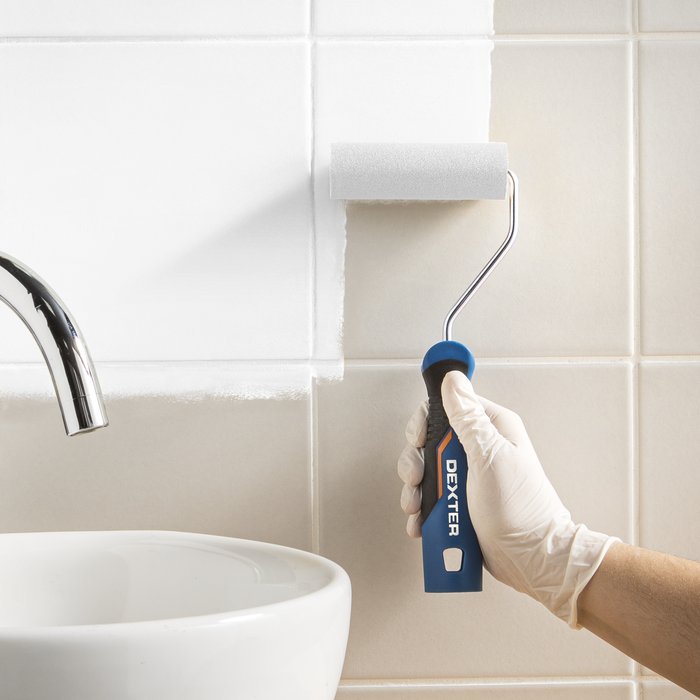
- Cut in carefully around tiles and sanitaryware — the sheen finish shows wobbly edges.
The bottom line
For most UK bathrooms: Dulux Bathroom+ or Johnstone’s Bathroom Paint — £25–£40, proper mould resistance, scrubbable. For persistent mould problems: Zinsser Perma-White or Ronseal Anti-Mould. But remember the hierarchy: ventilation first, mould treatment second, paint third. The world’s best bathroom paint can’t overcome a dead extractor fan and clothes drying on the radiator.
Ceilings: the forgotten surface
Bathroom ceilings get the worst of the steam — hot air rises, and the ceiling is where condensation forms first. Yet most people paint walls carefully and slap whatever’s left on the ceiling. Use the same bathroom paint on the ceiling (not standard ceiling emulsion), and consider going one shade lighter than the walls for a sense of height. If the ceiling already has mould spots, treat them exactly like wall mould (biocide remover, not just bleach), stain-block, then paint.
Textured ceilings (Artex, stipple) in bathrooms are mould magnets — the texture holds moisture and is impossible to wipe clean. If yours is pre-2000, test for asbestos (£30–£50) before disturbing it. Asbestos-free textured ceilings can be skimmed flat (£200–£400) then painted with bathroom paint — the single best upgrade for a mould-prone bathroom ceiling. Flat + wipeable beats textured + porous every time.
Bathroom paint FAQs
How many coats do I need? Two full coats minimum — bathroom paint needs its designed film thickness to deliver the moisture and mould resistance. One coat looks done but performs like standard emulsion. Don’t stretch the paint; buy enough.
Can I use kitchen paint in the bathroom? It’s better than standard emulsion (kitchen paints resist moisture and wiping) but not optimised for constant steam — bathroom paints have stronger anti-mould formulations. In a pinch, kitchen paint works; given the choice, buy the bathroom one. The price difference is £5.
How long does bathroom paint last? 4–7 years in a well-ventilated bathroom; 2–3 years where ventilation is poor (the paint gets blamed for a ventilation problem). The anti-mould agents deplete over time — when mould starts returning despite good ventilation, it’s repaint time.
Matt, eggshell or sheen? Soft sheen or eggshell — the slight sheen resists moisture better than dead matt and wipes clean. Full gloss is overkill and shows every flaw. Most bathroom paints come in soft sheen as standard — that’s the right choice, not a compromise.
Do I need to prime before bathroom paint? Bare plaster: yes — mist coat or primer. Previously painted (sound): no — just clean thoroughly. Stained/mould-treated areas: yes — stain-blocking primer (Zinsser BIN) over treated mould stains, or they’ll bleed through within months.
The ventilation hierarchy (paint is last, not first)
Worth restating because it determines whether your paint job lasts 6 years or 6 months. Level 1 — extractors: a working extractor fan (15-minute overrun, extracting to outside — not into the loft) removes ~90% of shower steam at source. If yours is dead, noisy or venting into the loft space, fix this before painting (£30–£60 DIY like-for-like, £80–£150 electrician). Level 2 — background ventilation: trickle vents open, door undercut (10mm gap under the bathroom door for air replacement — fans can’t extract without replacement air). Level 3 — behaviour: shower with the door closed, fan on 15 minutes after, no clothes drying on radiators. Level 4 — paint: the final defence, not the first. Level 5 — dehumidifier: for bathrooms that still struggle (£120–£200, transformative). Paint applied over a fixed ventilation system lasts years; paint applied as a substitute for ventilation fails within months. Always fix the air before decorating the walls.
Related reading
Fix the cause too: stopping condensation. Ronseal’s anti-mould guides cover problem walls.