
What Is the Best Low-impact Exercise for Bad Knees?
What Is the Best Low-impact Exercise for Bad Knees?
Knee pain has a cruel irony: the less you move, the worse your knees tend to get — but moving hurts, so you move less. I watched my dad fall into exactly this trap after his arthritis diagnosis, until a physiotherapist gave him a list of exercises that strengthened the muscles around his knees without pounding the joints. Within three months he was walking further than he had in years. Wondering “what is the best low-impact exercise for bad knees”? You’re not alone — and the real answer is more straightforward than most guides make it sound.
The principle is simple: choose activities where your joints don’t take repeated impact, and build the muscles that support your knees (quads, glutes, hamstrings). Strong supporting muscles genuinely reduce knee pain — this isn’t wishful thinking, it’s physiotherapy 101. Here are the best options, ranked by how knee-friendly they actually are.
Swimming and water exercise: the gold standard
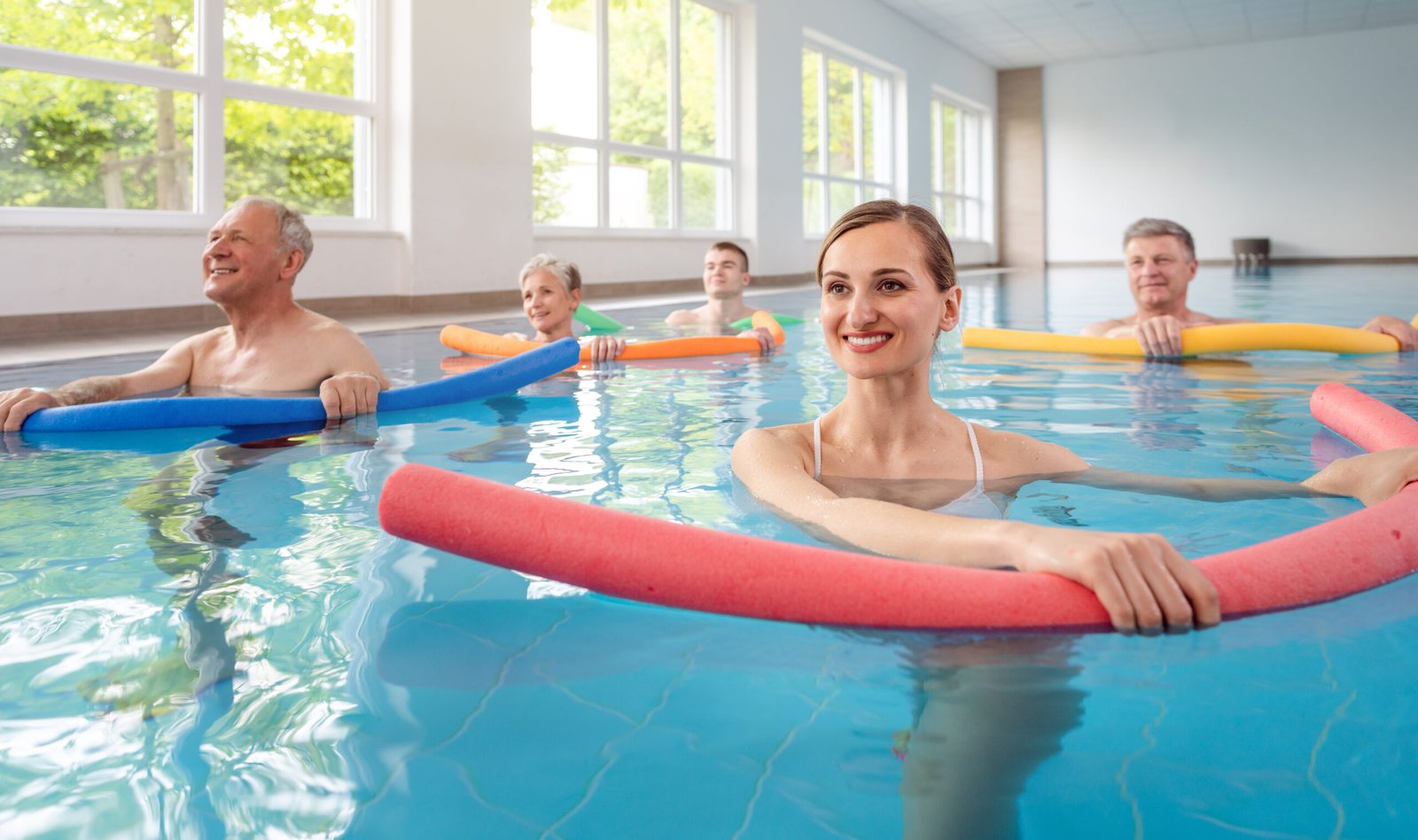
If you have access to a pool, this is the single best option for bad knees. Water supports around 90 percent of your body weight, which means your knees get movement and muscle work with almost no impact. Swimming laps is excellent, but you don’t even need to swim — aqua aerobics classes, walking laps in the shallow end, and gentle leg exercises holding the pool edge all count.
Most local authority leisure centres run aqua classes specifically aimed at older adults or people with arthritis, usually £4 to £7 a session — far cheaper than private physio. The warmth of the water helps too; many people with arthritis find their joints feel looser for hours afterwards. One tip: avoid breaststroke if it aggravates your knees — the whip-kick can stress the joint. Front crawl and backstroke are kinder.
Cycling: kind to knees, great for fitness
Cycling is the physio’s favourite land-based option because it’s non-impact and brilliant for quad strength — and strong quads are the number one protector of dodgy knees. Stationary bikes are ideal to start: set the seat high enough that your knee has only a slight bend at the bottom of the pedal stroke (too low a seat is the classic knee-killer), keep resistance light, and build duration before intensity.
Outdoor cycling works too, but stick to flat routes initially and use low gears — grinding uphill in a high gear loads the knee joint heavily. E-bikes are a genuinely good option here, not cheating: they let you get the movement and cardio while controlling the load. Many people with knee arthritis find that regular gentle cycling actually reduces their day-to-day pain within weeks.
- Swimming/aqua aerobics — near-zero impact, full-body
- Stationary or outdoor cycling — builds protective quad strength
- Walking on soft surfaces — flat, grass or track beats pavement
- Elliptical trainer — smooth motion, no pounding
- Rowing machine — low impact if technique is right
- Tai chi — improves balance and leg strength gently
Strength work: the part that actually fixes things
Cardio gets the glory, but targeted strength work is what reduces knee pain long-term. The key muscles are your quadriceps (front of thigh), glutes, and hamstrings. Straight-leg raises, wall sits (shallow ones — don’t go deep), glute bridges, and seated leg extensions with light resistance are all physio staples. Two to three short sessions a week is enough.
Form matters more than load: never let your knees cave inward during squats or steps, and avoid deep knee bends past 90 degrees if they hurt. Pain is information — a mild ache that eases within 24 hours is usually fine; sharp pain, swelling, or pain that worsens the next day means back off. The NHS knee pain guide has clear advice on when to see a GP versus self-managing.
What to avoid (and when to get help)
High-impact activities are the obvious avoid list: running on hard surfaces, jumping, deep lunges, and high-impact aerobics. Stairs deserve respect too — going down stairs loads the knee joint significantly, so take them one at a time and use handrails without embarrassment. Kneeling on hard floors is worth avoiding; get a kneeling pad for gardening.
See your GP or a physiotherapist if your knee locks, gives way, is hot and swollen (possible infection or gout — don’t wait on that one), or if pain persists despite several weeks of gentle exercise. You can self-refer to NHS physiotherapy in most areas without seeing a GP first. And for general fitness alongside knee-friendly exercise, check how much exercise you need per week — low-impact activity counts fully toward the guidelines.
Walking: the simplest knee-friendly exercise, done right
Walking rarely makes “best exercise” lists because it seems too ordinary — but for bad knees, a well-set-up walking habit beats most alternatives. It’s free, it’s weight-bearing (good for bones, unlike swimming), and you can dose it precisely. The trick is in the setup: supportive, cushioned shoes make a genuine difference — worn-out trainers are a common hidden cause of knee pain, so check the tread and cushioning if yours are past a year old.
Surface and route matter more than people think. Flat, even paths — park trails, canal towpaths, athletics tracks — are far kinder than cambered pavements or hills. Start with 10 to 15 minutes on flat ground and add five minutes a week; distance before speed, always. Walking poles (Nordic walking style) are worth considering: they offload the knees noticeably, engage your upper body, and look far less “medical” than you’d expect — half the walkers on my local heath use them now.
Technique tweaks help too: shorter, quicker steps reduce impact forces on the knee compared to long strides, and keeping a slight bend rather than locking the knee on each step protects the joint. If one knee is worse, a walking stick held in the opposite hand genuinely unloads it — physios recommend this without hesitation, though few people do it until told. Warm up with five minutes of gentle pace, and finish with a few minutes of quad and calf stretches. Ordinary, done well, beats fancy done badly.
What Is the Best Low-impact Exercise for Bad Knees: The Short Answer
Swimming, cycling, and flat walking strengthen the muscles that protect bad knees without pounding the joints — build the quads and glutes, respect sharp pain, and give it six weeks.
Where to start this week
Pick one: a local aqua class, 15 minutes on a stationary bike with the seat set high, or a flat 20-minute walk. Add two short strength sessions (leg raises, glute bridges, wall sits). Build slowly, respect sharp pain, and give it six weeks — most people are genuinely surprised how much better their knees feel when the supporting muscles wake up. Related reading: weekly exercise guidelines.