
What Is Sinead O’Connor’s Net Worth? Age, Height, Family and Career in Full
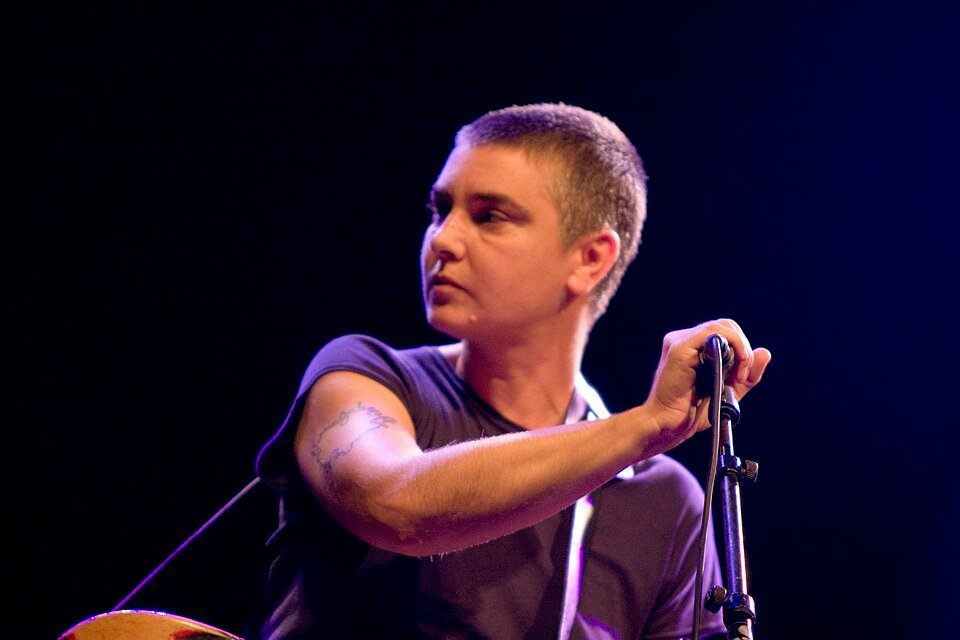
What Is Sinead O'Connor's Net Worth? Age, Height, Family and Career in Full
Sinead O’Connor in Brief
| Sinead O’Connor in Brief | Details |
|---|---|
| Born | 8 December 1966, Dublin; died 26 July 2023, London, aged 56 |
| Age | 56 at death (died 26 July 2023) |
| Net Worth | $1.5 million at death — Celebrity Net Worth (page updated 28 January 2025); Irish probate £1.7 million gross / £1.4 million net agrees |
| Height | 5 ft 4 in (1.63 m) |
| Weight | No reliable published figure exists |
| Partner | Barry Herridge — separated, with no divorce reliably reported before her death |
| Children | Four: Jake Reynolds (b. June 1987), Roisin Waters (b. March 1996), Shane Lunny (b. March 2004; d. January 2022, aged 17), Yeshua Bonadio (b. December 2006) |
| Parents | John Oliver “Seán” O’Connor; Johanna Marie O’Connor (née O’Grady) (d. 1985) |
| Nationality | Irish |
| Religion | Raised Catholic; ordained 1999 as Mother Bernadette Mary; converted to Islam October 2018, name Shuhada’ Sadaqat |
Sinead Keeps Family Out of the Spotlight
The partner position at her death is recorded precisely, because precision is what the record requires. Barry Herridge stands in the ledger’s Partner row with the exact sense the evidence supports: separated, with no divorce reliably reported before her death. Separated is not divorced, and this profile does not upgrade it. The full sequence of her four marriages is set out here with married and divorced wording only, as the record gives it.
She married John Reynolds in 1989; they divorced in 1991. She married Nick Sommerlad in 2001; they divorced in 2003. She married Steve Cooney in July 2010; they separated in March 2011 and divorced in 2011. She married Barry Herridge in December 2011, in Las Vegas; they separated within weeks, reunited in January 2012, and stated in February 2014 that they had not divorced. No divorce from Herridge was reliably reported before her death in July 2023, and the ledger records exactly that position and no other.
She had four children, whose fathers are named factually. Jake Reynolds was born in June 1987, his father John Reynolds. Roisin Waters was born in March 1996, her father John Waters. Shane Lunny was born in March 2004, his father Dónal Lunny; Shane died in January 2022, aged 17 — a date and an age, recorded here with nothing added. Yeshua Bonadio was born in December 2006, his father Frank Bonadio. The probate record of January 2025 left her estate to her surviving children, and that is the family’s position as the public documents state it.
Her parents are recorded in this profile and in the ledger: John Oliver “Seán” O’Connor and Johanna Marie O’Connor, née O’Grady, who died in 1985. Her position in the family is given in the form the record supports — third of five in her family — and no further family detail is printed beyond that form.
Her religious record is part of her verified pattern and is covered factually. She was raised Catholic. In 1999 she was ordained by Bishop Michael Cox of the Irish Orthodox Catholic and Apostolic Church — an independent church, not recognised by Rome — taking the name Mother Bernadette Mary. In August 2018 she asked for excommunication. In October 2018 she converted to Islam, taking the name Shuhada’ Sadaqat, while continuing to perform as Sinéad O’Connor. Her funeral in Bray included a Muslim burial service led by Shaykh Umar Al-Qadri. Those are the documented stations of a religious life she conducted as publicly as she conducted everything else, and they are printed here as facts, without commentary added in either direction.
Sinead Grew Up in Dublin Before the Cameras Found Sinead
She was born Sinéad Marie Bernadette O’Connor on 8 December 1966 in Dublin, the third of five in her family. Her father, John Oliver “Seán” O’Connor, was a structural engineer who later became a barrister. Her mother, Johanna Marie O’Connor, née O’Grady, died in 1985, when her daughter was eighteen and on the threshold of the recording career. The Dublin upbringing — in a household marked, on her own repeated public account over the years, by difficulty she never softened in the telling — produced a singer who treated plain speaking as a duty rather than a style, and that trait, more than any single recording, is what the obituaries of July 2023 returned to.
The musical formation was Dublin’s: singing in the city’s venues, a voice recognised early as exceptional by the musicians around her, and a first album in her early twenties that established the two elements that never separated afterwards — the voice itself, capable of moving from a near-whisper to full force inside a single line, and material that treated faith, anger and grief as subjects for popular song rather than decorations around it.
Her appearance became part of the record from the start: the shaved head she wore from her early career onwards was, on her own account of it, a refusal to be packaged, and it made her one of the most recognisable figures in popular music before she was twenty-five. That recognition was inseparable from the positions she took, and the positions repeatedly cost the career the recognition might have fed.
Sinead Built a Name on The First Album
Sinéad O’Connor died on 26 July 2023 in London, aged 56, and this profile is written posthumously throughout, because that is the only honest way to write it. In life she was the Irish singer whose voice carried one of the defining recordings of its era, whose second album made her a figure of world standing at twenty-three, and whose refusal — sustained across four decades, at real cost to the career the voice might have had — to separate the music from her convictions became the central fact of her public life. The London coroner recorded natural causes in January 2024, and that official wording is the whole of what this profile prints on the matter.
The money is stated in this profile. Celebrity Net Worth puts her net worth at her death at $1.5 million, in a page updated on 28 January 2025. Unusually for this series, that tracker figure can be checked against a hard public document: Irish probate, reported in January 2025, showed £1.7 million gross and £1.4 million net after debts, legal costs and funeral expenses, left to her surviving children. The two figures are presented here as agreeing — a tracker estimate and a probate record arriving at the same modest position by different routes — and probate is labelled as probate wherever it appears, not dressed up as a second net-worth figure.
What follows sets out the life in turn: upbringing, family — including four marriages recorded with their statuses held exactly — the career in years, the ledger, and then the fortune, which is small in the way the record says it is small, beside a legacy that is not.
What Sinead Earns, and What the Sources Say
Celebrity Net Worth puts her net worth at her death at $1.5 million, in a page updated on 28 January 2025, and that figure is carried here, attributed at every mention. Beside it stands the hardest figure in her record: Irish probate, reported in January 2025, which showed £1.7 million gross and £1.4 million net after debts, legal costs and funeral expenses. Probate is a legal accounting of an estate at a date, not a tracker’s estimate of a living fortune, and it is labelled as probate throughout this profile. What matters for the reader is the relationship between the two numbers: they agree. A singer who was, for a period in 1990, among the most famous performers in the world died with an estate in the region of one and a half million, and both the tracker and the legal record say so.
The explanation is structural, and its centre is the song everyone knows. “Nothing Compares 2 U” was written by Prince. Its songwriting royalties — the income stream that continues for decades from a recording of that scale — were never hers. She earned as its performer; the enduring writing income belonged to the writer’s estate. Add to that a career in which the years of maximum commercial possibility were spent taking positions that reduced that possibility, earnings spread across four decades of intermittent work, and the costs and settlements of an ordinary complicated life, and the probate figure stops looking like an anomaly. It is the arithmetic of the career as she chose to conduct it.
Her will, as reported with the probate record in January 2025, directed that her unreleased recordings be issued after her death — in her own quoted words, to “milk it for what it’s worth”. The direction is printed here because it is part of the probate reporting and because it is the subject’s own assessment of her catalogue’s remaining value, stated in her own idiom: the recordings were an asset, she knew it, and she instructed her children to realise it. The estate was left to her surviving children, and any income those recordings now generate belongs to the estate’s story, not to a revision of the figure at her death.
The shape of the whole fortune is therefore unusually well documented for this series: $1.5 million at death on the tracker’s page, £1.7 million gross and £1.4 million net on the probate record, the two agreeing, and the reason for the modesty of both traceable to a single documented fact — the defining song was somebody else’s composition. No Forbes total and no Rich List figure exists for her, and none is invented here.
Why Sinead Still Matters After The First Album
Her legacy is the voice and the example, in that order in the obituaries and in that order here. The recordings remain: a body of work headed by a performance that has not dated, made by a Dublin singer who was twenty-three when the world heard it and who spent the remaining thirty-three years declining to become a safer version of the person who had made it. The religious journey recorded in the family section — Catholic upbringing, ordination in an independent church in 1999, conversion to Islam in 2018 — was part of the same refusal to conduct any part of her life on instructions.
The estate’s position is the financial half of the legacy, and it is modest and documented: about $1.5 million at her death on Celebrity Net Worth’s figure, corroborated by Irish probate at £1.7 million gross and £1.4 million net, left to her surviving children, with her unreleased recordings directed by her will to be issued and, in her own words, milked for what they are worth. She died in London, a city that was her final home, and the coroner’s two words — natural causes — close the official record. This profile has kept the fame and the fortune in their separate places, because in her case the distance between them is the story.
The First Album, Nothing Compares 2 U and the Long Run
The First Album
Her first album, released in her early twenties, announced a singer of unusual force and a writer working through faith, family and anger in material that made no concession to radio habits of the period. The record established her name in Ireland and Britain and brought the first of the attention that would follow her for life — attention drawn as much by the refusal to present herself in the industry’s expected forms as by the singing itself.
1990 — Nothing Compares 2 U
The second album carried the recording that defines her: “Nothing Compares 2 U”, a song written by Prince, whose performance of it — direct, unadorned and emotionally exact — became one of the best-known recordings of its decade and took her to the top of charts around the world. The connection is a genuine one of authorship and interpretation, and it is set out in Prince’s net worth profile: the writer of the song that made her name, whose songwriting royalties from it were always his, never hers — a division this profile returns to in the fortune section, because it is the single most consequential financial fact of her career.
The Years of Refusal
What followed the breakthrough was not the consolidation the industry expected. Across the years after 1990 she repeatedly took public positions — on the church she had been raised in, on the industry itself, on the wars and injustices she spoke against — that closed doors a quieter career would have kept open, and she declined, on the record and at length, to trade the positions for the doors. Commercial momentum ebbed accordingly. The albums continued; the audience narrowed to the listeners who had come for the whole of what she was rather than for one song; and the financial shape of the later career — modest, intermittent, dependent on live work — was set in these years.
The Later Albums and Live Work
Recording and performing continued across the following decades, through changes of name and faith recorded in the family section, and through periods of withdrawal from public work. The voice remained the instrument obituarists described in 2023: intact, unmistakable, and capable in her fifties of the same directness that had marked the records of her twenties. Her property in Bray and her final residence in London — a flat, in the city where she died — were the two bases of those later years, worded here as the record words them.
2023 — Death and the Record Closed
She died in London on 26 July 2023, aged 56. The London coroner recorded natural causes in January 2024. Obituaries in The Guardian, the BBC and The New York Times agreed on the assessment that the career section has followed: a singer of the first rank whose commercial story cannot be separated from her refusal to make it easier, and whose best-known recording belonged, in its writing, to somebody else.