
How to Roast Coffee Beans at Home: Step-by-Step Guide (2026)
How to Roast Coffee Beans at Home: Step-by-Step Guide (2026)
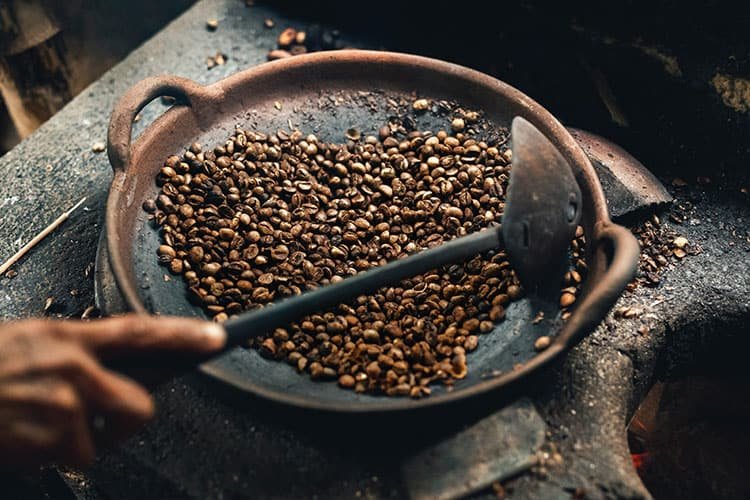
Freshly roasted coffee tastes like a different drink entirely — sweeter, more aromatic, and full of flavours you never get from a bag that has sat on a shelf for months. To roast coffee beans at home, you heat green (unroasted) beans to roughly 196-232°C, listening for two audible stages called “first crack” (~196°C) and “second crack” (~224°C), then cool the beans quickly and rest them for 12-24 hours before brewing. You can do it in a popcorn popper, a frying pan, or your oven with no specialist kit. This guide covers each method, the roast levels, where to buy green beans in the UK, and the safety rules you must follow — roasting makes smoke and flammable chaff, so ventilation matters.
What you need
- Green coffee beans (unroasted) — buy from UK suppliers such as Has Bean, Coffee Compass, or Amazon; expect to pay £8-£15 per kilo
- A heat source: hot-air popcorn popper, heavy frying pan, or oven
- A wooden spoon or whisk for stirring
- A metal colander for cooling
- A kitchen timer and, ideally, a thermometer
Method 1: Hot-air popcorn popper (easiest for beginners)
- Take the popper outside or to a very well-ventilated spot — roasting produces a lot of smoke and chaff.
- Add about 80-100g of green beans (no more than the popper handles comfortably).
- Switch on and let the beans tumble. Stir gently if your popper has a still spot.
- After 3-5 minutes you will hear popping like popcorn — this is first crack (~196°C). The beans turn light brown.
- For a light roast, stop here. For medium, keep going 1-2 minutes more. For dark, continue until you hear a quieter, faster second crack (~224°C) — do not push far past this or the beans will taste burnt.
- Tip the beans into a metal colander immediately and toss or shake to cool them fast.
Method 2: Heavy frying pan (no special kit)
- Heat a heavy frying pan or wok over a medium-high heat.
- Add a single layer of green beans — do not crowd them.
- Stir constantly with a wooden spoon so the beans roast evenly and do not scorch.
- First crack arrives at around 5-8 minutes. Keep stirring through your chosen roast level.
- Tip into a colander and cool quickly, shaking to shed the papery chaff.
This method is hands-on and gives a slightly uneven roast, but it is a brilliant way to try roasting for free.
Method 3: Oven roasting (biggest batches)
- Preheat the oven to 230°C (fan 210°C).
- Spread green beans in a single layer on a perforated tray or a tray lined with foil.
- Roast for 10-15 minutes, opening the door once or twice to stir and let smoke escape.
- Listen for first crack, then judge your roast level by colour and smell.
- Cool immediately in a colander — beans keep cooking from residual heat if you leave them on the hot tray.
Oven roasting smokes up a kitchen fast. Run the extractor fan on full and open a window. For oven confidence in general, see our guide to how to bake potatoes in the oven.
Understanding roast levels
- Light roast — stopped just after first crack. Bright, acidic, keeps the bean’s origin character. Best for African and fruity beans.
- Medium roast — a couple of minutes past first crack. Balanced sweetness and body; the all-rounder most people enjoy.
- Dark roast — into second crack. Oily, bold, smoky, low acidity. Classic for espresso-style drinks.
Write down your timings each batch so you can repeat a roast you love. For recipe ideas once your beans are ready, BBC Good Food has a solid collection of coffee recipes.
Cooling, resting and storing
Cooling fast is essential — beans left hot keep roasting and turn bitter. Shake them in a metal colander until they are just warm to the touch, and pick out any remaining chaff. Then rest the beans for 12-24 hours before brewing; fresh roast needs time to release CO2, and coffee brewed too soon tastes harsh and flat. Store rested beans in an airtight container away from light, and use within 2-3 weeks. Never store coffee in the fridge — it absorbs food smells. Speaking of fridge storage, our piece on how long hummus keeps in the refrigerator covers similar freshness rules for food.
Safety warnings
- Ventilation is non-negotiable. Roasting produces smoke that can irritate lungs and set off smoke alarms. Roast outdoors or under a powerful extractor with windows open.
- Chaff is flammable. The papery skins that flake off can ignite near open heat. Keep a damp cloth nearby and never leave roasting beans unattended.
- Beans and equipment get extremely hot — use oven gloves and keep children and pets away.
- If you are new to cooking projects like this, start with our simpler how to cook taco meat guide to build kitchen confidence first.
Tips
- Buy small amounts of green beans to start — 500g lets you experiment without waste.
- Roast the same bean three ways (light, medium, dark) and taste them side by side to learn your preference.
- A simple kitchen thermometer clipped near the beans helps you learn the crack temperatures faster.
- Label each batch with bean origin, date and roast level — memory is unreliable.
- Grind beans just before brewing for the biggest flavour payoff from your effort.
- Do not roast decaf or flavoured green beans until you have nailed plain beans — they behave differently.
FAQs
Is it cheaper to roast coffee at home?
Usually, yes. Green beans cost £8-£15 per kilo in the UK, while speciality roasted beans run £20-£35 per kilo. Once you own the kit, home roasting roughly halves the cost of speciality-grade coffee.
How long do home-roasted beans stay fresh?
Peak flavour is from day 2 to about day 14 after roasting. After 3-4 weeks they taste flat. Roast in small batches you will actually drink — 100-250g at a time is ideal for most households.
Can I roast coffee beans in an air fryer?
You can, but it is fiddly: small batches, lots of chaff blowing around the element (a fire risk), and uneven roasts. A popcorn popper or frying pan gives better results with less hassle.
Why do my home-roasted beans taste bitter?
Almost always over-roasting or slow cooling. Stop at or just after second crack for dark roasts, never beyond it, and get the beans into a colander the second you are done. Also make sure you rested them 12-24 hours before brewing.
Where can I buy green coffee beans in the UK?
Specialist roasters like Has Bean and Coffee Compass sell green beans online, and marketplaces like Amazon and eBay carry them too. Look for sellers who list the harvest date — fresher green beans roast more evenly.
Home roasting turns your kitchen into a tiny roastery and your morning cup into something genuinely special. Start with a popcorn popper, roast outdoors, listen for the cracks, and rest your beans before brewing. Within a few batches you will be drinking coffee fresher than anything from a supermarket shelf — and wondering why you waited so long to try.