
How to Protect Your Car From London Winter Salt: 6 Steps
London does not salt roads the way the Scottish Highlands do — but it salts enough, and the capital’s particular cocktail of road salt, standing water, grit and stop-start traffic is quietly devastating for cars. Salt accelerates corrosion on bodywork, brake lines, suspension components and exhausts; a single winter of neglect can start rust that costs thousands years later. Protecting your car from winter salt is cheap, simple and one of the highest-return maintenance tasks in motoring. Here is how.
Why salt destroys cars
Road salt (sodium chloride, sometimes mixed with grit) lowers water’s freezing point — but the resulting salty slush is an electrolyte that dramatically accelerates the electrochemical corrosion of steel. The damage concentrates where salt spray collects: wheel arches, sills, subframes, brake lines, fuel lines, exhaust mounts and suspension components. Modern cars have far better factory rust protection than 1990s rot-boxes, but it is not immunity — it is a delay, and neglect shortens it.
London’s specific problem: cars here do short journeys in salty slush, then park — the salt sits in wheel arches and underbody crevices for days, working undisturbed. Motorway drivers at least get airflow drying things off; the London pattern of short hop plus long park is close to the worst case for corrosion. The gov.uk winter driving guidance focuses on safety, but the same salt that keeps you safe eats your car.
Wash regularly — and wash underneath
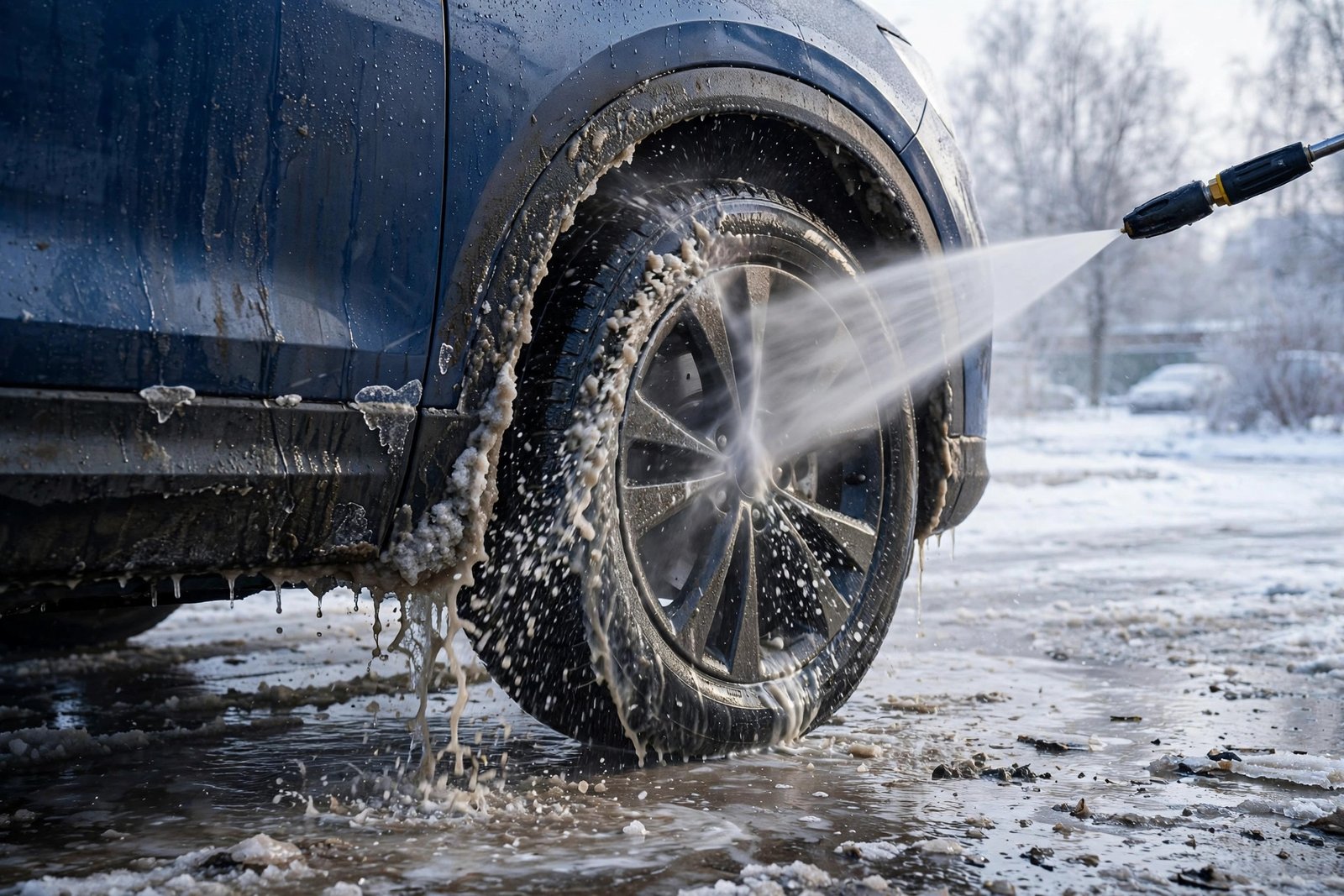
The single most effective protection: wash the salt off. Every 1–2 weeks through winter, and after any journey on freshly gritted roads. The critical part is the underbody — salt accumulates underneath far more than on visible panels. Use a jet wash with an underbody lance (£5–£10 at jet-wash bays), or pay £15–£25 for a winter wash including underbody at a hand car wash. Avoid automated car washes with harsh brushes on gritty cars — they grind the grit into your paint.
Do not wash in freezing temperatures (locks and seals freeze), and dry door seals after washing. A £30 pressure washer pays for itself in one winter if you have a driveway or access to a tap. This one habit prevents more corrosion than every wax and treatment combined — because corrosion needs salt plus time, and washing removes the time.
Wax and seal before winter
Protection works best applied in autumn, before the first gritting. A proper wax or paint sealant (£15–£30 DIY, £80–£150 professional) creates a sacrificial barrier: salt attacks the wax, not the paint. Focus on lower panels, wheel arches and sills — the salt-spray zones. Ceramic coatings (£300–£600 professional) last years rather than months and are worth considering if you keep cars long-term.
Underbody protection is the serious investment: professional undersealing (£200–£500) with wax-based products (Dinitrol, Waxoyl) protects subframes, sills and floor pans for years. For cars you plan to keep 5+ years, it is the best money in car care — a rusty subframe can write off an otherwise good car at MOT time. The AA’s winter car-care advice covers the essentials, though undersealing deserves a specialist.
Protect the vulnerable specifics
Brake lines and fuel lines
Steel brake lines corrode from the outside in — and corroded brake lines are an MOT failure and a genuine safety issue. During winter, hose the underbody regularly and have lines inspected at service time. Copper-nickel replacement lines (£150–£300 fitted) essentially solve the problem permanently if yours are ageing.
Alloys and tyres
Salt pits and corrodes alloy wheels — the white worm-like corrosion under lacquer starts with salt exposure. Wash wheels with the bodywork (never let brake dust and salt bake on), and consider a dedicated wheel sealant. Check tyre pressures monthly in winter: cold air contracts, under-inflation rises, and the RAC notes that winter tyre-related breakdowns spike when pressures are neglected.
Door seals, locks and wipers
Apply silicone lubricant (£5) to door seals before winter — it stops them freezing shut and tearing. Keep locks de-iced with proper de-icer (never hot water — it refreezes). Replace wipers in autumn (£15–£30); worn wipers smear salty spray into an opaque film exactly when you need visibility most. Top up screenwash with winter-rated fluid (neat, not diluted) — frozen washer jets on a salty motorway are miserable.
Driving habits that reduce salt damage
How you drive matters: avoid deliberately driving through deep salty slush where alternatives exist, do not park on grass or mud (moisture wicks up constantly), and after salty journeys, a quick underbody rinse matters more than a full wash. If you have a garage, use it — garaged cars corrode dramatically slower than street-parked ones, because they dry out instead of sitting in damp salty air.
One counterintuitive tip: do not wash the car and then leave it wet in a freezing garage — trapped moisture in a cold enclosed space can be worse than the salt. Wash, drive briefly to dry the brakes and arches, then park. And keep the fuel tank reasonably full in winter: it reduces condensation in the tank and ensures you never run dry in a weather delay.
The spring deep-clean
When gritting season ends (usually March), do the full decontamination: thorough underbody wash, wheel-arch liners removed and cleaned behind (salt packs behind liners where you cannot see it), brake components inspected, and a fresh wax application. This is also the moment for an honest rust inspection — surface rust treated now (£50 of converter and paint) versus structural rust discovered at next year’s MOT (£500+ of welding).
Budget winter car care into your annual motoring costs: £100–£200 a year in washes, wax and treatments versus thousands in corrosion repairs. It is the cheapest insurance in motoring. And a well-protected car photographs and presents better — relevant if you ever sell, since dash cams and good maintenance records both support resale values.
Conclusion
Protecting your car from London winter salt comes down to: wash the underbody every 1–2 weeks, wax and seal paintwork before winter, consider professional undersealing for keepers, protect brake lines, alloys and seals specifically, adapt driving and parking habits, and do a full decontamination each spring. Total cost: £100–£200 a year. Total saving: thousands in corrosion repairs and a car that passes MOTs instead of failing them. Salt is inevitable; rust is optional.
Frequently Asked Questions
Does road salt damage cars in London?
Yes — London grits major routes regularly through winter, and the salt spray accelerates corrosion on underbody components, brake lines, suspension and bodywork. Short journeys plus street parking (where salt sits undisturbed for days) make the damage worse.
How often should I wash my car in winter?
Every 1–2 weeks, always including the underbody — that is where salt does its damage. Wash after any journey on freshly gritted roads, but avoid washing in freezing temperatures.
Is undersealing worth it in the UK?
For cars you will keep 5+ years, yes — £200–£500 of professional wax-based undersealing protects subframes and sills for years. A rusty subframe can fail an MOT and write off an otherwise perfectly good car.
What is the best rust protection for cars?
Regular underbody washing (most important), autumn wax/sealant on paintwork, professional undersealing for long-term keepers, and spring decontamination. No single product beats the consistent washing habit.