
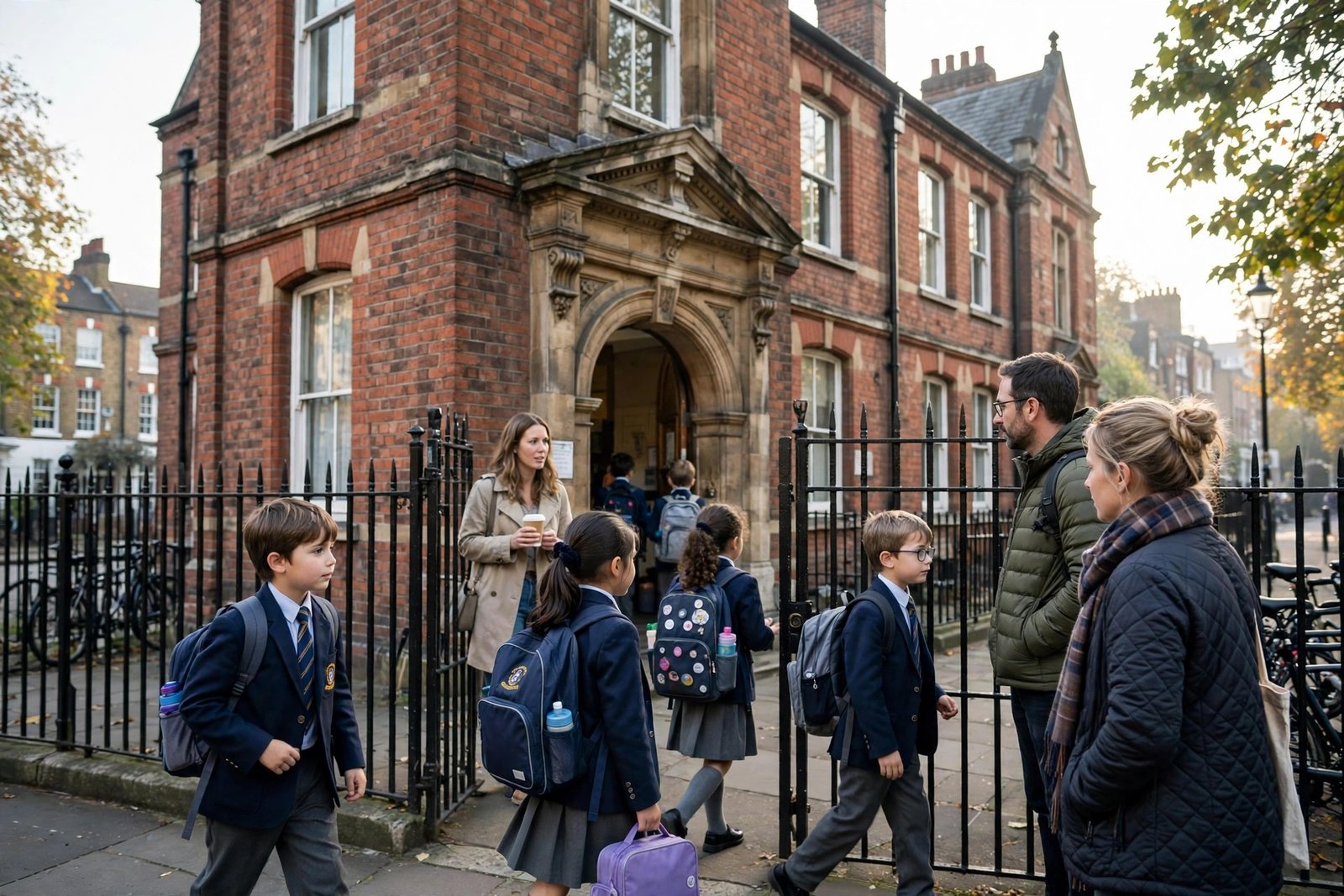
How to Get Your Child Into a Good London School: Playbook
Every January, London parents of four-year-olds enter a peculiar state of high alert: the primary school application deadline. The capital’s best state schools are oversubscribed ten times over, catchment areas shrink to a few streets, and house prices near outstanding schools carry a visible premium. Getting your child into a good London school is part strategy, part geography, and part understanding a system that rewards the well-informed. Here is the complete playbook.
Understand how admissions actually work
London state school admissions are run by borough councils under a national code — not by the schools themselves (with some academy exceptions). For primary, you apply through your home borough by mid-January for a September start; for secondary, by late October of Year 6. You list 3–6 preferences in rank order, and the system offers you the highest-ranked school you qualify for under its oversubscription criteria.
The criteria, in typical order: looked-after children, siblings, then distance — measured in a dead straight line from your front door to the school gate. Distance is the decider for most popular schools, which is why catchment areas matter so enormously. Check the exact rules on gov.uk’s school admissions pages and your borough’s admissions booklet, which publishes last year’s furthest-distance-offered figures — the single most useful data point in this whole process.
Catchment areas: the geography of opportunity
“Catchment” in London usually means the furthest distance from which offers were made last year — and for the most sought-after schools it can be under 300 metres. A few streets make the difference between an outstanding school and a long waiting list. This is why family homes near top schools command 10–20% price premiums, a phenomenon estate agents market openly.
Tactics: research furthest-offered distances for your target schools over several years (one year’s figure can mislead), rent or buy with the school map open, and remember the address rules — councils investigate fraudulent applications (using a relative’s address, short-term rentals) and withdraw offers. It happens every year. If a move is on the cards, our guide to moving house within London helps budget the relocation honestly.
Faith schools: the parallel system
London has hundreds of faith schools — Church of England, Catholic, Jewish, Muslim, Hindu — many of them outstanding and oversubscribed. Their admissions criteria prioritise practising families: regular worship, baptism, religious references. If faith is part of your life, these schools are a genuine route to excellent education without the catchment lottery.
The commitment is real: most require evidence of worship over 2+ years before application. Starting church attendance at 38 for a school application at 40 is transparent and sometimes challenged. But for genuinely practising families, faith criteria can matter more than distance — a legitimate and longstanding part of the system.
Selective schools and the 11-plus
London retains significant selection: grammar schools in Bromley, Kingston, Sutton, Barnet and elsewhere admit by the 11-plus exam, and many comprehensives select partly by aptitude or banding. The 11-plus (verbal reasoning, non-verbal reasoning, maths, English) is coachable — which is why a tutoring industry thrives around it, at £40–£80 an hour.
Honest assessment: tutoring for the 11-plus works, and most successful candidates have had some. Whether that is fair is a separate debate from whether it is effective. If you are considering the selective route, start familiarisation in Year 4, structured preparation in Year 5, and keep perspective — a happy child at a good comprehensive outperforms a miserable one at a grammar school. Budget for the whole journey with a realistic monthly savings plan, because tutoring, exam fees and open-day travel add up.
Ofsted: reading beyond the headline grade
Ofsted ratings (Outstanding, Good, Requires Improvement, Inadequate) are the starting filter, but read the actual reports on Ofsted’s website, not just the grade. A 2019 “Outstanding” may reflect a different school than today’s; the report’s detail on behaviour, leadership and curriculum tells you more. Visit on a normal school day — open days are performances; a midweek visit shows the reality.
Talk to parents at the gates (they are candid), check the school’s published results data with context (intake matters enormously — a school with privileged intake and average results is underperforming), and trust atmosphere. Your child’s happiness at a school predicts their outcomes more reliably than any league table.
Private schools: the maths
London private day schools now charge £20,000–£30,000 a year, with VAT on fees adding 20% since 2025. For two children through secondary, that is £300,000+. Bursaries exist — many top schools offer means-tested places covering up to 100% — but competition is fierce. The BBC has covered the VAT change’s impact extensively: some families are leaving the sector, which has slightly eased pressure on oversubscribed state schools nearby.
If you are weighing private versus moving near a great state school, do the full comparison: £25,000 a year in fees versus a £100,000 house-price premium near an outstanding comprehensive (which you may recoup on sale). Often the state route wins financially — and the social mix benefits children too.
Appeals and waiting lists
Did not get your preferred school? You are not done. Join waiting lists immediately — they move significantly as families accept private places or move, often into September and beyond. Some of the most oversubscribed London schools see 20–30% of their intake turn over from waiting lists in the first term. Appeals succeed in roughly 1 in 4 cases where there is a genuine procedural error or exceptional circumstance; “we really like the school” is not grounds, but a misapplied distance measurement is.
Meanwhile, accept the offered place — you must, to guarantee a school — while pursuing lists and appeals in parallel. And keep perspective: children thrive in “good” schools with engaged parents far more reliably than the admissions frenzy suggests. The 50/30/20 budget framework helps keep the whole expensive journey in financial proportion.
Conclusion
Getting your child into a good London school means understanding the admissions code, researching real catchment distances, considering faith and selective routes honestly, reading Ofsted reports in full, and having a plan B for waiting lists and appeals. Start 2–3 years before you need to, not 2–3 months. The system rewards the prepared — and the prepared are not always the wealthiest, just the best informed.
Frequently Asked Questions
When do I apply for primary school in London?
Applications open in September and close in mid-January for a September start. Apply through your home borough’s website listing 3–6 schools in genuine preference order.
How are London school catchment areas measured?
Usually as a straight-line distance from home to school gate. Check your borough’s published “furthest distance offered” figures for the last 2–3 years — that is the real catchment.
Can I appeal a school place decision?
Yes — appeals succeed in about a quarter of cases, mainly where admission rules were misapplied or exceptional circumstances exist. Always accept the offered place while appealing and join waiting lists immediately.
Are faith schools better in London?
Many are outstanding, but admission prioritises practising families with evidence of worship over two or more years. For genuinely religious families they are an excellent route; they are not a shortcut for others. Always check each school’s specific faith criteria, as they vary considerably.