
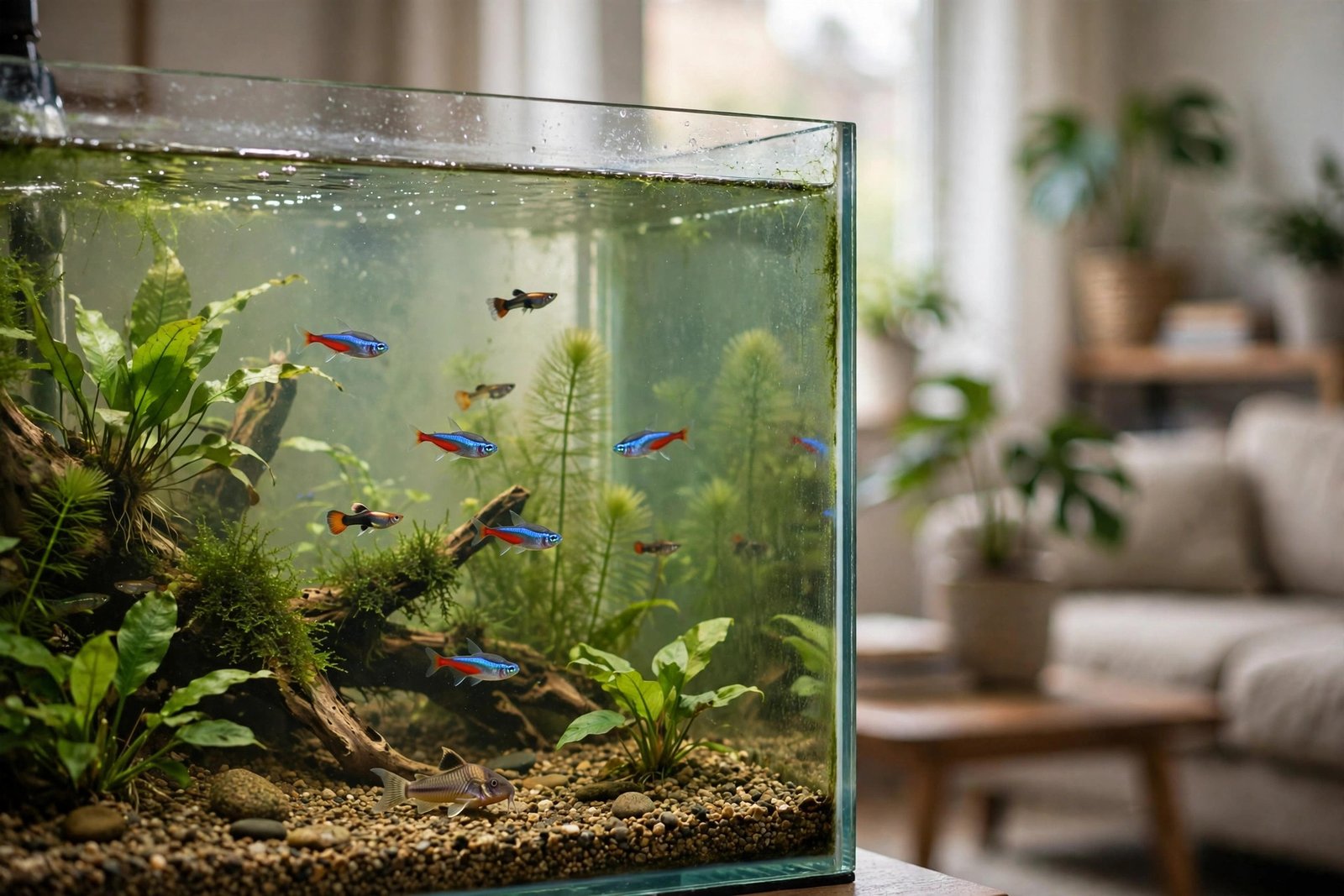
Cloudy Fish Tank Water? How to Diagnose and Clear It for Good
You set up your first tropical tank on a Saturday, arranged the gravel just so, and by Tuesday the water looks like diluted milk. Cloudy fish tank water is the single most common problem in fishkeeping, and it sends thousands of new UK aquarists into a panic every year. Take a breath: in the vast majority of cases, cloudy water is a normal, temporary stage of a maturing aquarium — not a death sentence for your fish. What matters is identifying which type of cloudiness you have, because each has a different cause and a different fix.
Aquarium cloudiness falls into three broad categories: bacterial blooms (white or grey haze), green water (algae), and particulate cloudiness (dust and debris). Each looks different, behaves differently, and responds to different treatment. Misdiagnosing the type is the main reason people waste money on the wrong products, so diagnosis comes first.
White or grey haze: the bacterial bloom
The milky-white cloudiness that appears in new tanks — typically within the first one to three weeks — is almost always a bacterial bloom. Here is what is happening: your tank is growing its biological filter. Beneficial nitrifying bacteria colonise the filter media and surfaces, converting toxic ammonia from fish waste into nitrite and then into far less harmful nitrate. During the early days, free-floating heterotrophic bacteria multiply explosively in the water column itself, and their sheer numbers turn the water cloudy.
This is a sign the nitrogen cycle is establishing itself, which is exactly what you want. The worst thing you can do is a massive water change or a full filter clean, both of which rip out the bacteria you are trying to grow. Instead, the standard advice from experienced aquarists is patience plus restraint: feed very lightly, avoid adding more fish, and let the bloom run its course. Most bacterial blooms clear on their own within one to two weeks as the filter bacteria outcompete the free-floaters.
How to cycle a tank properly
Ideally, you would never see a severe bloom with fish present, because the tank would be “cycled” before stocking. Fishless cycling — dosing pure ammonia and testing until the filter processes it fully within 24 hours — takes two to six weeks but is far kinder to fish. If you already have fish in a cloudy new tank, you are doing a “fish-in cycle”: test ammonia and nitrite daily with a liquid test kit, change 25 to 30 per cent of the water whenever ammonia exceeds 0.25 ppm, and use a water conditioner that detoxifies ammonia. Shops across the UK sell liquid test kits for under £30, and they are the single most useful purchase a new fishkeeper can make.
Green water: the algae bloom
If the cloudiness is distinctly green, you are looking at suspended single-celled algae, not bacteria. Green water is fuelled by two things: light and nutrients. The classic triggers are a tank placed in direct sunlight (even a couple of hours of sun through a window is enough), excessively long lighting periods, and overfeeding, which loads the water with the phosphates and nitrates algae thrive on.
The fix is to starve the algae, not to nuke it. Reduce lighting to six to eight hours a day on a timer, move the tank out of direct sun, cut feeding to what fish consume in two minutes, and increase water changes to remove dissolved nutrients. A UV steriliser — a device that zaps suspended algae as water passes through it — will clear green water in days and is a legitimate long-term solution for tanks prone to it. What does not work long-term is algaecide: it kills the algae but leaves the nutrients, so the bloom returns, and some products stress fish and invertebrates.
Brown or grey dust: particulate cloudiness
Sometimes the water is hazy because of fine particles: dust from unwashed gravel or sand, disturbed substrate, or debris from an underpowered filter. New substrate should always be rinsed thoroughly before it goes in — sand in particular can cloud a tank for days if added straight from the bag. If cloudiness appears after gravel-vacuuming or rearranging decor, it is simply disturbed sediment and will settle or be filtered out within hours.
Mechanical filtration is the answer here: fine filter floss or polishing pads in the filter trap particles that coarse sponge lets through. Check that your filter is rated for your tank size — a filter rated for 60 litres on a 120-litre tank will always struggle. And resist the urge to “clean” everything at once: rinsing all filter media under a tap can crash your biological filtration, because chlorine kills the beneficial bacteria. Always rinse media in old tank water removed during a water change.
The maintenance routine that prevents cloudiness
Nearly all cloudy water traces back to one of three maintenance failures: overfeeding, overstocking, or neglected water changes. Feed small amounts once or twice daily, stock conservatively (the old “one inch of fish per gallon” rule is crude but keeps beginners out of trouble), and change 20 to 25 per cent of the water weekly with dechlorinated water matched to tank temperature.
Test your water monthly once the tank is established — ammonia and nitrite should always read zero, nitrate ideally below 40 ppm. Keep a simple log; patterns become obvious quickly. If you are dealing with persistent household dampness alongside your aquarium hobby — tanks do raise room humidity — our guides to getting rid of mould on walls permanently and stopping condensation on windows in winter are worth a read, since a large tank in a small flat can push humidity surprisingly high.
Products: what helps and what is hype
The aquarium aisle is full of “water clarifiers” that clump fine particles together so the filter can catch them. These work for particulate cloudiness and are generally safe, but they are a sticking plaster — if the cause is a bacterial bloom or overfeeding, the cloud returns. Beneficial-bacteria-in-a-bottle products have mixed evidence; some help a fish-in cycle along, none replace proper cycling. Activated carbon polishes water and removes discolouration from driftwood tannins, but it does nothing for bacterial or algae blooms and needs replacing monthly.
The unglamorous truth, confirmed by decades of hobbyist experience documented everywhere from the Practical Fishkeeping community to university aquaculture courses, is that stable water parameters beat products every time. The RSPCA‘s guidance on fish care makes the same point: a properly cycled, sensibly stocked tank is the foundation of fish welfare, and no bottled product replaces it. A cycled filter, sensible stocking, light feeding, and weekly water changes will keep water crystal clear indefinitely — no clarifier required.
The bottom line
Cloudy water is your tank talking to you. White haze in a new setup means the nitrogen cycle is building — leave it alone, test daily, and change water only to keep ammonia safe. Green water means too much light and too many nutrients — cut both, and consider a UV steriliser. Dusty haze means particles — polish your filtration and rinse substrate properly next time. Diagnose first, reach for the bottle second, and remember that the clearest tanks in the hobby belong to the most patient fishkeepers, not the ones with the most chemicals.
Frequently Asked Questions
How long does cloudy water last in a new fish tank?
A bacterial bloom in a new tank typically clears within one to two weeks as the biological filter matures. Green-water algae blooms persist until you reduce light and nutrients. Particulate haze from new substrate usually settles within 24 to 48 hours with good filtration.
Will cloudy water kill my fish?
The cloudiness itself is rarely lethal, but its cause can be: in new tanks, the ammonia spike behind a bacterial bloom is dangerous. Test ammonia and nitrite daily and do partial water changes to keep ammonia below 0.25 ppm during a fish-in cycle.
Should I do a full water change to clear cloudy water?
No — full water changes stress fish and can restart the cycling process, prolonging a bacterial bloom. Stick to partial changes of 20 to 30 per cent, and never change all the water and clean the filter on the same day.
Does a UV steriliser clear cloudy fish tank water?
Yes for green water (suspended algae) and for free-floating bacterial haze, since UV kills suspended microorganisms. It does nothing for particulate cloudiness from substrate dust, and it does not fix the underlying nutrient or cycling issues.
Why is my established tank suddenly cloudy?
Sudden cloudiness in a mature tank usually means something disrupted the biological filter — overcleaning media, a dead fish hidden behind decor, overfeeding, or a medication that harmed bacteria. Test ammonia and nitrite immediately and do a partial water change.