
How to Choose a Wedding Hairstyle: Step-by-Step Guide (2026)
Quick answer: Choose a wedding hairstyle that suits your face shape, complements your dress neckline, and fits your venue and weather. Book a trial 2–3 months before the wedding, bring reference photos, and pick something that feels like you — just polished.
Your wedding photos last forever, and your hairstyle is front and centre in every one. No pressure, then. But choosing the right wedding hairstyle doesn’t have to be stressful — it comes down to a few practical decisions about your face, your dress, and your day. Here’s how to get it right.
Start With Your Face Shape
Certain styles flatter certain face shapes:
- Oval: Lucky you — most styles work. Updos, loose waves, sleek buns all suit oval faces.
- Round: Height on top elongates the face — think high buns, top knots, or half-up styles with volume at the crown. Avoid styles that add width at the cheeks.
- Square: Soften strong jawlines with loose waves, side-swept styles, or textured updos with face-framing pieces.
- Heart: Balance a wider forehead with styles that add fullness at the jawline — chin-length waves, low buns, side parts.
- Long / oblong: Avoid excessive height; go for width — Hollywood waves, low chignons, styles with volume at the sides.
Not sure of your face shape? Pull your hair back, look straight into a mirror, and trace the outline. Or just ask your stylist at the trial — they assess this instinctively.
Match Your Dress Neckline
Your hairstyle and neckline should work together, not compete:
- Strapless / sweetheart: Anything goes — updos show off shoulders, loose waves add romance.
- High neck / halter: Updos and swept-back styles keep the neckline visible and avoid a cluttered look.
- V-neck: Side-swept styles or loose waves echo the V shape beautifully.
- Off-shoulder: Updos highlight the neckline; alternatively, hair swept to one side.
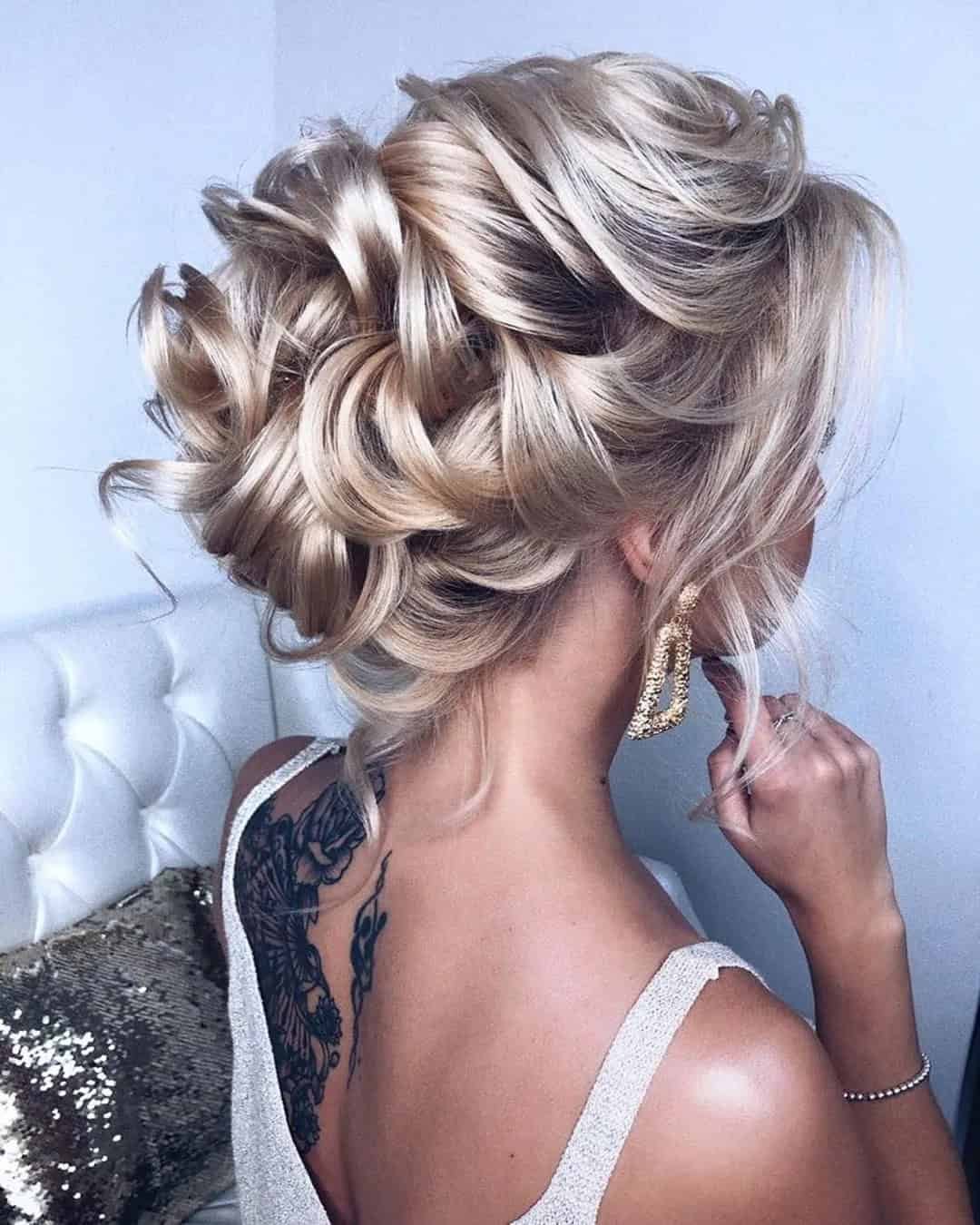
- Detailed back: If your dress has a stunning low or embellished back, wear your hair up — don’t hide it.
Consider Your Venue and Season
Be practical about the conditions:
- Outdoor / summer wedding: Updos survive heat, humidity, and wind far better than loose styles. Secure everything well.
- Winter wedding: More freedom — but static can be an issue; ask your stylist about anti-static products.
- Beachy / destination: Embrace texture — loose boho waves and braids suit the setting and handle breeze gracefully.
- Formal venue: Classic chignons, French twists, and polished buns match the formality.
UK weather is famously unpredictable — if there’s any chance of rain or wind, choose a style with staying power and have a backup plan (a beautiful hair accessory can rescue a style that’s losing its battle).
Popular Wedding Hairstyles
- Low chignon: Timeless, elegant, suits most dresses. The safest classic.
- Loose Hollywood waves: Glamorous and romantic; needs strong hold products to last all day.
- Textured low bun: Modern and relaxed — the “effortless” look that actually takes effort.
- Half-up, half-down: The best of both worlds; great for showing off long hair while keeping it out of your face.
- Braided styles: From fishtail crowns to braided updos — romantic and secure.
- Sleek low ponytail: Chic and modern; works beautifully with minimalist dresses.
Your Wedding Hair Timeline
- 6+ months before: Start growing or maintaining healthy hair. Get regular trims, deep condition, avoid drastic changes.
- 3 months before: Finalise your colour (don’t experiment with new colours closer than this).
- 2–3 months before: Book your hair trial. Bring photos, your veil or accessories, and ideally wear a top with a similar neckline to your dress.
- 1 month before: Confirm the final style with your stylist after the trial. Get a trim (not a restyle).
- 1 week before: Deep conditioning treatment. Don’t try anything new.
- Day before: Wash your hair (most updos hold better on day-old hair — confirm with your stylist).
Tips for the Trial
- Bring 3–5 reference photos of styles you love — and one or two you hate, so the stylist knows what to avoid.
- Bring your veil, headpiece, or any accessories you plan to wear.
- Wear a white or light-coloured top to mimic your dress.
- Take photos from every angle in natural light.
- Be honest. If you don’t love it, say so — that’s what the trial is for.
- Ask how it will hold up over 8+ hours and what touch-ups you might need.
Working With Your Stylist
In the UK, wedding hair stylists charge roughly £150–£400+ for bridal hair (trial usually £50–£100 separately), depending on region and complexity. Book early — good stylists are reserved 6–12 months ahead for peak wedding season (May–September). Ask to see their portfolio of real weddings, not just styled shoots. Check reviews on wedding directories like Hitched, and Which? also carries guidance on choosing reliable service suppliers.
FAQs
Should I wash my hair the day of the wedding?
Usually not — most stylists prefer day-old hair for updos because freshly washed hair is too slippery. Confirm with your stylist, as it varies by hair type and style.
How do I make my wedding hairstyle last all day?
Good prep (the right products for your hair type), plenty of pins (criss-crossed for grip), and a strong-hold hairspray. Ask your stylist for a mini emergency kit: spare pins, blotting papers, and lipstick.
Can I do my own wedding hair?
If you’re skilled and your chosen style is simple, yes — but most brides find a professional worth it for the lack of stress alone. At minimum, have a trial run so there are no surprises.
What if it rains on my wedding day?
Choose a style with hold (updos beat loose waves in rain), use anti-humidity products, and keep an umbrella for photos. Some of the most atmospheric wedding photos happen in the rain.
Conclusion
The perfect wedding hairstyle is one that suits your face, complements your dress, survives your venue, and — most importantly — feels like you on your best day. Start early, trial properly, and trust your stylist. Then forget about your hair and enjoy every minute.