
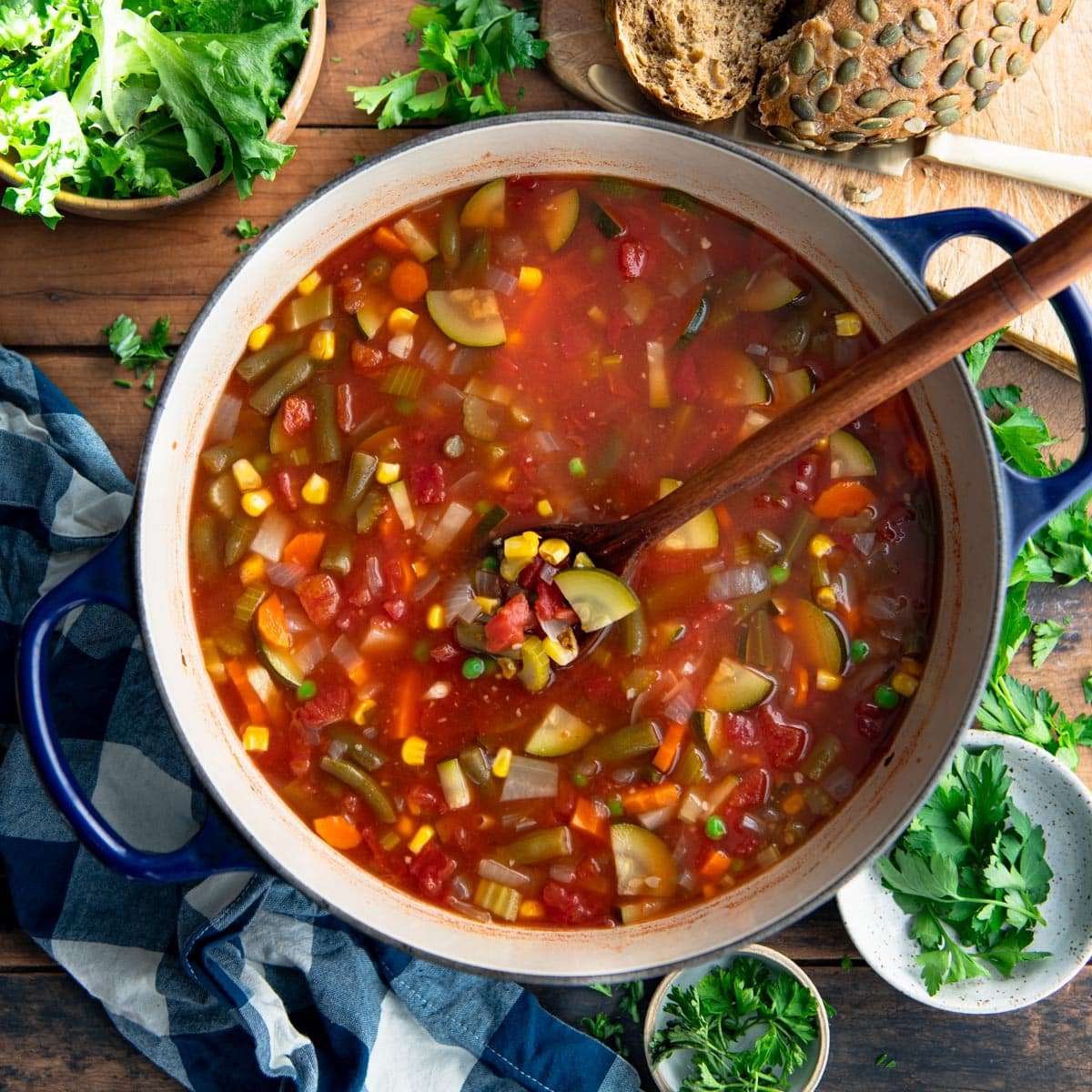
How to Make Soup From Leftover Vegetables (Any Veg, Every Time)
Half a cauliflower, three soft carrots, a leek that’s seen better days, some celery going bendy — the vegetable drawer of doom. Before you bin it all, know this: almost any vegetable can become a genuinely delicious soup. Once you learn the method for how to make soup from leftover vegetables, you’ll never throw away sad veg again, and you’ll have a free, healthy lunch waiting most weeks.
The universal method (works with any veg)
Forget specific recipes. This formula handles whatever you’ve got:
- Base (10 mins): Soften a chopped onion (and garlic if you have it) in butter or olive oil over medium heat until golden. This step is non-negotiable — it’s where the flavour starts.
- Add your veg (5 mins): Chop everything roughly — it all gets blended. Harder veg (carrots, parsnips, cauliflower) goes in first; softer stuff (courgettes, peppers, spinach) later. Sauté 5 minutes to wake up the flavours.
- Season: Salt generously, add your flavourings (see combos below).
- Cover with liquid: Stock is best, water is fine. Just cover the veg — too much liquid makes thin soup.
- Simmer 20-25 mins until everything is completely tender.
- Blend until smooth. Add cream, coconut milk or a knob of butter if you like it rich.
- Taste and adjust: More salt? A squeeze of lemon? A pinch of chilli? The final seasoning is everything.
Flavour combinations that never fail
- Carrot + coriander: ground coriander in the base, fresh coriander to finish. The classic for a reason.
- Leek + potato: butter, thyme, cream. Vichyssoise if you serve it cold and feel fancy.
- Tomato + red pepper: smoked paprika, basil. Roast the veg first for extra depth.
- Cauliflower + cheese: mature cheddar stirred in at the end, mustard powder in the base.
- Butternut squash + coconut: curry powder or Thai red curry paste, coconut milk, lime.
- Broccoli + stilton: the pub classic. Don’t overcook the broccoli or it goes grey and sulphurous.
- Mixed root veg + cumin: cumin and coriander, swirl of yoghurt. Tastes like autumn.
- Pea + mint: frozen peas count — mint from the garden, crème fraîche. Bright green and fresh.
What about veg that’s past its best?
Be honest with yourself: wilted is fine, slimy is not. Use veg that’s soft, bendy or slightly wrinkled — cooking and blending erase all of that. But bin anything that’s actually mouldy, slimy, or smells off; soup can’t rescue rot. Cut away dodgy spots generously. This is the same judgement call as knowing how much it costs to run an air fryer per hour — a small piece of kitchen knowledge that pays off every week.
Texture tricks
- Too thin? Simmer uncovered to reduce, or blend in a handful of red lentils (they dissolve and thicken), a potato, or a slice of bread.
- Too thick? Thin with stock or water — soup should coat a spoon, not stand up on its own.
- Grainy? Blend longer, and pass through a sieve if you’re feeling particular. A high-speed blender makes a real difference.
- Bland? Salt first, then acid (lemon juice or vinegar), then richness (butter, cream, olive oil). In that order. Bland soup is almost always under-salted.
- Toppings transform it: toasted seeds, croutons, crispy onions, a swirl of yoghurt, chilli oil, fresh herbs. A plain soup with great toppings beats a fancy soup with none.
Storage and batch cooking
Soup is the ultimate batch-cook food. It keeps 3-4 days in the fridge and 3 months in the freezer. Freeze in portion-sized containers (old yoghurt pots are perfect), leaving headroom for expansion. Label with the flavour and date — all blended soups look identical frozen, and “mystery orange soup” is less appealing than “carrot & coriander, Oct.”
Thaw overnight in the fridge or straight from frozen in a pan over low heat. Most soups reheat beautifully; cream-based ones can split slightly — a quick whisk fixes it. Dairy-free soups (coconut milk, olive oil based) freeze and reheat best of all.
If you’re packing lunch for the family, soup in a good flask is unbeatable — and while you’re at it, check how much a coffee costs on average in London to see how much your homemade soup-and-flask habit saves versus buying lunch out.
For more on safe storage of cooked foods, the NHS leftovers guidance covers the key timeframes.
How to make soup from leftover vegetables taste like a restaurant dish
The method gets you good soup; the finishing gets you restaurant soup. The difference is a handful of professional touches that cost almost nothing. Roast the veg first. Instead of sautéing, toss your leftover vegetables in oil and roast at 200°C for 25 minutes until caramelised at the edges, then make the soup from there. The Maillard reaction adds a depth that boiling alone never achieves — this one change transforms the result more than any other.
Finish with fat and acid. Restaurants mount soups with butter, swirl in cream, or finish with a thread of excellent olive oil — and then, crucially, add acid: lemon juice, sherry vinegar, or a spoonful of yoghurt. The fat gives body and richness; the acid lifts it and stops it tasting flat. Taste your soup, add a knob of butter and a squeeze of lemon, taste again. The difference is startling.
Garnish like you mean it. A soup’s garnish isn’t decoration — it’s texture and contrast. Toasted seeds or nuts for crunch, a swirl of cream or yoghurt for richness, chilli oil for heat, fresh herbs for brightness, crispy shallots or croutons for savouriness. Even the simplest carrot soup becomes a proper dish with toasted pumpkin seeds, a yoghurt swirl and a drizzle of chilli oil. Keep a “soup toppings” box in the cupboard: seeds, crouton ingredients, chilli oil, and some decent olive oil.
Serve it properly. Warm the bowls (hot soup in a cold bowl is lukewarm soup), serve with genuinely good bread — a crusty sourdough or warm naan — and you’ve turned “leftover soup” into a dinner you’d serve to guests. Which, with these finishes, you absolutely should.
The takeaway
Onion base, whatever veg you’ve got, seasoning, liquid, simmer, blend, adjust. That’s the whole method, and it works with practically any vegetable combination. Keep a bag in the freezer for veg that’s fading, run a weekly soup night, and watch your food waste — and your lunch bill — shrink.