
How Do I Dress for Unpredictable British Summer Weather?
How Do I Dress for Unpredictable British Summer Weather?
British summer is a weather lottery: 28 degrees and glorious on Saturday, 16 degrees and sideways rain on Sunday, and occasionally all four seasons before lunch. The classic mistake is dressing for the forecast high — then shivering through the afternoon when the cloud rolls in. I’ve been caught in a summer downpour in a sundress more times than dignity allows. “how do I dress for unpredictable british summer weather” — let’s get into it properly, with the detail and straight talking the question deserves.
The answer isn’t checking the forecast obsessively (though do that too) — it’s a layering system that handles 15-degree swings without requiring a costume change. Here’s the formula, the essential pieces, and how to look good while prepared for anything.
The layering formula: 3 layers, always
Base layer: whatever suits the warmest expected temperature — a tee, vest, or light shirt. This is your “if the sun comes out” outfit, and it should look complete on its own. Middle layer: a light knit, overshirt, or thin jumper for when the temperature drops — the piece that takes you from 24° comfort to 17° comfort. Outer layer: a packable waterproof or water-resistant jacket — not an umbrella (useless in British wind), a proper layer.
The rule: never leave home in summer without the outer layer, however nice the morning looks. A packable rain jacket (£30–£60, Uniqlo/Regatta/Mountain Warehouse) scrunches into a bag and has saved more British days out than any other garment. For commuting and smarter occasions, a lightweight trench or water-resistant blazer does the same job more elegantly — see the best raincoats for commuting.
Fabrics matter: cotton and linen breathe in heat but stay wet when rained on; light merino regulates temperature across the widest range (cool when warm, warm when cool) and resists odour — the secret weapon fabric for unpredictable weather. Avoid: heavy denim (miserable wet), silk (water-spots), and anything dry-clean-only when rain is possible.
- Base: tee/vest/shirt — complete on its own if sun appears
- Middle: light knit or overshirt for the temperature drop
- Outer: packable waterproof — non-negotiable, whatever the morning looks like
- Fabrics: light merino is the unpredictable-weather champion
Footwear: the hardest decision
Feet are where British summer defeats most outfits. The contenders: trainers (safe, comfortable, handle rain if not downpours), sandals (glorious in sun, miserable in rain — and British pavements in rain are grim), and the compromise options — leather sandals with closed toes, canvas shoes, or waterproof trainers.
My system: check the rain probability. Under 20%: sandals if the outfit wants them. 20–60%: closed shoes (trainers, loafers, canvas). Over 60%: waterproof footwear, no debate. Keep a pair of emergency flats or trainers at the office/desk for the day the forecast lies — every London office has a cupboard of abandoned umbrellas and emergency shoes for good reason.
Socks: no-show trainer socks for the trainer days, and accept that sandal days mean committing — there’s no graceful mid-day switch without carrying spares (which, honestly, some people do — a folded pair of flats in a tote bag is a legitimate strategy).
Outfits that work across the swing
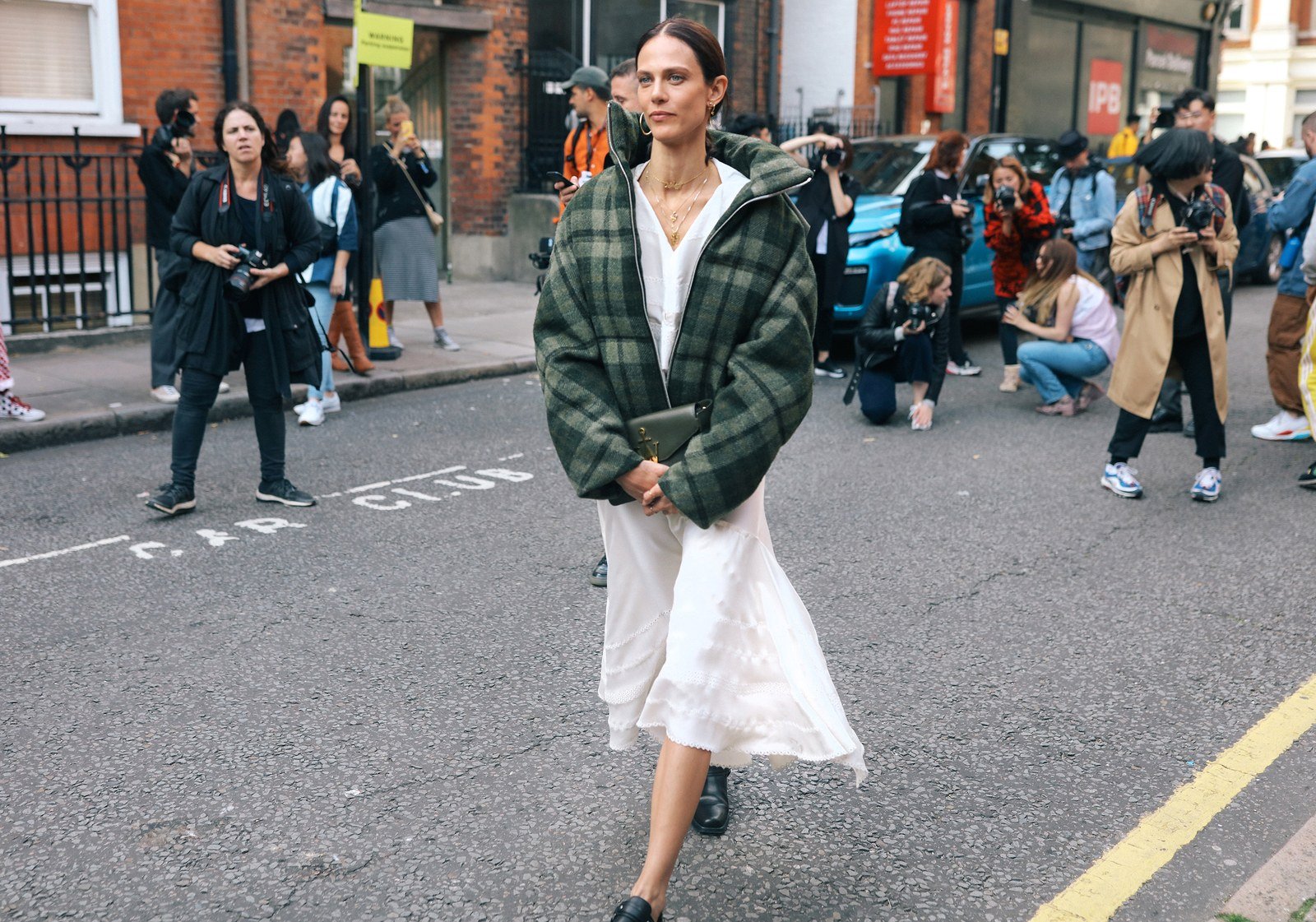
The pieces that handle 16°–26° gracefully: midi dresses (legs out when warm, add tights and a jacket when cool — the most adaptable single garment), linen trousers with a tee and overshirt, jeans with a vest top and light jacket (the uniform of British summer), and jumpsuits in breathable fabric.
Colour and pattern strategy: mid-tone colours and patterns hide the rain spots and sweat marks that white and pale grey reveal brutally. A patterned midi dress is the ultimate unpredictable-weather garment — looks intentional across temperatures, hides everything, layers easily. White linen looks incredible for the two hours before the first rain; navy linen looks good all day.
The bag question: a tote or crossbody that fits the folded rain jacket, sunglasses, and (optimistically) sunscreen. British summer bags are bigger than Mediterranean summer bags — you’re carrying weather insurance. A compact umbrella as backup for the jacket (for downpours where jackets aren’t enough) completes the kit — but the jacket is primary, the umbrella secondary.
The forecast: how to actually read it
Don’t just check the temperature — check the “feels like,” the rain probability by hour, and the wind. A 22° day with 25mph wind feels like 17°; a 19° still sunny day feels glorious. The Met Office app’s hourly breakdown is the gold standard; look at the trend through the day, not just the morning.
Plan for the day’s range, not its average: if it’s 14° at 8am and 24° at 2pm, dress for 14° with removable layers, not for 19°. Removable beats predictive every time — you can take off a layer, but you can’t conjure one. And the specific British skill: the optimistic layer — the sunglasses and the rain jacket in the same bag, because both might be needed before lunch. For winter’s version of this problem, see winter coat costs.
The summer emergency kit: what lives in your bag
Veteran British summer navigators carry a kit. The essentials: a packable rain jacket (the non-negotiable — Uniqlo’s pocketable parka or similar, £30–£40, scrunches to fist-size), a compact umbrella (for downpours where jackets aren’t enough), sunglasses (because the sun does appear, suddenly, and squinting ruins photos), and sunscreen (SPF in your bag from May — British sunburns are real and always surprising).
The nice-to-haves: a light scarf or pashmina (evenings cool fast, air conditioning is arctic, and it dresses up outfits), fold-up flats (if you’re in sandals and the heavens open, dry feet matter), a plastic bag (for the wet jacket/soggy umbrella — contains the damp), and a portable phone charger (you’ll check the forecast seventeen times).
This kit lives in your work tote or car from June to September, not assembled daily — that’s the trick. A packed “summer bag” by the door means you’re never caught out, whatever the sky does. The smug preparedness of producing a rain jacket when colleagues are drenched is worth the small bag space a hundred times over.
The mindset shift: prepared, not paranoid
There’s a fine line between being prepared and letting the forecast run your life. The goal of the layering system is freedom from both the weather and the worry — once the kit is in your bag and the layers are a habit, you stop checking the forecast obsessively and just go. British summer is at its best when you’re dressed for all of it: the sudden sunshine feels like a gift rather than a trap, and the rain becomes a minor inconvenience rather than a disaster.
And remember the ultimate British summer truth: the people having the most fun are rarely the best dressed for the weather — they’re the ones who dressed sensibly enough to forget about it entirely. Layers on, jacket in bag, sunglasses ready. Whatever the sky does, you’re covered.
How Do I Dress for Unpredictable British Summer Weather: The Short Answer
Three layers always (base, middle, packable waterproof), footwear matched to rain probability, and dress for the day’s temperature range — not its average. Related reading: BBC Weather forecasts.