
How Do I Clean Tarnished Silver Jewellery at Home?
How Do I Clean Tarnished Silver Jewellery at Home?
Tarnished silver looks neglected — that yellow-brown-black film that dulls shine and makes good pieces look cheap. But tarnish isn’t damage: it’s a surface chemical reaction (silver + sulphur in the air), and it reverses easily with the right methods. I’ve restored blackened silver chains to mirror shine in minutes, and I’ve also seen well-meaning cleaning attempts destroy pieces. The method matters enormously. If “how do I clean tarnished silver jewellery at home” is the question you’ve been asking, here’s the straight answer — practical, honest, and based on what actually works.
Here are the safe home methods ranked by effectiveness, what never to do, and how to prevent tarnish in the first place.
Method 1: the silver polishing cloth (start here)
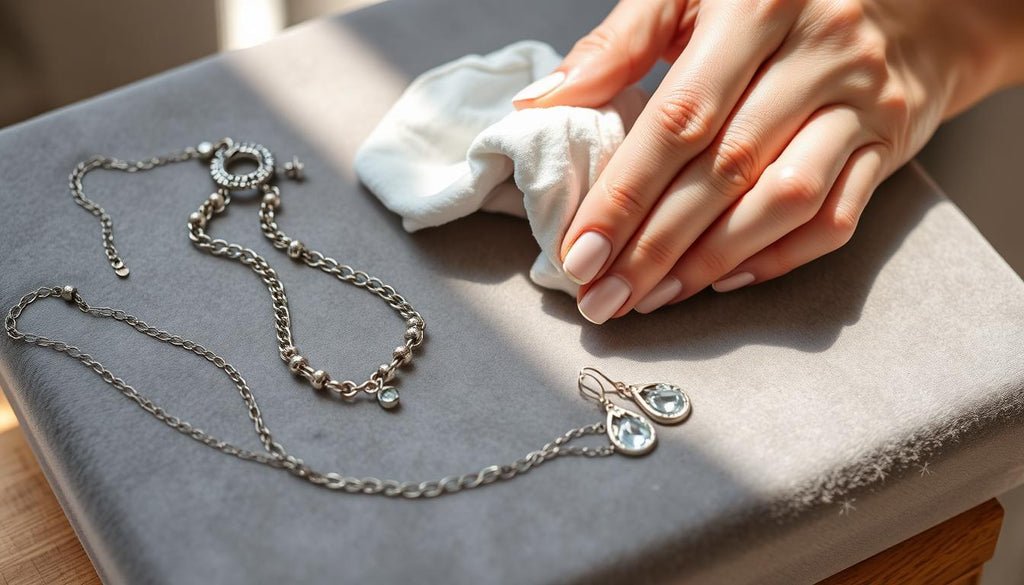
A proper silver polishing cloth (£5–£8, impregnated with cleaning agents — Goddard’s, Town Talk) is the first and often only tool you need. Rub gently with the cloth — the tarnish transfers to the cloth, the shine returns. It takes seconds for light tarnish, minutes for heavier. No liquids, no risk, no mess. Every silver owner should own one; it’s the highest-value £6 in jewellery care.
The cloth works for: chains, bangles, rings, earrings — all solid silver pieces. It doesn’t work well for: deep crevices in intricate designs (the cloth can’t reach), or very heavy black tarnish (possible, but slow). The cloth itself lasts months of use — when it’s black all over, replace it (don’t wash it — washing removes the impregnated cleaners).
Technique: rub in one direction, not circles (avoids micro-scratching), use light pressure (the chemicals do the work), and support delicate pieces (don’t bend chains while scrubbing). For pieces with gemstones, avoid rubbing the stones with the cloth — clean around them. This method is safe for virtually all solid silver jewellery, which is why it’s first.
Method 2: the baking soda bath (for heavy tarnish)
For heavily tarnished pieces, the aluminium-foil baking soda bath is remarkably effective: line a bowl with aluminium foil (shiny side up), add hot (not boiling) water and a tablespoon of bicarbonate of soda per litre, submerge the silver touching the foil, and watch the tarnish transfer electrochemically — minutes for most pieces. Rinse in clean water, dry thoroughly with a soft cloth.
The science: it’s a gentle electrochemical reaction that reverses the tarnish without abrasion — safer than scrubbing for intricate pieces. It works brilliantly on chains, textured pieces, and anything the cloth can’t reach. Limitations: it doesn’t polish (pieces come out clean but matte — follow with the cloth for shine), and the smell (rotten eggs — that’s the sulphur leaving, a good sign, but ventilate).
Critical warnings: NEVER use this on pieces with gemstones (especially pearls, opals, turquoise, amber — porous and delicate stones are damaged by the bath), oxidised/antiqued finishes (the bath removes the intentional darkening), or silver-plated items (it can strip thin plating). When in doubt about stones or finishes, stick to the cloth. For gold jewellery, different rules apply — see gold vs silver value.
- Silver cloth (£5–£8): first choice, safe for everything solid silver
- Baking soda + foil bath: for heavy tarnish, no stones, no plating
- Never on: pearls, opals, porous stones, oxidised finishes, plated pieces
- Rinse and dry thoroughly after any wet method
What never to do
Toothpaste: the classic internet advice, and it’s terrible — toothpaste is abrasive (it’s designed to polish enamel, which is harder than silver) and leaves micro-scratches that dull silver permanently. It “works” in the sense that it removes tarnish along with a layer of silver. Never use it. Similarly: baking soda paste scrubbed directly (abrasive — the bath method is fine, scrubbing isn’t), bleach or chlorine (corrodes silver), and ultrasonic cleaners on pieces with stones or glued settings (vibration loosens them).
Silver dip (the liquid immersion cleaners): effective but harsh — they strip tarnish aggressively and can damage patina, stones, and plating. Professionals use them carefully; home users often overdo it. If you use dip, follow instructions exactly, rinse thoroughly, and never leave pieces soaking. Honestly, the cloth + bath combination handles everything dip does, more safely.
The over-cleaning trap: obsessive polishing wears silver down over years — silver is soft, and every polish removes a microscopic layer. Clean when tarnished, not on a schedule. And “cleaning” plated silver pieces aggressively wears through the plating to the base metal — gentle cloth only for plated items, and accept that replating (£20–£40) is eventually needed.
Preventing tarnish (better than cleaning)
Storage is prevention: individual pouches or compartments (silver touching silver is fine; silver touching other metals accelerates tarnish), anti-tarnish strips or pouches (£5 for a pack — absorb sulphur), a piece of chalk in the jewellery box (absorbs moisture), and silica gel packets. The enemy is air, moisture, and sulphur — sealed, dry storage wins.
Wear it: counterintuitively, regularly-worn silver tarnishes less — skin oils protect it, and friction keeps it polished. The blackened chain is always the one left in the box for a year. Last on, first off: perfume, hairspray, lotion, and sweat all accelerate tarnish — apply products, let them dry, then jewellery; remove jewellery before exercise, swimming, and cleaning.
For the jewellery worth protecting, see affordable jewellery brands (buying pieces worth maintaining) and ring resizing for keeping favourite pieces wearable. A £6 cloth and sensible storage keep silver beautiful indefinitely — tarnish is a maintenance task, not a tragedy.
Cleaning silver with gemstones: the safe approach
Gemstones change the rules. The cloth-only rule: for any silver piece with stones, use the polishing cloth gently around (not over) the stones — it’s safe for the metal and won’t harm most settings. Never use the baking soda bath with stones: pearls, opals, turquoise, amber, emeralds, and onyx are damaged by heat, chemicals, or immersion; even hard stones (diamonds, sapphires, rubies) can have treatments or glued settings that the bath ruins.
For grimy settings: warm water with a drop of mild washing-up liquid, a soft toothbrush worked gently around (not on) the stones, rinse quickly, dry immediately and thoroughly — water left in settings causes damage over time. Dry with a soft cloth, then finish the silver areas with the polishing cloth. This handles 95% of gemstone-piece cleaning safely.
Know when to go professional: valuable pieces (£200+), antique jewellery, loose stones, or anything you’re unsure about — a jeweller’s clean (£10–£25) is cheap insurance. They have ultrasonic cleaners (safe in professional hands for appropriate pieces), steam cleaners, and the expertise to spot loose settings before they become lost stones. Annual professional checks for valuable pieces catch problems early — the £15 check that saves a £500 stone is the best value in jewellery care.
How Do I Clean Tarnished Silver Jewellery at Home: The Short Answer
A £5–£8 silver polishing cloth handles 90% of tarnish safely — for heavy tarnish use the foil and baking soda bath (never on stones, pearls, or plating), and never use toothpaste. Related reading: sterling silver.