
How to Bleed a Radiator: Step-by-Step (Beginner-Friendly)
How to Bleed a Radiator: Step-by-Step (Beginner-Friendly)
Cold spots at the top of your radiators? Gurgling noises? Your radiators probably have trapped air — and bleeding them is a 10-minute DIY job that makes your heating noticeably better. Here’s how to bleed a radiator step by step, written for complete beginners.
What you’ll need
- A radiator bleed key (£1–£2 from any DIY shop — buy a couple, they vanish)
- An old towel or cloth
- A small bowl or mug
- That’s it. No plumber, no special skills.
Step-by-step
Step 1: Turn the heating on
Run your heating for 10–15 minutes so pressure builds up, then turn it off and wait for radiators to cool slightly. (Bleeding with the system running can draw more air in.) Identify which radiators need it: feel for cold patches at the top, or listen for gurgling.
Step 2: Find the bleed valve
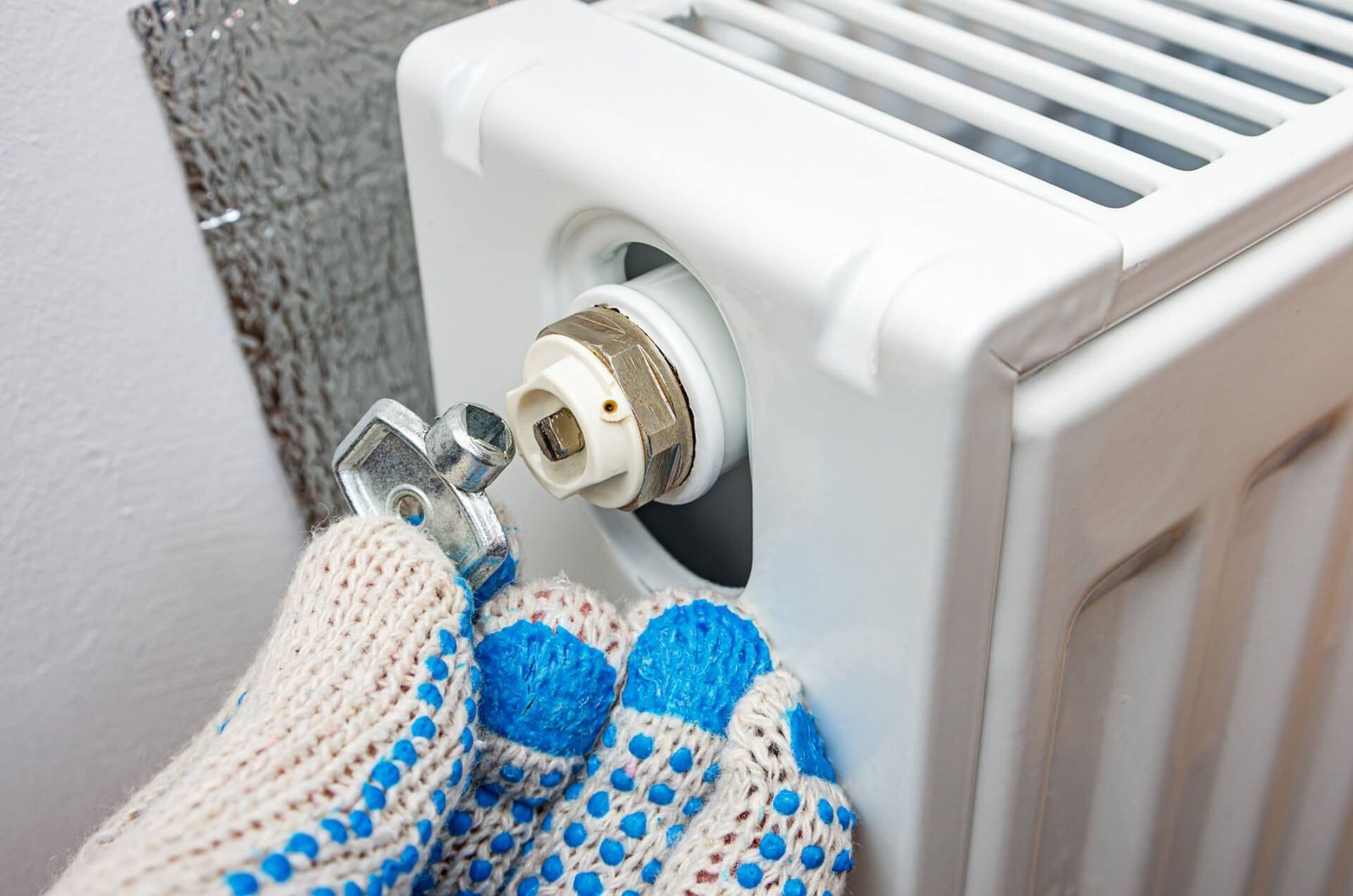
It’s a small square-headed valve at the top corner of the radiator — usually at the opposite end from the thermostatic valve. On most UK radiators it’s obvious once you look.
Step 3: Protect the wall and floor
Hold the cloth under the valve and have the bowl ready. The water that comes out can be dirty (blackish — that’s normal sludge, not a disaster).
Step 4: Open the valve slowly
Fit the bleed key and turn anti-clockwise about a quarter-turn. You’ll hear hissing — that’s the trapped air escaping. Don’t open it fully; a quarter-turn is plenty.
Step 5: Wait for water
When the hissing stops and a steady trickle of water comes out, close the valve (clockwise) promptly. Don’t overtighten — snug is enough.
Step 6: Check the boiler pressure
Bleeding drops system pressure. Check your boiler’s pressure gauge — it should read 1–1.5 bar when cold. If it’s below 1, top up via the filling loop (your boiler manual shows how; it’s a 2-minute job).
Step 7: Repeat and test
Bleed any other affected radiators, then turn the heating back on and check they’re warming evenly top to bottom.
Cold at the BOTTOM? That’s different
Bleeding fixes air (cold tops). If your radiators are cold at the bottom, that’s sludge buildup — a different problem. See our guide on why radiators are cold at the bottom for what to do about it.
Common mistakes
- Bleeding with the heating on — can pull air back in
- Forgetting to check boiler pressure afterwards — low pressure stops the heating working entirely
- Overtightening the valve — it can snap; replacements are fiddly
- Ignoring dirty water — black water is normal, but if it’s very sludgy across all radiators, consider a system flush (a job for a pro)
How often should you do this?
Once a year, ideally at the start of heating season (October). If you’re bleeding the same radiator every few weeks, there’s an underlying issue — possibly a leak letting air in, or corrosion. Time to call a heating engineer. And while you’re at it, make sure your boiler’s serviced — see how often to service your boiler.
The bottom line
Bleeding a radiator is genuinely one of the easiest DIY jobs in the home: key, quarter-turn, hiss, water, close, check pressure. Ten minutes, zero cost, warmer house. If it doesn’t fix the cold spots, the problem is sludge or pressure — and that’s when you escalate beyond the bleed key.
What if the bleed valve is stuck or broken?
Old bleed valves seize — especially in hard-water areas or on radiators that haven’t been bled in a decade. Don’t force it: bleed valve keys are soft brass and the valve squares round off easily. If it’s stuck: spray with WD-40 or penetrating oil, wait 15 minutes, and try again with a proper bleed key (not pliers — they chew the square). Tap gently around the valve body to break corrosion.
If the square is already rounded off, you have options: bleed valve replacement keys with a tighter grip, or as a last resort, carefully gripping with small pliers while supporting the valve body (to avoid twisting the whole fitting). If the valve snaps or leaks after bleeding, you’ll need a replacement bleed valve (£3–£5) — which means draining that radiator down, a 30-minute job. At that point, honestly, it’s a £80–£120 plumber visit — or a good excuse to learn radiator draining, which isn’t hard, just wet.
Bleeding FAQs
Should I bleed all radiators or just the cold ones? Just the ones with symptoms (cold tops, gurgling). Bleeding healthy radiators pointlessly drops system pressure and wastes your time.
Which radiators do I bleed first? Start with the downstairs radiators, then upstairs — or more precisely, start with the one furthest from the boiler and work towards it. Either order works; the key is checking pressure at the end.
How do I top up the boiler pressure? Via the filling loop — usually a flexible braided hose under the boiler with one or two valves. Open the valve(s) slowly, watch the gauge rise to 1–1.5 bar, close the valve(s). Your boiler manual shows the exact setup — it varies by model. If pressure keeps dropping after topping up, you have a leak — call an engineer.
Is the black water dangerous? No — it’s magnetite sludge (iron oxide from inside the radiators), not toxic, but it stains everything permanently. Wear gloves, protect carpets, and don’t wear good clothes. If all radiators produce very black water, consider a system clean (see cold radiator bottoms).
Can I bleed a radiator with the heating on? You shouldn’t — circulating water can draw more air in through the open valve. Turn the heating off, wait 10 minutes for things to settle, then bleed.
Making bleeding part of your heating routine
Bleeding shouldn’t be a crisis response — make it seasonal maintenance. Every October (before the heating season): walk the house, feel every radiator top-to-bottom, bleed any with cold spots, check boiler pressure, top up if needed. 15 minutes, once a year — and your heating runs efficiently all winter. After any system drain-down (plumber visit, new radiator, leak repair): bleed everything — air enters whenever the system is opened. After summer: radiators that sat idle for months often develop air pockets; a quick autumn bleed catches them.
Keep a bleed key on the boiler (magnetic hook, £2 — so it’s there when needed, not lost in a drawer), and note which radiators needed bleeding — if the same one needs it every few months, that’s a symptom (possible micro-leak drawing in air, or corrosion generating hydrogen gas — hydrogen from corrosion smells slightly eggy and indicates the system needs inhibitor). Pair it with the boiler service (see servicing guide): bleed in October, service in summer, and the heating system is maintained year-round with minimal effort. Boring, effective, cheap — the holy trinity of home maintenance.
Related reading
If bleeding doesn’t fix cold spots, read why radiators are cold at the bottom — and see the Energy Saving Trust’s radiator advice.