
Eddie Murphy in Numbers: Net Worth, Age, Wife, Family and Career
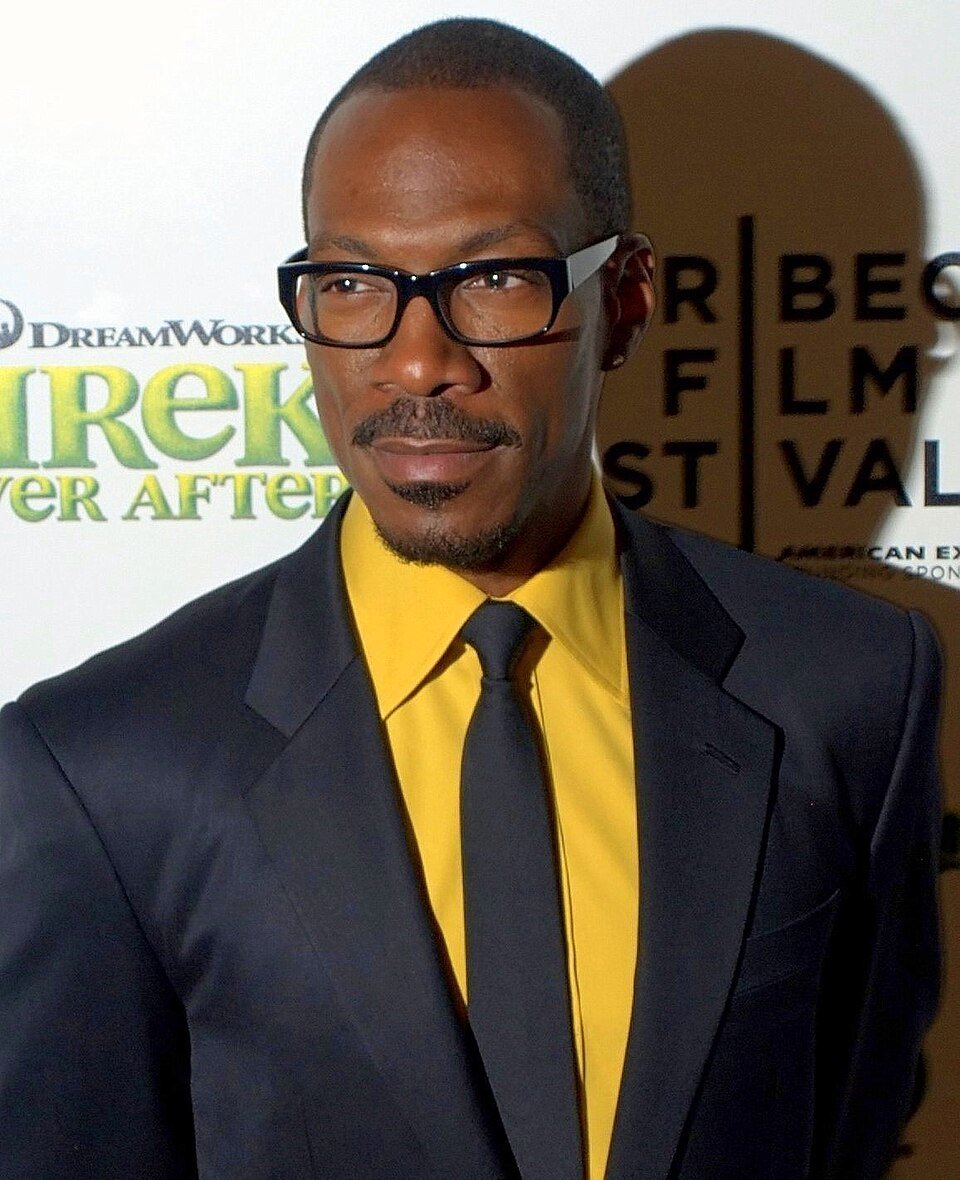
Eddie Murphy in Numbers: Net Worth, Age, Wife, Family and Career
The star, from Brooklyn to fame
Eddie Murphy was the biggest comedy star in the world in the 1980s, and by a distance. He arrived on a sketch programme while still in his teens, moved into pictures and produced a run of successes that made him, for a decade, the performer studios built their years around. The pace later slowed, the work became more selective, but the position never entirely went: he remains one of the highest-earning performers in the history of his field.
Celebrity Net Worth puts his fortune at $200 million, the 2026 figure repeated by Parade. That is the figure this profile uses, attributed at every mention. Two much larger numbers travel with his name and both are kept firmly apart from it in the money part of this profile : the roughly $7 billion his pictures have taken at box offices worldwide, which is box office and not wealth, and the peak fees of more than $20 million a picture that he commanded at his height, which were earnings in the years they were paid.
He is 65, married since July 2024, and the father of ten children. His recent work has returned, deliberately, to the characters and the kind of pictures that made him, and found a large audience waiting. This profile sets out the verified record: the Brooklyn beginning, the family, the career in its stages, and the fortune as it can honestly be counted.
The money after 48 Hrs. and Trading Places
The figure is $200 million, from Celebrity Net Worth, its 2026 figure repeated by Parade, and it is the only figure this profile prints as his net worth. It is a large fortune and, set against the earnings record, a plausible one: Murphy was, for a period in the 1980s and again in the 1990s, among the most highly paid performers in the world, and a fortune of this size is what remains, on the published estimate, after four decades of earning at that level and the costs and taxes that attend it.
The two larger numbers must be labelled and set apart. The first is box office. His pictures have taken around $7 billion at box offices worldwide, a total accumulated across more than forty years of releases. That money was taken by cinemas, distributors and studios, in proportions set by contracts this profile has not seen; a performer’s share of it, even a star’s share, is a fraction of the whole. Box office measures the drawing power of the pictures, and his is among the greatest ever recorded in comedy. It does not measure his wealth, and it is never used as such here.
The second is fees. At his peak Murphy commanded more than $20 million a picture, a level of fee reached by very few performers in any era, sometimes with a share of a picture’s returns on top. Those were earnings: money paid in particular years, for particular work, taxable and spent and invested as all earnings are. They explain how a fortune of $200 million was built. They are not themselves the fortune, and adding a career’s fees together to produce a present-day total is an error this profile does not make.
Home base in Beverly Park
His best-known property is the mansion in Beverly Park, Los Angeles, which he bought in 2001 for a reported $10 million. That figure is a purchase price from a quarter of a century ago, reported at the time; no current value for the property has been published by a source this profile can rely on, and none is asserted here. Earlier, he kept the Bubble Hill estate at Englewood, New Jersey, through the height of his fame, and sold it in the middle 2000s. Both properties are recorded as facts of the record — a purchase price in 2001, a sale in the middle 2000s — and neither is converted into a present-day asset value, because no reliable published figure exists to convert them with.
What cannot be counted should also be stated. No audited account of his assets has been published, and the value of his property and investments is a matter of estimate. Celebrity Net Worth’s $200 million, read with $7 billion of box office and $20 million fees labelled as what they are and kept out of the total, fairly represents the scale of what that record left behind.
What 48 Hrs. and Trading Places started
1980 — The Sketch Programme
Murphy joined the cast of the leading sketch programme in 1980, aged nineteen, and became its outstanding performer within a season. The characters he created there are still the ones by which the programme’s early 1980s are remembered, and he carried a show that had been written off by its critics back to the centre of the culture. He stayed for four years, leaving in 1984 with a film career already under way, which is the order in which the two careers overlapped: the pictures began while the programme was still running.
1982 — 48 Hrs. and Trading Places
His first picture, 48 Hrs., in 1982, placed him opposite an established leading actor and he took the picture over; it was a substantial success and it established, immediately, that the presence worked on a large screen. Trading Places followed in 1983, a comedy built on a wager between two wealthy men, and confirmed the position. By the age of twenty-two he had two major hits and a reputation as the most naturally gifted comic performer of his generation, a reputation the next picture turned into something larger.
1984 — Beverly Hills Cop
Beverly Hills Cop, in 1984, made him a star of the first rank. The picture took more money than any other of its year, its character — a Detroit detective working a case among the wealthy of California — became one of the defining screen creations of the decade, and it generated sequels across forty years, the most recent arriving in 2024. The run that followed through the 1980s, including Coming to America in 1988, in which he played several parts under heavy make-up, a device that became a signature, placed him for a period in a commercial position with no close rival in comedy.
1996 — The Nutty Professor and the Family Audience
The 1990s brought a quieter commercial period and then a second reinvention. The Nutty Professor, in 1996, again built around Murphy playing multiple parts, was a major success and repositioned him for a family audience without losing the adult one. Work in animated pictures followed, most prominently as the voice of a donkey in a series that began in 2001 and became one of the most successful of its kind, introducing him to an audience that had not been born when Beverly Hills Cop was released. Charlie Murphy worked in this period as a performer and writer in the same professional world, including on sketch programmes of the era.
2006 — Dreamgirls and Eddie’s contribution
Dreamgirls, in 2006, gave him the most critically honoured part of his career: a dramatic role as a fading star of an earlier era, played straight, for which he won major awards and was nominated for an Academy Award. He starred in the picture alongside Jamie Foxx, and readers following that pairing can consult Jamie Foxx’s net worth profile for the record of the other leading performer in it. The part settled a question that the comedy had always left open, about what he could do with serious material, and it remains the performance critics reach for when the full range of the career is argued.
2019 — The Return
After a period of reduced activity, Murphy returned in 2019 with a picture about the making of a low-budget production in the 1970s, playing its determined central figure, and the performance was received as the best of his later career. He followed it by returning to the programme where he had started, as guest presenter, for the first time in thirty-five years, in an appearance that drew the largest audience the programme had had in years. The message of both appearances was the same: the ability had not gone anywhere, and neither had the audience.
2024 — The Detective Again
In 2024 he returned to the Beverly Hills detective for a fourth picture, forty years after the first, released to a large audience on a streaming platform. The same year he married Paige Butcher in Anguilla. The combination is characteristic of the present phase of his career: the work is selective, it trades knowingly on the creations that made him, and it is done on terms he sets, at a pace he chooses, which is the position that a forty-year career at his level is supposed to arrive at.
Born in Brooklyn, New York: the short version
| Born in Brooklyn, New York: the short version | Details |
|---|---|
| Born | 3 April 1961, Brooklyn, New York |
| Age | 65 |
| Net Worth | $200 million (Celebrity Net Worth, 2026 figure repeated by Parade) |
| Height | 5 ft 10 in (1.78 m) |
| Weight | No reliable published figure exists |
| Wife | Paige Butcher (partner since 2012; married 9 July 2024, Anguilla) |
| Children | Ten: Eric (b. 1989), Bria (b. 1989), Christian (b. 1990), Myles (b. 1992), Shayne (b. 1994), Zola (b. 1999), Bella (b. 2002), Angel (b. 2007), Izzy Oona (b. 2016) and Max Charles (b. 2018) |
| Parents | Charles Edward Murphy (d. 1969) and Lillian Murphy (d. 2000) |
| No verified personal account |
Love and life with Paige Butcher
Murphy’s wife is Paige Butcher. They have been partners since 2012 and were engaged from 2018, and they married on 9 July 2024 in Anguilla. She is carried in this profile’s title and ledger as his wife, which is what the record now supports, superseding any older description of her as his partner. The marriage is the most recent settled fact in his family life and it is stated here at its full value: a marriage, in 2024, after a partnership of twelve years.
His first marriage, to Nicole Mitchell Murphy, ran from 1993 to 2006. Five of his children were born during that marriage. A ceremonial union with Tracey Edmonds in 2008 is recorded in the public record as not legally completed; it is not counted as a marriage in this profile, and it is mentioned only so that the record of his marriages is complete and accurate rather than tidier than the facts.
He has ten children, born across three decades: Eric, born in 1989; Bria, born in 1989; Christian, born in 1990; Myles, born in 1992; Shayne, born in 1994; Zola, born in 1999; Bella, born in 2002; Angel, born in 2007; Izzy Oona, born in 2016; and Max Charles, born in 2018. The two youngest are his children with Paige Butcher. Several of the older children work in the industry themselves, in acting, modelling and production, and appear in public on their own account. This profile records the family as documented — ten children, the dates as published — and goes no further into private matters.
His parents complete the picture: Charles Edward Murphy, who died in 1969, and Lillian Murphy, who died in 2000. His father’s early death is one of the fixed facts of his biography, present in every account of his upbringing, and his mother’s lifetime reached to the turn of the century, long enough to see her son’s career at its full height and into its second phase. Charlie Murphy, who died in 2017, appears in this profile in the career section , in the professional capacity in which he belongs to this record: as a performer and writer who worked on programmes and pictures in Murphy’s professional world.
A 1961 childhood in Brooklyn
Eddie Murphy was born on 3 April 1961 in Brooklyn, New York, and raised largely in Roosevelt, on Long Island, where the family settled. His father, Charles Edward Murphy, died in 1969, when his son was eight. His mother, Lillian Murphy, died in 2000, by which time her son had been one of the most famous performers in the world for close to twenty years.
The comedy came early and it came from imitation: voices, characters, whole routines built from the performers he watched. By his middle teens he was performing stand-up in clubs, under age and working rooms that were not designed for a schoolboy, and winning the small competitions that marked out a prospect. The material was precocious and so was the delivery. Nothing in the record suggests a long apprenticeship; he was, by every published account, recognisably the performer he would become while he was still in his teens, waiting only for a stage large enough.
That stage arrived in 1980, when he joined the cast of the country’s best-known sketch programme at nineteen. It is worth pausing on the timing. The programme was in a difficult period and he became, very quickly, the reason much of its audience watched it. A performer of nineteen carrying a flagship programme is rare in any era; it set the pattern of a career in which the rises were steep, the peaks very high, and the quieter periods a matter of choice and of material rather than of ability.
The life, as it stands now
Murphy’s position at 65 is that of a performer whose best work is forty years old and still current. The detective he created in 1984 was still drawing a large audience in 2024; the characters he created at nineteen are still quoted; and the dramatic part of 2006 stands as evidence that the range was always wider than the comedy required. He works now when he chooses, on material that connects to what made him, and the audience has shown, repeatedly, that it will follow him there.
On the money, the position is a single attributed estimate: $200 million from Celebrity Net Worth, built on peak fees in this profile $20 million a picture and kept strictly separate from the $7 billion his pictures have taken, which is box office and not wealth. A fortune of that size, from a start in Brooklyn and the clubs of Long Island, places him where the record has always placed him — at the top of the commercial history of his field, with the count, for once, the least remarkable thing about the career.