
Daniel Craig’s Career and Wealth: Net Worth, Age, Wife and Family
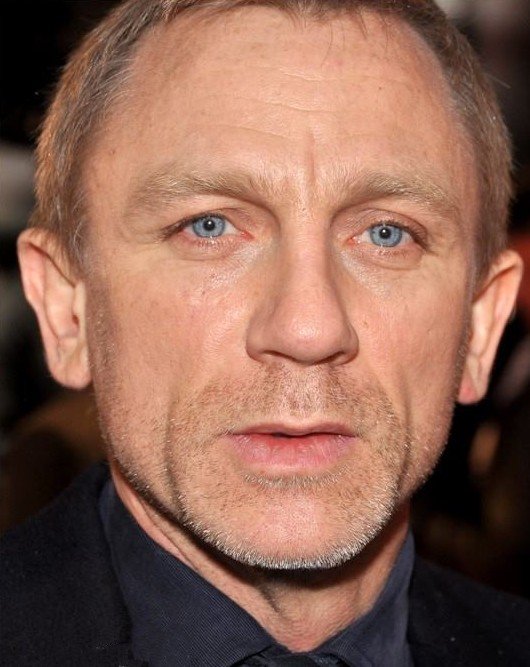
Daniel Craig's Career and Wealth: Net Worth, Age, Wife and Family
Partners, Children and Home: Daniel Away From Work
Craig’s wife is Rachel Weisz. They married on 22 June 2011 in New York — verified — in a small ceremony, having worked together that year on a picture described in the career section. The marriage is the central fact of his present family life, and the two have guarded its privacy consistently, giving few interviews about it and keeping their daughter’s life out of public view.
His previous marriage was to Fiona Loudon; they married in 1992 and divorced in 1994. His two daughters are Ella Loudon, born in 1992, whose mother is Fiona Loudon, and Grace Craig, born in September 2018, whose mother is Rachel Weisz. The ledger’s Children row counts those two daughters and no one else. Craig is also stepfather to Henry Aronofsky, born in 2006, Weisz’s son with Darren Aronofsky; Henry is recorded here as a stepson, labelled as such, and is not counted in the Children row. The distinction matters to the record and this profile keeps it exact.
His father, Timothy John Wroughton Craig, died in 2020. His mother is Carol Olivia Craig, née Williams. Both parents are recorded in the ledger. Taken whole, the family picture is of a man whose public fame is enormous and whose private arrangements are deliberately small in footprint: one current marriage of fifteen years, an earlier short marriage recorded as history, two daughters across those two chapters of his life, and a stepson acknowledged in his proper place.
Daniel Has More to Give
Daniel Craig’s position, on the verified record, is that of a 58-year-old actor with a net worth of $200 million on Celebrity Net Worth’s current estimate and $160 million on its earlier one, married to Rachel Weisz since 22 June 2011, father of two daughters, stepfather to Henry Aronofsky, five Bond pictures behind him and a working detective franchise in front of him. That is the whole of the position, stated whole.
The assessment from this desk is that Craig’s career is a study in leaving at the right time. He took the most contested casting in modern cinema, made it his own for fifteen years, and exchanged it for character work, the stage and a detective he plainly enjoys playing. The fortune followed the same discipline: very large earnings, conservatively converted. London trained him, at the Guildhall and in youth theatre, and London keeps the ledger.
School, Home and First Steps in Chester
Daniel Craig was born on 2 March 1968 in Chester. His parents are Timothy John Wroughton Craig and Carol Olivia Craig, née Williams. He grew up largely on the Wirral, in Merseyside, after his parents’ marriage ended, and his route to acting ran through youth theatre rather than any family connection to the profession. He joined the National Youth Theatre as a teenager and moved to London to train.
He was accepted at the Guildhall School of Music and Drama and graduated in 1991, in a year group that marked him out early as a serious stage actor in the making. The pre-fame record is otherwise one of patience: small parts, touring theatre and television work through the early 1990s, taken without any guarantee that the large roles would follow. What the training gave him was a physical, unsentimental style — a willingness to let a character’s damage show — that casting directors noticed long before the public did, and that later defined both his Bond and the parts he chose around it.
Daniel’s Wealth, Traced to the Work
Celebrity Net Worth puts Daniel Craig’s net worth at $200 million, on a page updated on 16 April 2026, and Parade repeated that figure in January 2026. That is the figure in this profile’s headline and ledger. The disagreement in the record is now printed in full: Celebrity Net Worth’s own earlier figure for Craig was $160 million, and much secondary reporting continues to put his total at $160 million. This profile does not resolve the $40 million gap between the two readings, because nothing in the verified record allows it to. Readers are given both numbers, both attributed, and the newer one adopted for the ledger with the older one standing beside it here.
The reported Knives Out sequel deal of about $100 million, struck with Netflix for two sequels, is earnings — a fee agreement for work — and not net worth. It is recorded here because it is the largest single earnings item of his career and plainly feeds the fortune over time, but no part of it is added to either figure above, and any account that treats a fee as a fortune is making an error this profile will not repeat. His Bond salaries rose steeply across the five pictures, from a reported low-seven-figure fee for the first to sums many times larger, with profit participation, for the last; those too are earnings, recorded as such. No Forbes wealth total and no Sunday Times Rich List wealth total for Craig was found.
A London Address for Daniel
The property record, set out in this subsection only, is as follows. In Primrose Hill, London, Craig bought an apartment for £4 million in October 2008, and also holds the neighbouring 1840s listed townhouse. In Cobble Hill, Brooklyn, a brownstone bought in 2017 for $6.75 million was sold off-market in 2026 for a reported $11.8 million, and an adjacent townhouse was sold for a reported $4.05 million. Weisz’s property in Ulster County, bought in 2008, completes the recorded picture. Purchase and sale prices are transaction figures, not valuations of present wealth, and are printed as reported.
The shape of the fortune, then, is a fifteen-year run at the top of the highest-paying franchise in popular cinema, followed by a second franchise on streaming-era fees, with a London and New York property record behind it. Whether the true accumulated total is the $200 million Celebrity Net Worth now prints or the $160 million it printed before is, on the present record, an open question — and this profile leaves it open, with both figures standing.
Daniel Craig: Birth, Family and Career in One Place
| Daniel Craig: Birth, Family and Career in One Place | Details |
|---|---|
| Born | 2 March 1968, Chester |
| Age | 58 |
| Net Worth | $200 million — Celebrity Net Worth (page updated 16 April 2026) |
| Height | 5 ft 10 in (1.78 m) |
| Weight | No reliable published figure exists |
| Wife | Rachel Weisz (m. 22 June 2011) |
| Children | Two daughters: Ella Loudon (b. 1992); Grace Craig (b. September 2018) |
| Parents | Timothy John Wroughton Craig (d. 2020); Carol Olivia Craig née Williams |
| No verified personal account |
Daniel Craig: the Work, the Family and the Fortune in Brief
Daniel Craig, born in Chester on 2 March 1968 and now 58 years old, is the actor who remade James Bond for a harder century and then walked away from the role at the height of its earning power. He became famous first in television drama at home, then worldwide in 2006 with Casino Royale, the first of his five Bond pictures, and he has since built a second popular character in Benoit Blanc, the detective of the Knives Out pictures. His present-day position is that of a leading man choosing stage work and character parts over franchise duty.
His fortune is stated in this profile, with its source and its disagreement both attached. Celebrity Net Worth puts Daniel Craig’s net worth at $200 million, on a page updated on 16 April 2026, a figure repeated by Parade in January 2026. Against it, Celebrity Net Worth’s own earlier figure, and much secondary reporting, put the total at $160 million. That disagreement is printed in full in the fortune section and is not silently resolved here or anywhere in this profile. No Forbes wealth total and no Sunday Times Rich List wealth total for Craig was found, so neither is quoted. The reported deal of about $100 million for the Knives Out sequels is earnings, not net worth, and is labelled as such wherever it appears.
The sections below cover upbringing, family, career, the ledger and the fortune.
The Career Daniel Built After Our Friends in the North
1996 — Our Friends in the North
Craig’s breakthrough came on television, in the 1996 drama serial Our Friends in the North, where his performance as Geordie Peacock, a drifter whose life unravels across three decades, marked him as the outstanding actor of a strong cast. The work that followed mixed television, stage and supporting parts in pictures including Elizabeth in 1998 and The Trench in 1999, building a reputation among directors rather than a public profile.
2001 — Tomb Raider and Road to Perdition
Parts in Lara Croft: Tomb Raider in 2001 and Road to Perdition in 2002 put him in large American productions, the second as a damaged, dangerous son opposite Tom Hanks and Paul Newman. Sylvia in 2003, in which he played Ted Hughes, and Enduring Love in 2004 kept the run of serious leading parts going, and Layer Cake, also in 2004, gave him his first outright lead in a crime picture — a cool, controlled performance that the Bond producers later said had settled their casting argument.
2005 — Munich, and the Bond Announcement
In 2005 Craig played a member of the Israeli hit team in Munich, Steven Spielberg’s account of the aftermath of the 1972 Olympics attack. The same year, his casting as James Bond was announced, to a noisy public scepticism that now reads as one of the great misjudgements of modern casting commentary. He was 37, under contract for the most scrutinised role in popular culture, and the answer to the sceptics was delivered on screen the following year.
2006 — Casino Royale
Casino Royale, released in 2006, rebooted Bond as a blunt, bruised, newly licensed agent, and Craig’s performance was praised almost universally. The picture took about $616 million worldwide. He received a British Independent Film Award for the performance, and the argument about his casting was over. Quantum of Solace followed in 2008, made under strike conditions and generally ranked the weakest of his five, though a large commercial success at the time.
2011 — The Girl with the Dragon Tattoo and Dream House
Between Bond pictures Craig worked steadily: Cowboys & Aliens and The Girl with the Dragon Tattoo both appeared in 2011, the latter casting him as journalist Mikael Blomkvist. The same year brought Dream House, a thriller in which he starred opposite Rachel Weisz, the production on which the two, already acquainted, became a couple before their marriage that June; readers interested in the other half of that household’s finances can follow Rachel Weisz’s net worth profile for her own record. Defiance in 2008 and Infamous in 2006, in which he played killer Perry Smith, complete the serious non-Bond work of the period.
2012 Brings Skyfall and Daniel
Skyfall, released in 2012 for the franchise’s fiftieth year, is the commercial peak of his Bond run and of the series itself, taking more than $1.1 billion worldwide and winning wide critical approval. Spectre followed in 2015, also a large success, after which Craig spoke publicly and bluntly about his reluctance to return. He did return, once, after a delay that pushed the final picture into a changed world.
2019 — Knives Out
Knives Out, released in 2019, introduced Benoit Blanc, a Southern-accented private detective played by Craig with evident relish, in a whodunit that became a word-of-mouth hit and earned about $312 million worldwide. The part mattered beyond its returns: it proved, before his Bond exit was even complete, that audiences would follow him into a new character entirely of the present tense rather than the past. Logan Lucky in 2017, a heist comedy in which he played a bleached-blond safecracker, had pointed the same way.
Daniel Joins No Time to Die in 2021
No Time to Die, released in 2021 after repeated delays, closed his Bond tenure with the character’s death — a first for the series — and took about $774 million worldwide. Craig’s five pictures span fifteen years, the longest tenure in the role by calendar if not by count. Glass Onion, the first Knives Out sequel, followed in 2022, and a third Blanc picture, Wake Up Dead Man, in 2025, keeping the detective as the active centre of his screen career.
2022 — The Stage Return
Craig has returned repeatedly to the stage, the medium he trained for: a Broadway production of Macbeth in 2022, in which he played the title role, and an earlier off-Broadway Othello in 2016, in which he played Iago. Queer, released in 2024, cast him as a dissolute expatriate in 1950s Mexico City in one of the most exposed performances of his career. The pattern of the post-Bond years is plain: fewer pictures, chosen for the part rather than the scale, and the theatre treated as a home base rather than a detour.