
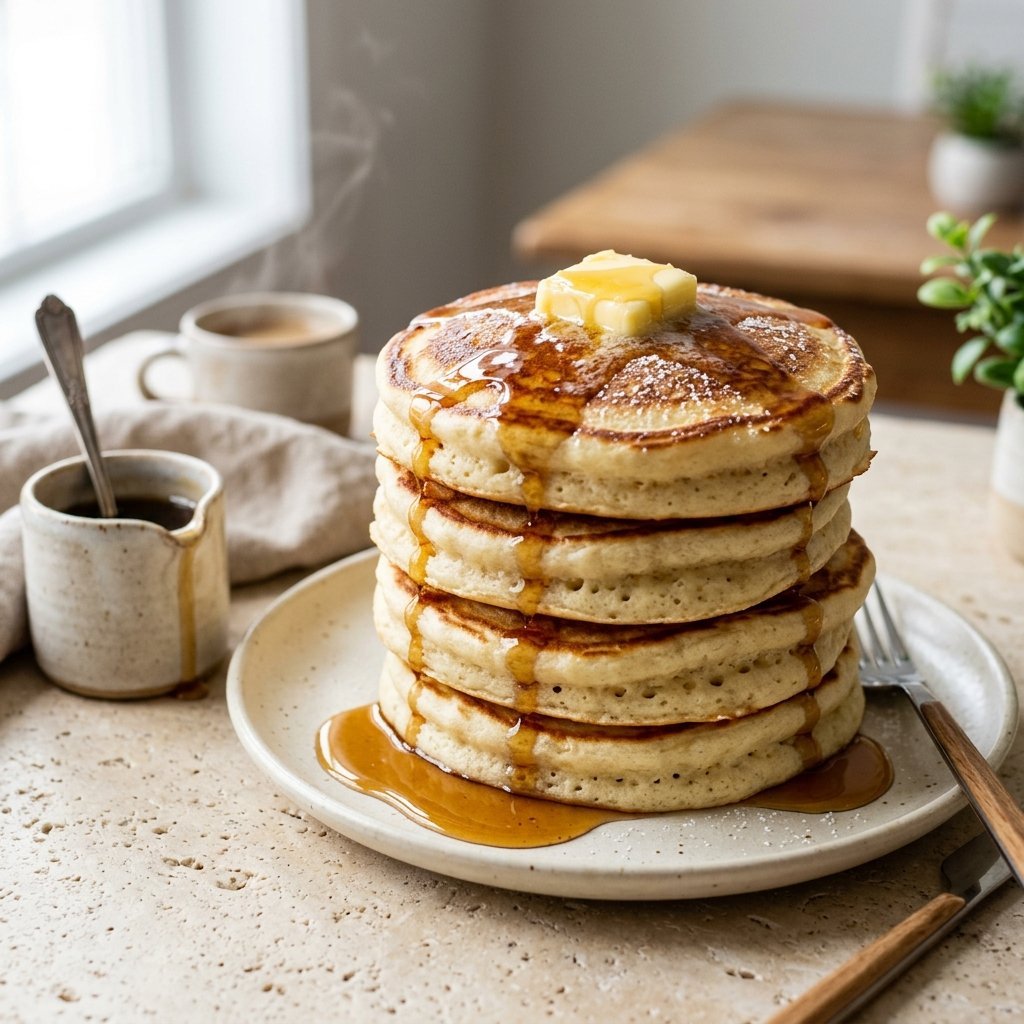
How to Make Fluffy Pancakes Without Lumps (Every Time)
How to Make Fluffy Pancakes Without Lumps (Every Time)
Flat, rubbery pancakes with floury lumps — the Shrove Tuesday disappointment we all know. Here’s how to make fluffy pancakes without lumps: the mixing method matters more than the recipe, and it’s simpler than you think.
The recipe (American-style fluffy)
- 200g self-raising flour (or plain flour + 2 tsp baking powder)
- 2 tbsp sugar
- ½ tsp salt
- 2 eggs
- 250ml milk
- 50g melted butter (plus extra for the pan)
- 1 tsp vanilla extract (optional but lovely)
The no-lump method (this is the whole secret)
- Mix dry ingredients in a large bowl — flour, sugar, salt, baking powder. Whisk them together before any liquid goes in. This distributes the raising agents evenly (uneven baking powder = uneven rise = dense patches).
- Mix wet ingredients separately — eggs, milk, melted butter, vanilla in a jug.
- Pour wet into dry and whisk gently until just combined — 10–15 seconds. Small lumps are fine. Stop whisking.
That’s it. That’s the secret. Lumps come from overmixing, not undermixing. Overworked batter develops gluten → tough, flat, chewy pancakes with a bread-like texture. A few small flour lumps hydrate and disappear during resting and cooking. Every pancake recipe that says “whisk until smooth” is lying to you — just combined is the goal.
Rest the batter (10 minutes)
Let the batter sit for 10–15 minutes. The flour hydrates fully (those small lumps vanish), the baking powder starts working, and the gluten relaxes. The batter thickens slightly — that’s correct. Don’t re-whisk; give it one gentle stir if needed.
Cooking: heat control is everything
- Medium-low heat — the #1 pancake mistake is too-hot pans (burnt outside, raw inside). The pan should be hot enough that batter sizzles gently, not aggressively.
- Butter the pan lightly between each pancake — wipe out excess with kitchen paper. Too much butter fries the edges (tasty but not fluffy).
- ¼ cup (60ml) batter per pancake — don’t spread it; let it settle naturally into a thick round.
- Wait for bubbles: when bubbles appear on the surface and pop (2–3 minutes), flip once. One flip only — repeated flipping deflates them.
- Second side: 1–2 minutes until golden.
- Keep warm in a low oven (100°C) on a plate while you cook the batch — cold pancakes are sad pancakes.
For tall, diner-style fluffiness
- Thick batter: if it pours like single cream, it’s too thin — it should ribbon off the spoon
- Fresh baking powder: test it — ½ tsp in hot water should fizz vigorously. Dead baking powder = flat pancakes (it loses potency after 6–12 months open)
- Buttermilk swap: replace milk with buttermilk for tangier, fluffier results (the acid supercharges the baking powder)
- Separate the eggs: whip the whites to soft peaks and fold in last — the soufflé method; maximum height, slightly more effort
Toppings worth the effort
- Classic: maple syrup (the real stuff — the “maple-flavoured” syrup isn’t maple) + butter
- British classic: lemon juice + sugar on thin crêpe-style — see below
- Berry compote: frozen berries + spoonful of sugar, 5 minutes in a pan
- Bacon + maple: the sweet-salty combination that converts sceptics
- Chocolate spread + banana: the crowd-pleaser
Thin crêpe-style (the British Shrove Tuesday original)
Different beast: 100g plain flour, 2 eggs, 300ml milk, pinch of salt — whisk smooth (lumps matter less here since it’s thin), rest 30 minutes, ladle thin into a hot buttered pan, swirl, 1 minute per side. Lemon and sugar. The BBC Good Food classic ratio never fails.
The bottom line
Whisk dry ingredients first, combine wet and dry with minimal mixing, rest 10 minutes, cook low and slow, flip once. Lumps are a mixing problem, flatness is a heat/baking-powder problem — now you know which is which. Fresh baking powder, a gentle hand and a medium-low pan will give you pancakes worth getting out of bed for. Serve with a proper full English for the ultimate weekend breakfast spread.
Pancake variations around the world (steal the best ideas)
Every culture has a pancake — and the techniques cross-pollinate beautifully. French crêpes: thin, lacy, rested batter (30 minutes minimum — the resting principle applies universally), cooked in a hot buttered pan, flipped with confidence. Russian blini: yeasted batter — tiny, thick, tangy; the yeast version of fluffy. Japanese soufflé pancakes: whipped egg whites folded in, cooked low and slow with a lid — jiggly towers that make American pancakes look flat.
Scotch pancakes (drop scones): smaller, thicker than American — the batter has less liquid, they’re cooked in batches on a dry griddle, served with butter and jam. Staffordshire oatcakes: savoury — oatmeal batter, filled with cheese and bacon like a wrap. The universal lessons: rest batters, control heat (medium-low for thick, high for thin), don’t overmix, and fresh raising agents always. Master the American fluffy, and every other pancake is a small variation.
Pancake FAQs
Can I make the batter the night before? Yes — refrigerate overnight, stir gently in the morning (don’t re-whisk vigorously). Note: double-acting baking powder loses some lift overnight — for maximum fluffiness, mix dry ingredients the night before but add the wet in the morning (30 seconds of work). Buttermilk batters hold overnight better than regular milk.
Why are my pancakes flat? Dead baking powder (the #1 cause — test it: fizz in hot water or replace), overmixed batter (gluten development = tough + flat), batter too thin (should ribbon, not pour like milk), pan too hot (sets the outside before the inside can rise — medium-low, always). Old flour can also underperform — check dates.
Can I make them without eggs? Yes — replace each egg with 60ml mashed banana (adds sweetness — reduce sugar), 60g apple sauce, or a “flax egg” (1 tbsp ground flaxseed + 3 tbsp water, rested 5 minutes). Vegan: plant milk + oil + flax egg + baking powder works well — slightly denser, still delicious. The resting and heat control matter even more without eggs.
How do I keep pancakes warm for a crowd? Low oven (100°C) on a wire rack over a baking tray (not a plate — stacking steams them soggy). Single layer if possible; if stacking, put baking paper between. They hold 20–30 minutes well. Better: set up a pancake station — keep batter in a jug by the stove and cook to order. Fresh pancakes + toppings bar beats a warming drawer every time.
Sweet or savoury — which is better? Both. Sweet: the classic — maple syrup, berries, chocolate, lemon-sugar. Savoury: the underrated — bacon + maple (the gateway), smoked salmon + cream cheese + dill (brunch luxury), fried egg + hot sauce (the hangover cure), cheese + ham (folded like an omelette). Make the batter less sweet (halve the sugar) if going savoury — one batch serves both camps.
Related reading
The full spread: a proper full English alongside — and BBC Good Food’s pancake recipes.
One thought on “How to Make Fluffy Pancakes Without Lumps (Every Time)”