
How to Get Rid of Mould on Walls Permanently (Not Just Hide It)
How to Get Rid of Mould on Walls Permanently (Not Just Hide It)
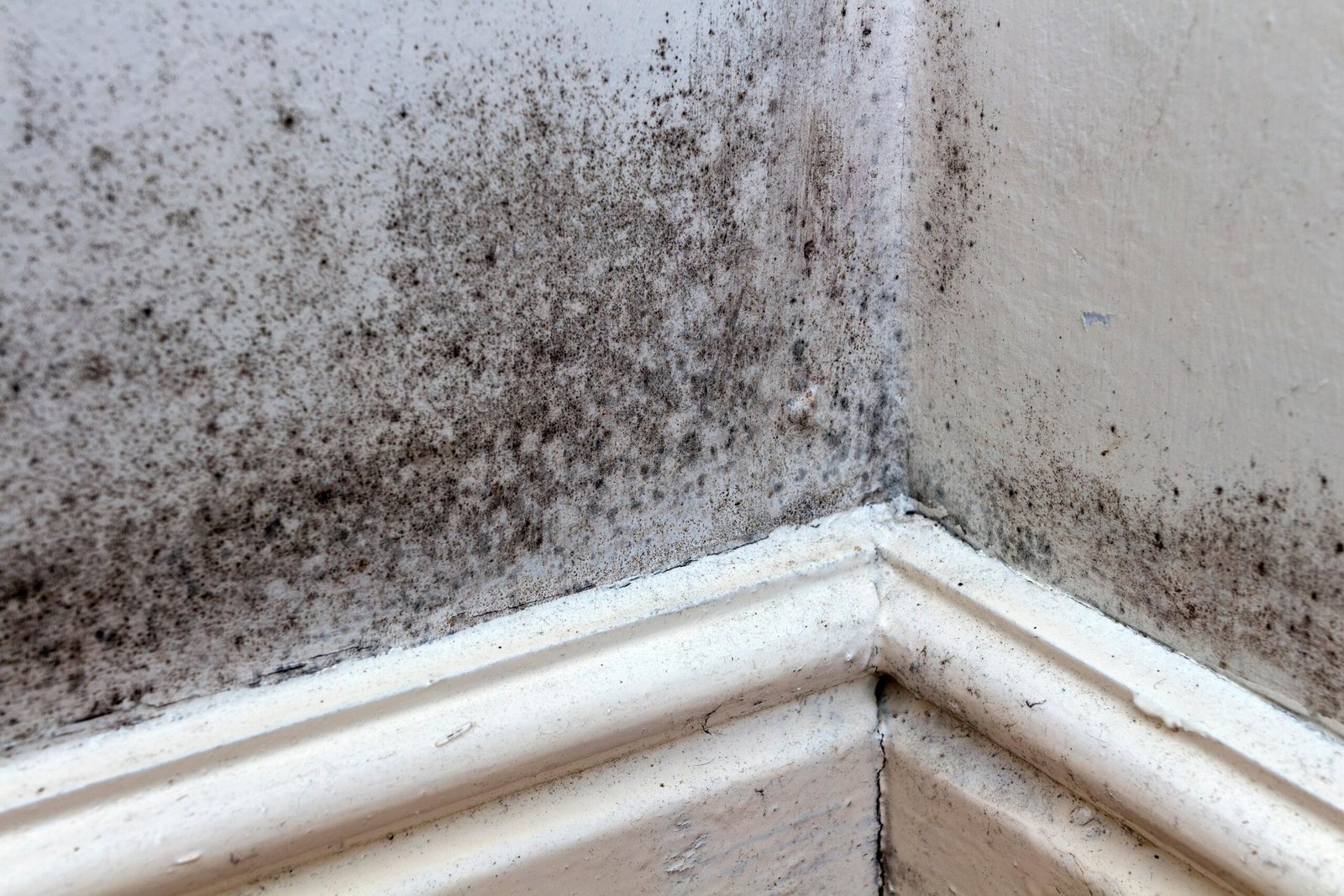
Black mould on walls is ugly, unhealthy, and stubborn — scrub it off and it comes back within weeks. That’s because most people treat the mould, not the cause. Here’s how to get rid of mould on walls permanently: kill it properly, then fix whatever’s feeding it.
Why mould keeps coming back
Mould needs three things: moisture, warmth, and food (plaster, paint, dust all qualify). Scrubbing removes the visible colony but leaves microscopic roots in porous surfaces — and if the moisture source remains, it regrows. Permanent removal = kill + dry + prevent. Skip any step and it returns.
Common moisture sources in UK homes:
- Condensation — the #1 cause; see stopping condensation
- Penetrating damp — failed pointing, cracked render, leaking gutters
- Rising damp — failed/missing damp-proof course (less common than claimed)
- Leaks — plumbing, roofs, overflowing gutters
Step 1: Kill the mould properly
- Ventilate the room and wear a mask and gloves — mould spores irritate lungs, especially for asthmatics.
- Use a dedicated mould remover (HG, Cillit Bang Black Mould Remover, Astonish) — not just bleach. Bleach whitens surface mould on non-porous surfaces but doesn’t kill roots in plaster or grout; dedicated removers contain biocides that do.
- Apply generously, leave for the stated time (usually 15–30 minutes), scrub with a stiff brush.
- For porous surfaces (plaster, grout), you may need 2–3 applications.
- Wipe down and let the wall dry completely — use a dehumidifier if needed.
Step 2: Fix the moisture source
This is the permanent part. Identify your mould’s cause:
- Mould on windows/walls in bedrooms and bathrooms, worse in winter: condensation. Fix ventilation: trickle vents open, extractor fans working, stop drying clothes on radiators, consider a dehumidifier or PIV unit.
- Mould in patches on external walls, worse after rain: penetrating damp. Check gutters, downpipes, pointing and render outside — fix the water ingress first. See damp proofing costs.
- Mould low on ground-floor walls, tide-mark staining: possible rising damp — get a proper independent damp survey (not from a company that sells damp-proofing).
- Mould near pipes, bathrooms, kitchens: check for leaks — even slow drips feed mould for months.
Step 3: Repair and protect
- Once dry, sand back damaged paint/plaster to sound material.
- Apply a stain-blocking primer (Zinsser BIN or similar) — stops old stains bleeding through.
- Repaint with anti-mould paint — see best paint for damp bathrooms (Zinsser Perma-White or Ronseal Anti-Mould for problem areas).
- In bathrooms, re-seal grout or re-grout if it’s the source — see re-grouting guide.
Health: take it seriously
The NHS advises that damp and mould can cause respiratory problems, allergies and asthma flare-ups — children, the elderly and those with existing conditions are most vulnerable. If anyone in the household has persistent coughs, wheezing or skin irritation that improves away from home, the mould may be the cause. Don’t just live with it.
Renters: landlords are legally required to fix damp and mould under the Homes (Fitness for Human Habitation) Act. Report in writing, keep copies, and contact your council’s environmental health team if the landlord doesn’t act. (Awaab’s Law, coming into force for social housing, sets strict repair timeframes.)
What doesn’t work
- Painting over live mould — it grows straight through within months
- Bleach alone on plaster — whitens but doesn’t kill roots
- Dehumidifier without fixing ventilation — treats symptoms; useful as part of the fix, not the whole fix
- “Anti-mould” sprays as the only treatment — they kill surface mould but the moisture source remains
- Damp-proofing injection for condensation mould — the classic misdiagnosis; expensive and useless for condensation
The bottom line
Kill it with a proper biocide mould remover, fix the moisture source (usually ventilation), then seal and repaint with anti-mould paint. That three-step sequence is the only permanent fix — everything else is redecorating over a problem. Most UK mould is condensation-driven and solvable with better ventilation for a few hundred pounds, not thousands in damp-proofing. Diagnose before you spend.
Mould on clothes, curtains and soft furnishings
Wall mould spreads to fabrics — and mouldy curtains, clothes and upholstery need different treatment. Washable fabrics: hot wash (60°C kills mould) with white vinegar in the rinse or a laundry sanitiser (Dettol, Napisan). Dry clean only: professional cleaners deal with mould routinely — tell them. Curtains: wash if possible; if the lining is mouldy, replace the lining (£20–£40) rather than the curtains.
Mattresses: surface mould can be treated with biocide spray and thorough drying (sunlight is a natural mould killer — UV works). But mould inside a mattress (from condensation against cold external walls — the classic bed-against-outside-wall scenario) means replacement — you can’t clean inside a mattress. Prevention: don’t push beds hard against cold external walls — leave a 5–10cm air gap. This single habit prevents most bedroom mattress mould.
Mould FAQs
Is black mould dangerous? “Black mould” (Stachybotrys) gets the headlines, but all indoor mould can cause health issues — respiratory irritation, allergies, asthma exacerbation. The colour doesn’t determine danger; the exposure level and individual sensitivity do. Don’t wait to identify the species — remove all indoor mould and fix the cause. See your GP if anyone has persistent symptoms; see the NHS damp and mould guidance.
Can I just paint over mould with anti-mould paint? No — anti-mould paint prevents regrowth on clean surfaces; it doesn’t kill established colonies. Kill first (biocide remover), dry fully, stain-block, then anti-mould paint. Skipping the kill step wastes the expensive paint.
How do I prevent mould in a wardrobe? Wardrobes against cold external walls are classic mould spots (trapped air + cold surface + clothes = condensation). Fix: leave a gap behind the wardrobe, don’t overfill (air must circulate), use moisture traps (£5–£10, the crystal type) inside, and louvre the doors or leave them ajar periodically. Leather shoes and bags mould first — check them.
Will a dehumidifier solve it alone? It manages symptoms brilliantly (10–20 litres/day extracted) but doesn’t fix causes — if the bathroom has no extractor fan, the dehumidifier is compensating forever. Use it as part of the fix (with ventilation improvements), not instead of it. For the full ventilation picture, see stopping condensation.
I’m renting — whose responsibility is mould? The landlord’s — under the Homes (Fitness for Human Habitation) Act, landlords must address damp and mould. Report in writing (email, keep copies), photograph everything, allow reasonable access. If they don’t act: council environmental health can enforce. Awaab’s Law sets strict timelines for social housing. Don’t accept “it’s your lifestyle” for structural damp — but do ventilate reasonably; adjudicators consider both sides.
One thought on “How to Get Rid of Mould on Walls Permanently (Not Just Hide It)”