
How to Book Accessible Travel Assistance on UK Trains (Step-by-Step)
How to Book Accessible Travel Assistance on UK Trains (Step-by-Step)
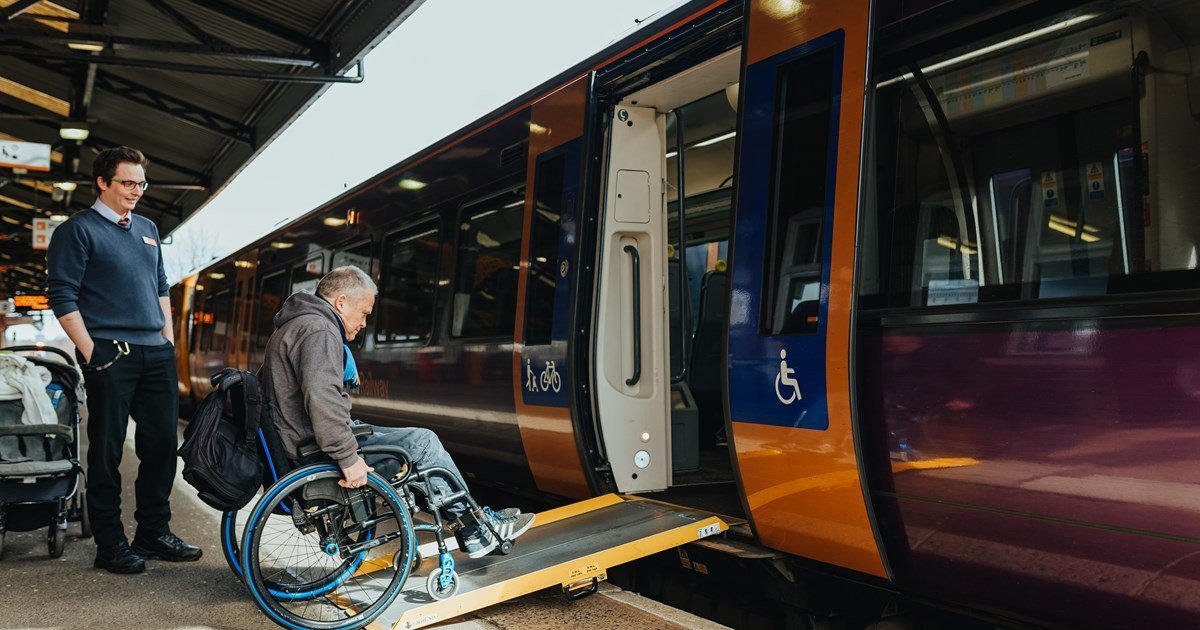
If you need a ramp, a helping hand with luggage, or guidance through a station, Britain’s railways offer free assistance — but you have to know how to book it. Here’s how to book accessible travel assistance on UK trains, what you’re entitled to, and what to do when things go wrong.
What assistance is available (it’s free)
Under the rail industry’s Accessible Travel Policy, every train company must provide free assistance, including:
- Ramps for boarding and alighting
- Help with luggage
- Guidance through stations for visually impaired passengers
- Accessible seating and wheelchair spaces on board
- Alternative transport (usually a taxi) if a station is inaccessible or assistance fails
You don’t need to “prove” your disability. If you need help, ask — that’s the whole system.
How to book: Passenger Assist
The national system is called Passenger Assist. You can book through:
- Online: via National Rail’s Passenger Assist page or your train company’s website — most have an assistance booking form alongside ticket purchase.
- Phone: call the train company you’ll travel with (numbers are on National Rail). There’s also a dedicated Passenger Assist helpline.
- At the station: speak to staff — but this only works if you don’t need advance notice (see below).
- Via the Trainline app: assistance can be added when booking tickets.
How much notice do you need?
The official line: book by 10pm the night before travel (this replaced the old 24-hour rule in recent years). In practice:
- Booked assistance (night before or earlier) means staff are expecting you — most reliable.
- Turn-up-and-go: at staffed stations you can request help on arrival without booking. This works well at big stations; at small unstaffed halts it’s patchy.
- For complex journeys (multiple changes, unfamiliar stations), book as early as you can — a week ahead is ideal.
My advice: always book when you can. Turn-up-and-go is your legal right, but booked assistance fails less often.
Step-by-step: booking for a typical journey
- Buy your ticket as normal (disabled persons railcard holders get 1/3 off — the Disabled Persons Railcard costs £20/year).
- Book assistance via the train company’s site or helpline, giving your train times, the help you need (ramp, guidance, luggage, seating), and a contact number.
- You’ll get a confirmation — keep it on your phone.
- Arrive 20 minutes early and make yourself known to station staff or use the assistance point (usually a help phone on the platform).
- At each change, staff should be waiting — but check with the guard on board that your connection assistance is arranged.
Your rights when it goes wrong
Assistance failures still happen — ramps forgotten, staff absent, taxis not booked. Know this:
- If assistance fails and you’re stranded, the train company must get you to your destination — including paying for a taxi.
- Complain in writing to the train company; they’re required to respond and report assistance failures to the regulator.
- The Office of Rail and Road oversees accessibility — systemic failures can be reported to them.
- Keep receipts for any extra costs (taxis, alternative transport) — you can claim them back.
Useful extras
- Priority seats and wheelchair spaces can be reserved when you book tickets — do it, especially on busy routes.
- Changing Places toilets are appearing at more major stations; check the station’s accessibility page before travelling.
- Assistance dogs travel free, no booking needed.
- Many companies offer a “meet and greet” where staff stay with you until your train departs — ask if you’d like this.
The bottom line
Book Passenger Assist by 10pm the night before, arrive 20 minutes early, and keep your confirmation handy. The system isn’t perfect — but it works far more often than it fails, and knowing your rights (free assistance, taxi backup, compensation for failures) turns a stressful unknown into a manageable process. Everyone deserves to travel by train with confidence.
Turn-up-and-go: your rights without booking
Many disabled passengers don’t realise: you have the legal right to turn up and request assistance without booking. Station staff must help you if the station is staffed — this is the “turn-up-and-go” commitment all train companies signed up to. In practice, it works well at major stations (King’s Cross, Birmingham New Street, Manchester Piccadilly) where staff are plentiful, and patchily at small unstaffed halts.
My practical advice: use turn-up-and-go for familiar, simple journeys (your regular commute from a staffed station), and book Passenger Assist for everything else — unfamiliar stations, tight connections, first/last trains of the day, and any journey where failure would strand you. The booked system isn’t perfect, but it creates accountability: there’s a record, a named responsibility, and compensation leverage if it fails.
One more right worth knowing: if your booked assistance fails and you miss a connection, the train company must get you to your destination at their expense — including taxis and, if necessary, overnight accommodation. Don’t let staff tell you otherwise.
Accessible travel FAQs
Do I need to prove my disability? No. You don’t need a Blue Badge, PIP award or doctor’s letter to request assistance. If you need help, ask — that’s the entire eligibility criterion.
What if the station is unstaffed? Use the help point (the button on the platform) — it connects to a control centre who can arrange assistance or alternative transport. Alternatively, book Passenger Assist in advance and staff will meet your train.
Can I get a discount? The Disabled Persons Railcard (£20/year) gives 1/3 off most fares for you and a companion. If you have a visual impairment, some operators offer free travel for companions — check with your train company.
What about replacement buses during engineering works? Train companies must provide accessible alternative transport — if the rail replacement bus isn’t accessible, they must arrange an accessible taxi at no cost to you. State your needs when booking.
Who do I complain to? First the train company (in writing), then Transport Focus (the passenger watchdog) if unresolved. The ORR handles systemic accessibility failures.
Related reading
Also useful: taxi vs train from Gatwick to London for accessible airport transfers, and accessible-friendly day trips from London by train.