
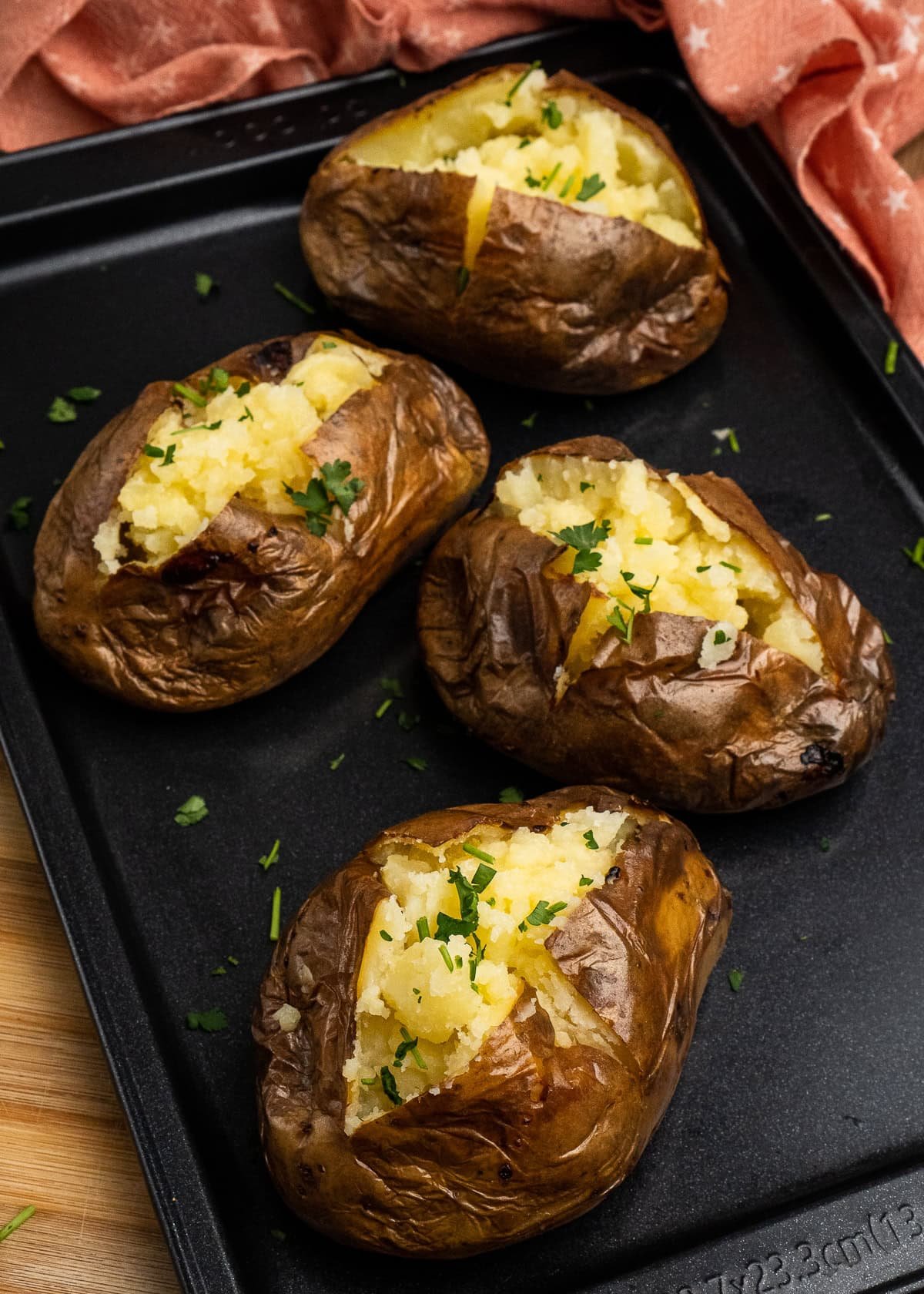
How to Bake Potatoes in the Oven: Step-by-Step Guide (2026)
The jacket potato is a British classic — cheap, filling, and endlessly customisable. The secret to learning how to bake potatoes in the oven properly is simple: heat your oven to 200°C (180°C fan / gas mark 6), rub the skins with oil and salt, and bake directly on the oven rack for 1 to 1½ hours until the skin is crisp and the inside is fluffy. Never wrap them in foil — that steams the skin soft. Read on for the full step-by-step method, timings by size, the quick microwave shortcut, and the best UK potato varieties to use.
Choosing the Right Potatoes
The variety you pick makes a real difference. For fluffy middles and crisp skins, you want a floury potato with a high starch content — waxy salad potatoes will never go properly fluffy inside.
- Maris Piper — the all-rounder. Floury, reliable, and easy to find in every supermarket. An excellent baking potato.
- King Edward — another classic floury variety with a lovely light texture inside. Great for jackets.
- Marfona — often sold in bags labelled simply “baking potatoes” in UK supermarkets. A safe pick.
- Rooster — a floury red-skinned variety that bakes up beautifully.
Look for potatoes sold as “baking potatoes” — they’re graded larger and rounder so they cook evenly. Avoid very small potatoes for this job; anything under about 200g takes longer to peel and gives a poor skin-to-fluff ratio. BBC Good Food’s perfect jacket potato method uses the same high-heat start we recommend here.
How to Bake Potatoes in the Oven: Step by Step
This is the classic method for 4 large baking potatoes. It takes about 5 minutes of hands-on time — the oven does the rest.
- Heat the oven to 200°C (180°C fan) or gas mark 6. A properly hot oven is the key to crisp skin. Don’t be tempted to start low — the initial blast of heat sets the skin.
- Wash and dry the potatoes. Scrub off any dirt under running water with a brush or your hands, then pat them completely dry with a clean tea towel. Wet skins won’t crisp.
- Prick them all over with a fork. Give each potato 6–8 good pricks. This lets steam escape so they don’t burst in the oven.
- Rub with oil and salt. Pour about a teaspoon of olive oil or vegetable oil per potato into your hands and rub it all over the skin. Then scatter over flaky sea salt. The oil and salt are what make the skin golden and crunchy.
- Place directly on the oven rack. Put the potatoes straight onto the middle shelf — not in a tray. The hot air needs to circulate all the way round for even crisping.
- Bake for 1 to 1½ hours. Don’t open the door for the first 45 minutes. They’re ready when the skin is deep golden and crisp, and the potato gives slightly when you squeeze it (use an oven glove).
- Cut, squeeze, and fill. Cut a cross in the top of each potato, then squeeze the base gently to open it up and fluff the inside with a fork. Add your toppings and serve straight away.
Baking Times by Potato Size
Bigger potatoes take longer — that’s all there is to it. At 200°C (180°C fan / gas mark 6), use these as a guide:
- Medium (200–250g): about 1 hour to 1 hour 10 minutes
- Large (250–350g): about 1 hour 15 minutes to 1 hour 30 minutes
- Very large (350g+): about 1 hour 30 minutes to 1 hour 45 minutes
If you’re baking several different sizes at once, put the small ones in later so everything finishes together. A skewer should slide into the centre with no resistance when they’re done.
The Microwave-Then-Oven Shortcut
No one has 90 minutes on a weeknight. This shortcut gets you a proper jacket potato in about 25 minutes:
- Wash, dry, and prick the potato exactly as above.
- Microwave on high for 6–8 minutes (per potato), turning halfway. Wrap it loosely in kitchen paper first to absorb steam. It should be soft when squeezed.
- Rub with oil and salt, then bake in a hot oven at 220°C (200°C fan / gas mark 7) for 10–15 minutes. The blast of heat crisps the skin while the inside is already cooked.
The result is very close to a full oven bake. Alternatively, you can flash the microwaved potato under a hot grill for 5 minutes, turning often, if the oven is busy with something else.
Best Toppings for Jacket Potatoes
The potato is a blank canvas. Here are the British favourites:
- Beans and cheese — the undisputed classic. A small tin of baked beans heated through, a knob of butter, and a handful of grated mature Cheddar.
- Tuna mayonnaise — mix a drained tin of tuna with 2 tablespoons of mayo, salt, pepper, and a squeeze of lemon. Add sweetcorn if you like.
- Chilli con carne — leftover chilli reheated and spooned over the potato with a dollop of soured cream is a proper meal.
- Cheese and coleslaw — simple, cold, and crunchy against the hot fluffy potato.
- Soured cream and chives — light and fresh. Grated cheese on top if you’re feeling indulgent.
- Smoked mackerel and horseradish — flake the fish over the potato with a teaspoon of horseradish sauce and chopped parsley. BBC Good Food’s classic jacket potato pairs theirs with soured cream and bacon for the same effect.
What About Baking Sweet Potatoes?
The same method works for sweet potatoes, with a couple of tweaks. They’re denser and sweeter, so they take a little less time — about 45 minutes to 1 hour at 200°C (180°C fan / gas mark 6), depending on size. Prick, oil, and salt them exactly as you would a normal baking potato, and bake directly on the rack.
Sweet potatoes leak a little sugary juice as they bake, so it’s worth putting a tray on the shelf below to catch the drips. They’re ready when the skin is dark and papery and a knife slides in easily. For toppings, try butter and cinnamon, black beans with soured cream, or a simple chilli — the sweetness pairs well with a bit of heat.
Top Tips
- Never wrap in foil. Foil traps steam and gives you a soggy, soft skin. Foil belongs on the barbecue, not the oven.
- Dry skins are non-negotiable. Any surface moisture turns to steam and stops the skin going crisp. Pat them really dry after washing.
- Salt the skin, not just the flesh. The salt draws out a little moisture and seasons the crispy jacket — the best bit.
- Don’t crowd the oven. Leave a couple of inches between potatoes so hot air can circulate around each one.
- Serve immediately. Jacket potatoes go soggy as they sit. Have your toppings ready before the potatoes come out.
- Batch cook and freeze. Bake extras, cool them completely, then freeze whole. Reheat from frozen at 180°C (160°C fan / gas mark 4) for 30–40 minutes.
Common Mistakes to Avoid
- Wrapping in foil — the single biggest reason for soft, pale skins.
- Starting in a cool oven — the skin needs that initial blast of heat. Always preheat fully.
- Skipping the pricking — unpricked potatoes can burst and make a mess of your oven.
- Using waxy potatoes — new potatoes and salad varieties bake up dense and gluey inside. Go floury.
- Over-filling the potato — a ladle of beans on a small potato turns it into soup. Match the topping to the size.
FAQs About Baking Potatoes in the Oven
What temperature should I bake potatoes at?
200°C (180°C fan) or gas mark 6 is the sweet spot for the full oven method. If you’re doing the microwave shortcut, finish them at 220°C (200°C fan / gas mark 7) to crisp the skin.
How long do jacket potatoes take in the oven?
Allow 1 to 1½ hours for large baking potatoes at 200°C (180°C fan / gas mark 6). Medium potatoes (200–250g) need about an hour. Check by squeezing — they should give slightly under an oven glove.
Should I wrap baked potatoes in foil?
No. Foil traps steam against the skin and stops it going crisp. Bake them unwrapped, directly on the oven rack, for the best crispy jacket.
Can I bake potatoes in advance?
Yes. Bake them fully, cool completely, and keep in the fridge for up to 2 days. Reheat at 180°C (160°C fan / gas mark 4) for 20 minutes, or halve and reheat under the grill for extra-crispy skins.
Why are my baked potatoes soggy inside?
It’s usually down to the variety — waxy potatoes bake up dense rather than fluffy. Switch to a floury type like Maris Piper or King Edward, and make sure you don’t wrap them in foil.
Conclusion
Once you know how to bake potatoes in the oven, you’ll never buy a sad microwave jacket again. Hot oven, dry salted skins, no foil, and a bit of patience — that’s the whole recipe. Pick up some Maris Pipers on your next shop and give it a go this week.