
How Do I Choose Sunglasses for My Face Shape?
How Do I Choose Sunglasses for My Face Shape?
The “sunglasses for your face shape” advice is everywhere, and much of it is overcomplicated. The underlying principle is simple: contrast. Angular faces suit rounder frames, round faces suit angular frames, and the goal is balance, not rules. I’ve tried on hundreds of sunglasses (occupational hazard of loving them), and the face-shape guidance works — as a starting point, not a law. Wondering “how do I choose sunglasses for my face shape”? You’re not alone — and the real answer is more straightforward than most guides make it sound.
Here’s the practical guide: how to determine your face shape, what suits each one, and the universal rules that matter more than any shape chart.
Finding your face shape
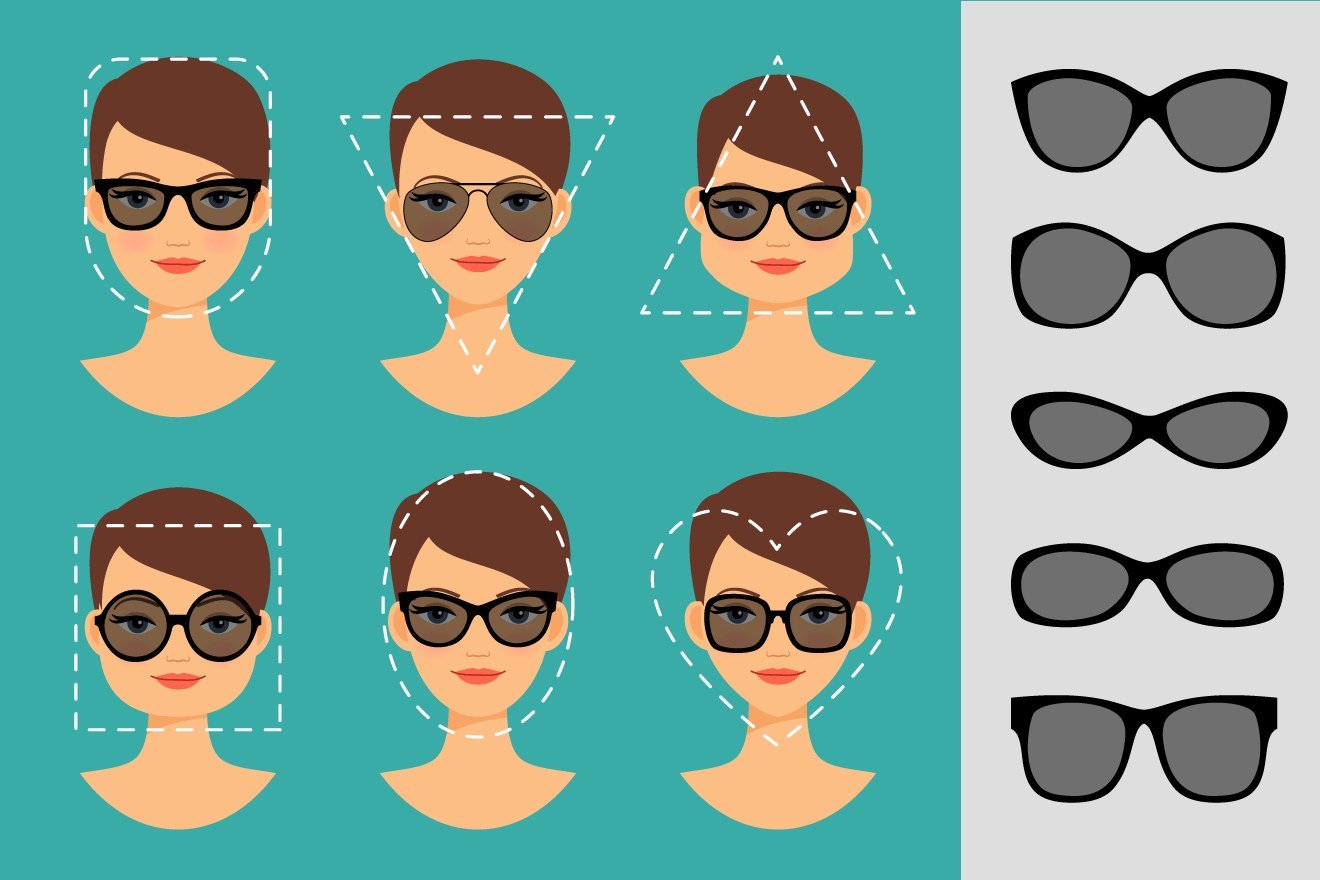
The quick method: pull hair back, look straight in a mirror, and trace your face outline on the mirror with a dry-wipe marker (or just observe). The key dimensions: forehead width vs cheekbone width vs jawline width, and face length vs width. The main shapes: oval (longer than wide, gently rounded — the versatile one), round (similar length and width, soft curves, full cheeks), square (strong jaw, broad forehead, angular), heart (wide forehead, narrow chin), diamond (narrow forehead and jaw, wide cheekbones), and oblong (long and narrow).
Most faces are combinations — don’t stress about perfect categorisation. The useful question isn’t “which shape am I exactly?” but “what’s my most prominent feature?” — strong jaw, full cheeks, wide forehead, long face. That single observation guides better than any chart. And face shape is a starting filter, not a verdict: if you love how a “wrong” shape looks on you, it’s right.
Recommendations by face shape
Oval: the lucky ones — most styles work. The guidance: don’t go too large (overwhelms balanced proportions) or too small (looks lost). Aviators, wayfarers, round, square — all fine. Focus on personal style and fit rather than shape rules.
Round: contrast the curves with angles — rectangular, square, and wayfarer styles add definition. Avoid small round frames (emphasise roundness) and oversized round styles. Slightly wider-than-face frames with angular lines are the classic recommendation, and it holds up.
Square: soften the angles with curves — round, oval, and aviator styles. Avoid boxy square frames (doubles the angularity) and very narrow styles. Browline and rimless styles work well, breaking up the strong lines.
Heart: balance the wide forehead with bottom-heavy or rounded styles — aviators, round, and wayfarers. Avoid top-heavy styles and very wide frames that emphasise the forehead. Lighter colours and rimless options reduce visual weight up top.
Diamond: highlight the eyes, soften cheekbones — rimless, oval, and cat-eye styles. Avoid narrow frames that emphasise width at the cheekbones. Oblong: add width — oversized, tall, and wide styles; avoid small narrow frames that elongate further.
- Oval: most styles work — focus on fit and taste
- Round: angular frames (rectangular, wayfarer) for contrast
- Square: round/oval/aviator to soften angles
- Heart: aviators, round styles — avoid top-heavy
- The principle: contrast your most prominent feature
The rules that matter more than face shape
Fit beats shape theory: sunglasses that slip down your nose, pinch your temples, or touch your cheeks are wrong whatever the style guide says. The three fit points: bridge (sits comfortably without sliding), temples (arms straight back without pressure), and coverage (eyes centred, brows visible or covered according to taste — the brow question divides stylists, but showing a little brow usually looks more natural).
Size proportion: the frames should be roughly as wide as your face — significantly narrower looks pinched, much wider looks costume (unless that’s the intent). Lens height matters for coverage; larger lenses protect more (skin around eyes is thin and sun-sensitive — bigger is better for health, whatever fashion says).
Lifestyle fit: driving (polarised, good peripheral coverage), sport (wraparound, secure fit, impact-resistant), fashion (the statement pair), beach (cheap enough to lose — buy accordingly). Most people need two pairs: the good everyday pair and the expendable holiday pair. For the prescription version, see affordable prescription sunglasses.
Trying on: the practical method
In store: try the recommended shapes plus your instincts — the guidance narrows the field, it doesn’t dictate. Photograph yourself in each contender (the mirror lies; the camera shows what others see). Check in daylight if possible — shop lighting flatters everything. Wear them for five minutes in the shop — pressure points reveal themselves with time, not instantly.
Online: use virtual try-on tools (most good retailers have them now), check frame measurements against sunglasses you own (lens width, bridge, temple — the numbers inside the arm), read reviews mentioning face shape and fit, and use free home-trial services where available (Glasses Direct offers home trials on optical; some sunglasses retailers do too). Order two or three to compare at home if returns are free — the side-by-side comparison is invaluable.
The confidence rule, repeated because it matters: the “right” sunglasses are the ones you feel good in. Face-shape guidance gets you to the shortlist faster; your own eye makes the final call. If the “wrong” shape makes you grin in the mirror, buy them — joy is the best accessory.
Small, wide, and low-bridge faces: fit specifics
Beyond face shape, fit details determine comfort. Small faces: look for “petite” or “narrow” ranges (many brands do them — the standard 140mm+ temple length overwhelms); lens width under 50mm usually works. Oversized styles can work as fashion, but check they don’t touch cheeks or slide — the fashion oversized needs a good bridge fit to stay put.
Wide faces: seek “wide fit” ranges (often marked XL or wide); standard arms pinch at the temples, causing headaches. The frame should be as wide as your face — narrower looks pinched and feels worse. Low nose bridges (common in East Asian, African, and many other face types): standard frames slide down — look for adjustable nose pads or “Asian fit”/”low bridge fit” ranges (Oakley, Ray-Ban, and many online retailers offer them). This single feature transforms sunglasses from unwearable to perfect.
The universal test: shake your head gently — well-fitted sunglasses stay put. Look down — they shouldn’t slide. Wear for ten minutes — pressure points appear with time. And the optician’s secret: most sunglasses can be adjusted (arms bent, nose pads tweaked) — high-street opticians do this free, even for online-bought pairs. Fit is adjustable; don’t accept “they’re supposed to feel like that.”
How Do I Choose Sunglasses for My Face Shape: The Short Answer
Contrast your most prominent feature, keep frame width roughly equal to face width, prioritise fit over theory — and trust your own eye for the final call. Related reading: affordable prescription sunglasses and Specsavers.