
How Do I Style a Blazer for Weekends?
How Do I Style a Blazer for Weekends?
The blazer is the hardest-working item in most wardrobes — but Monday to Friday it means business, and Saturday it needs to mean something else entirely. The trick to weekend blazer styling is deliberate casualness: every element around the blazer should signal “off duty,” so the blazer reads as style, not as overtime. I’ve worn blazers most weekends for years, and the formula is consistent. If “how do I style a blazer for weekends” is the question you’ve been asking, here’s the straight answer — practical, honest, and based on what actually works.
Here are the outfit combinations that work, the blazer styles that suit weekends best, and the mistakes that make you look like you’re heading to a meeting.
The core formulas: 10 weekend blazer outfits
Jeans + tee + blazer + trainers: the foundational formula. Dark or mid-wash jeans, plain white/grey/black tee, unstructured blazer, clean minimal trainers. It works because every element except the blazer is casual — the contrast is the style. Upgrade with a striped Breton tee or a good graphic tee.
Jeans + knit + blazer + boots: the autumn version — fine merino or cashmere crew neck, Chelsea or ankle boots. Smart enough for lunch, comfortable for everything. Dress + blazer + trainers: a midi or mini dress with an oversized blazer and trainers is the weekend uniform of every stylish city — feminine and masculine elements balanced.
Shorts + tee + blazer (summer evenings): tailored shorts, simple tee, unstructured blazer, loafers or clean trainers — Riviera-adjacent, works for dinners and bars. Leggings + oversized blazer + chunky trainers: the athleisure-polished look — the blazer must be oversized and the trainers deliberately chunky for the proportions to work. Wide-leg trousers + vest + blazer + sandals: elegant weekend, minimal effort.
- Jeans + tee + trainers: the foundational formula
- Jeans + knit + boots: the autumn upgrade
- Dress + trainers: feminine/masculine balance
- Tailored shorts + loafers: summer evenings
- Wide-leg trousers + sandals: elegant minimal effort
Choosing the right blazer for weekends
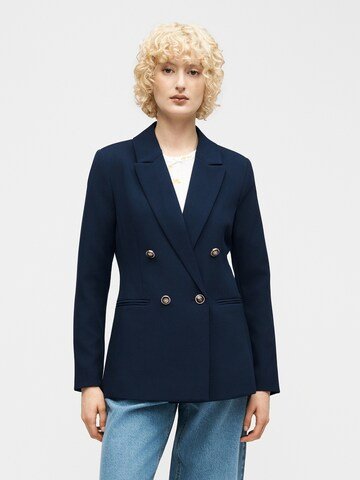
Not all blazers weekend well. Best: unstructured or half-canvassed blazers (soft shoulders, no stiff padding — the corporate armour is what you’re avoiding), oversized or relaxed fits (the borrowed-from-him look is inherently casual), textured fabrics (linen, cotton, jersey, corduroy — texture reads casual; smooth worsted wool reads office), and colours beyond navy/black (camel, olive, grey marle, patterns).
Avoid for weekends: sharp padded-shoulder corporate blazers (they’ll always read “office,” however you style them), matching suit jackets worn as separates (the orphaned suit jacket is a known style error — the fabric and details mark it as suiting), and anything too tight (weekend blazers need ease — you should be able to layer a knit underneath).
One blazer can do double duty if chosen well: an unstructured navy blazer in a textured fabric (hopsack, linen blend) works for smart-casual offices and weekends. But if your work blazers are all sharp corporate armour, buy one dedicated weekend blazer — second-hand is perfect (£15–£30 on Vinted for the ideal oversized wool blazer). For the workwear side, see affordable workwear.
The details that make it weekend
Sleeves: push or roll them to the elbow — the single fastest way to de-corporate a blazer. It signals relaxation instantly and shows off bracelets or a watch. Open, never buttoned (or buttoned only for a photo) — a buttoned blazer reads formal; open reads relaxed. Layering: let a hoodie peek out under an oversized blazer (the streetwear-approved move), or wear it over a sweatshirt instead of a shirt.
Accessories shift the register: trainers or boots instead of court shoes, crossbody bag instead of work tote, sunglasses on head, minimal jewellery instead of office pearls. Hair down and natural rather than the office updo. These small signals compound — three or four of them and the blazer is unmistakably weekend.
What to avoid: the full corporate base with just trainers swapped in (shirt + tailored trousers + blazer + trainers = confused, not casual — change at least two elements), tie or corporate shirt underneath (obviously), and overthinking it. The weekend blazer should look effortless; if you’ve spent 30 minutes engineering “casual,” step back and simplify. For more on blazers generally and the smart casual code they inhabit on weekdays.
Seasonal weekend blazer styling
Spring: blazer over a Breton tee with jeans and loafers — the Parisian-adjacent uniform; add a silk scarf for polish. Linen blazers come into their own — breathable, textured, inherently relaxed. Summer: unstructured cotton or linen blazer over vest tops and shorts for evenings; the blazer handles air-conditioned restaurants and cooling nights.
Autumn: the blazer’s peak season — over knits, with boots, under a coat when needed. Corduroy and tweed-adjacent textures shine. Layer a thin gilet or waistcoat underneath for extra warmth without bulk. Winter: blazer as a mid-layer under your winter coat — the collar and lapels peeking out add structure to bulky outerwear; or the blazer as the outer layer for mild days over a chunky knit.
The year-round truth: the weekend blazer is about contrast — structured piece, relaxed everything else. Master that contrast and the blazer becomes the easiest item you own: the thing you throw on that makes jeans and a tee look intentional.
Building a weekend blazer collection (without overspending)
One blazer is a start; three covers every weekend. The ideal trio: an oversized wool blazer in camel or grey (the workhorse — goes with everything, second-hand £15–£30), an unstructured linen or cotton blazer in navy or olive (spring/summer, breathable, relaxed), and a textured statement — corduroy, subtle check, or deep green (for when you want the blazer to be the outfit).
Buy them second-hand where possible: blazers are abundant on Vinted and in charity shops because office workers clear them out. Look for natural fabrics, working buttonholes (a sign of quality), and half-canvas construction (pinch the lapel — if you feel a floating layer between fabric and lining, it’s canvassed, which drapes better). Avoid shoulder pads that extend past your natural shoulder — the 80s power blazer rarely weekends well.
Care: brush after wearing, air between wears, dry clean sparingly (twice a year max — over-cleaning destroys structure). A £20 second-hand blazer with £15 of tailoring (sleeve shortening, waist suppression) fits better than a £100 new one. Three good weekend blazers, bought smart, cost less than one new high-street blazer — and get worn ten times more.
How Do I Style a Blazer for Weekends: The Short Answer
Unstructured blazer, sleeves rolled, open over casual everything else — change at least two elements from your office formula and let texture do the casualising. Related reading: the blazer’s history.