
Dolly Parton Profiled: Net Worth, Age, Husband, Family and Career
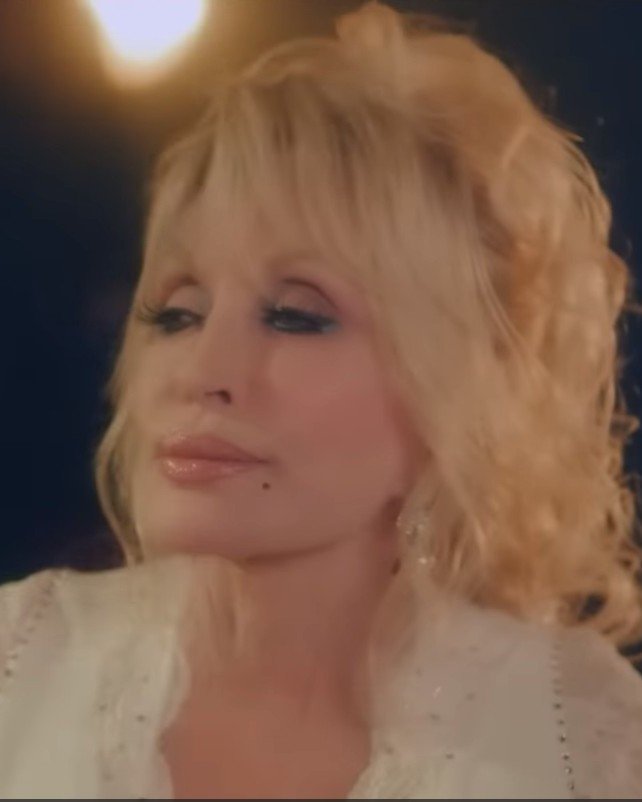
Dolly Parton Profiled: Net Worth, Age, Husband, Family and Career
From Pittman Center to the world stage
Dolly Parton was, for more than sixty years, one of the most recognisable figures in popular music: a songwriter of the first rank, a singer whose voice was known in every market where records were sold, and a businesswoman who built a leisure enterprise in the Tennessee hills she came from. She wrote some of the most recorded songs of the modern era, and she kept control of them, a decision that shaped her fortune as much as any hit.
Her net worth is a matter of a disagreement that this profile prints in full and does not resolve. Forbes put her fortune at $450 million, its figure for her in its 2025 America’s Richest Self-Made Women listing, repeated after her death. Celebrity Net Worth put her fortune at $650 million at her death. The two figures stand $200 million apart, both are attributed at every mention in this profile, and neither is preferred over the other here.
Parton died on 25 August 2026 in Nashville, aged 80. She was buried beside Carl Dean at Woodlawn Memorial Park, Nashville, after a private funeral on 28 August 2026. What follows is the verified record of her life, set out in past tense throughout: the Tennessee beginning, the family, the career in its stages, and the fortune as two reputable counters left it — in open disagreement.
Pittman Center to today: the facts in brief
| Pittman Center to today: the facts in brief | Details |
|---|---|
| Born | 19 January 1946, Pittman Center, Tennessee; died 25 August 2026, aged 80 |
| Age | 80 at death (died 25 August 2026) |
| Net Worth | Unresolved: $450 million (Forbes) vs $650 million (Celebrity Net Worth) |
| Height | 5 ft 0 in (1.52 m) |
| Weight | No reliable published figure exists |
| Husband | Late husband Carl Thomas Dean (m. 30 May 1966; d. 3 March 2025) |
| Parents | Robert Lee Parton Sr. (d. 2000) and Avie Lee Parton née Owens (d. 2003) |
| @dollyparton |
How Jolene and I Will Always Love You fed the fortune
The fortune cannot be counted to a single figure, and this profile does not pretend otherwise. Forbes put Parton’s net worth at $450 million, the figure it published for her in its 2025 America’s Richest Self-Made Women listing and repeated after her death. Celebrity Net Worth put her net worth at $650 million at her death. The disagreement is $200 million wide, it is printed here in full, in the opening part of this profile, in the facts table and in this section, and it is left unresolved, because no published source reconciles the two counts and inventing a middle figure would be worse than printing both.
The gap is methodological, and its largest single component can be identified. Her song catalogue — the publishing in the songs she wrote, including Jolene and I Will Always Love You — was valued by Forbes at around $120 million and by Celebrity Net Worth at around $200 million. A difference of some $80 million on one asset class, between two counters applying different assumptions about what a catalogue of that depth would fetch and what it earns, accounts for a substantial part of the distance between the two totals. The rest is the ordinary consequence of estimating private assets that are not open to inspection.
Dollywood requires a separate and firm statement. Parton was a part-owner of the enterprise, not its sole owner, and only her stake in it counts towards her net worth. Valuations of the whole enterprise — the park, its resorts and its associated attractions taken together — have appeared in coverage of her business life, and they are expressly not her net worth, and they are not used as such anywhere in this profile. The same discipline applies to her touring: the grosses her tours took across the decades were earnings in the years they were taken, before costs and tax, and they are recorded as earnings and never as wealth.
A home in Pittman Center
Her best-known property was Willow Lake Plantation at Brentwood, Tennessee, a property of some 63 acres that she bought in 1999 and kept for the rest of her life. Post-death coverage reported a Realtor.com estimate for the property of around $8.8 million. That figure is what it is labelled as here: an estimate published by a property platform and reported in coverage after her death, not a sale price, not a probate valuation, and not a component that can be added to either of the two net-worth figures in this profile to adjust them. It is recorded because the property was a fixed point in her life for twenty-seven years, in the state she never left.
The estate position is therefore this: a fortune counted at $450 million by Forbes and at $650 million by Celebrity Net Worth, resting on a catalogue the two counters placed some $80 million apart, a part-owned Tennessee enterprise of which only her stake was hers, and touring earnings that belong to the years in which they were earned. No probate figure reconciling the two counts has been published, and until one is, the honest statement of her wealth is the disagreement itself.
The Carl Thomas Dean years at home
Parton’s husband was Carl Thomas Dean. They married on 30 May 1966 in Ringgold, Georgia, in a small ceremony, two years after her arrival in Nashville and before her fame had properly begun. Dean predeceased her: he died on 3 March 2025 in Nashville, aged 82. She was therefore a widow for the last seventeen months of her own life, and he is written of in this profile as her late husband, which is what the record supports.
The marriage lasted fifty-eight years and was conducted, on Dean’s side, almost entirely out of public view. He ran a business of his own, kept away from her industry and its events, and was rarely photographed and still more rarely interviewed. The arrangement was remarked on for decades precisely because it was so unusual beside a career lived so publicly, and both of them described it, when they described it at all, as the arrangement that suited them. His absence from her professional life was total and deliberate, and it never appeared to weaken the marriage.
Her parents, named in this profile, both died more than two decades before her, having lived long enough to see a daughter from Pittman Center become one of the most famous performers in the world. The family is presented here as the verified record presents it — through her parents and her marriage — and this profile makes no further statements about family relationships beyond those the record supports.
Jolene and I Will Always Love You and the rise that followed
1967 — Hello, I’m Dolly
Parton’s first album, Hello, I’m Dolly, appeared in 1967, after several years in Nashville spent principally as a songwriter for other performers. The writing came first in her career and it never stopped being the foundation of it: she wrote constantly, in volume, across the whole of her working life, and the catalogue she accumulated is the single most important fact in any count of her fortune. The performing fame, when it arrived, was built on material she largely owned.
1971 — Coat of Many Colors
Coat of Many Colors, released in 1971, took the story of her mother’s handmade coat and made it a signature song, the record most closely identified with her origins. In the same period she was recording and touring as a duo partner in a long professional pairing that carried her through the early Nashville years and gave her a national audience in her industry before her solo fame matched it.
1974 — Jolene and I Will Always Love You
The middle of the 1970s produced the two songs on which much of her later wealth rested. Jolene, released as a single in 1973 and an album in 1974, became one of the most recorded and most recognised songs in popular music. I Will Always Love You, written and released in the same period, was recorded again by Whitney Houston a generation later and became one of the best-selling singles of all time in that second version — with the publishing, and therefore a substantial share of the money, remaining with its writer. The episode is the clearest illustration in her career of the value of owning the writing.
1980 — 9 to 5
In 1980 the song 9 to 5, written as the title song of the picture of that name, gave her a number one record on the pop charts as well as in her own field, and carried her voice to an audience that had not followed her earlier work. The record’s subject — the working day, and the grievances of the people who work it — came straight from the world she had grown up in, and its success marked the point at which she ceased to be a star of one genre and became a general public figure.
1986 — Dollywood
In 1986 she became a part-owner of the theme park in Pigeon Forge, Tennessee, that was renamed Dollywood, in the district where she had been raised. The park grew over the following forty years into one of the most visited attractions of its kind in the United States, with associated resorts and entertainments built around it. Her position in the enterprise was always a part-ownership, held alongside partners, and the money part of this profile is careful about what that does and does not mean for her personal fortune.
1993 — The Duet with Reba McEntire
Her standing among her peers was marked across the decades by collaborations with the leading singers of her field, among them the duet Does He Love You, recorded with Reba McEntire, a pairing of two of the most established voices in country music. Readers following that collaboration can consult Reba McEntire’s net worth profile for the record of the other singer in that duet. Such pairings were a recurring feature of her career: she recorded with contemporaries and with performers a generation younger, and the invitations ran in both directions to the end of her working life.
1995 — The Imagination Library
In 1995 she founded the Imagination Library, a programme that posted free books to young readers under five. It began in her home district of Tennessee and expanded, over the following three decades, across the United States and into other countries, reaching a scale at which the number of books posted ran into the hundreds of millions. It continued to operate at the time of her death.
2026 — The Final Year
Parton remained a public figure into her final year: her catalogue continued to be streamed and reissued, and her Tennessee business interests continued to operate. Her death on 25 August 2026 in Nashville, aged 80, was reported and corroborated across the BBC, The Guardian, the Associated Press, Reuters, The Times, USA Today and The Tennessean, and was announced through her Instagram account, which has since carried statements from her estate. The account remains at @dollyparton.
Life before fame, in Pittman Center
Dolly Parton was born on 19 January 1946 in Pittman Center, Tennessee, in the foothills of the Great Smoky Mountains, and raised in the rural country around it. The place stayed at the centre of her public identity for the whole of her life: she wrote about it, sang about it, built her best-known business in it, and returned to it in her giving for as long as she lived. Few performers of her scale remained so closely identified with so small a place of origin.
Her parents were Robert Lee Parton Sr., who died in 2000, and Avie Lee Parton, née Owens, who died in 2003. Her father worked the land and took such work as the district offered; her mother kept a large household in a small home. Money was short throughout her early years, a fact she never concealed and frequently turned into material, most famously in a song about a coat her mother made for her from rags, which became one of the defining records of her career and one of the most retold stories in country music.
Music was present from the start, in church and at home, and she was performing while still at school: singing on local radio and in public from a young age, recording a first single while still in her teens, and moving to Nashville on the day after she finished high school in 1964. The move was deliberate and final in intent. She had gone to the capital of her industry to work, and she spent the rest of her career there, building the writing reputation first and the singing fame on top of it.
The story that ended in 2026
Parton’s legacy rests on three things that rarely coincide in one career. She wrote songs that other singers will go on recording for as long as popular music is recorded, and she owned them. She built a business in the district she came from that employed the people of that district and carried her name to visitors who had never heard her sing. And through the Imagination Library she put free books into the hands of young readers under five, at a scale that outgrew every other part of her public work. A performer is usually remembered for one of those things. She is remembered for all three.
On the money, the last word is the one this profile has given throughout: the count is unresolved. Forbes said $450 million; Celebrity Net Worth said $650 million; the difference turns substantially on how a great song catalogue is valued, and no published authority has settled it since her death. Her estate carries that position forward as she left it. What is not in dispute is the scale — a fortune of hundreds of millions, built from a small home in the Smoky Mountains by a writer who kept hold of her own songs.