
The Money Behind Daniel Day-Lewis: Net Worth, Age and a Career in Years
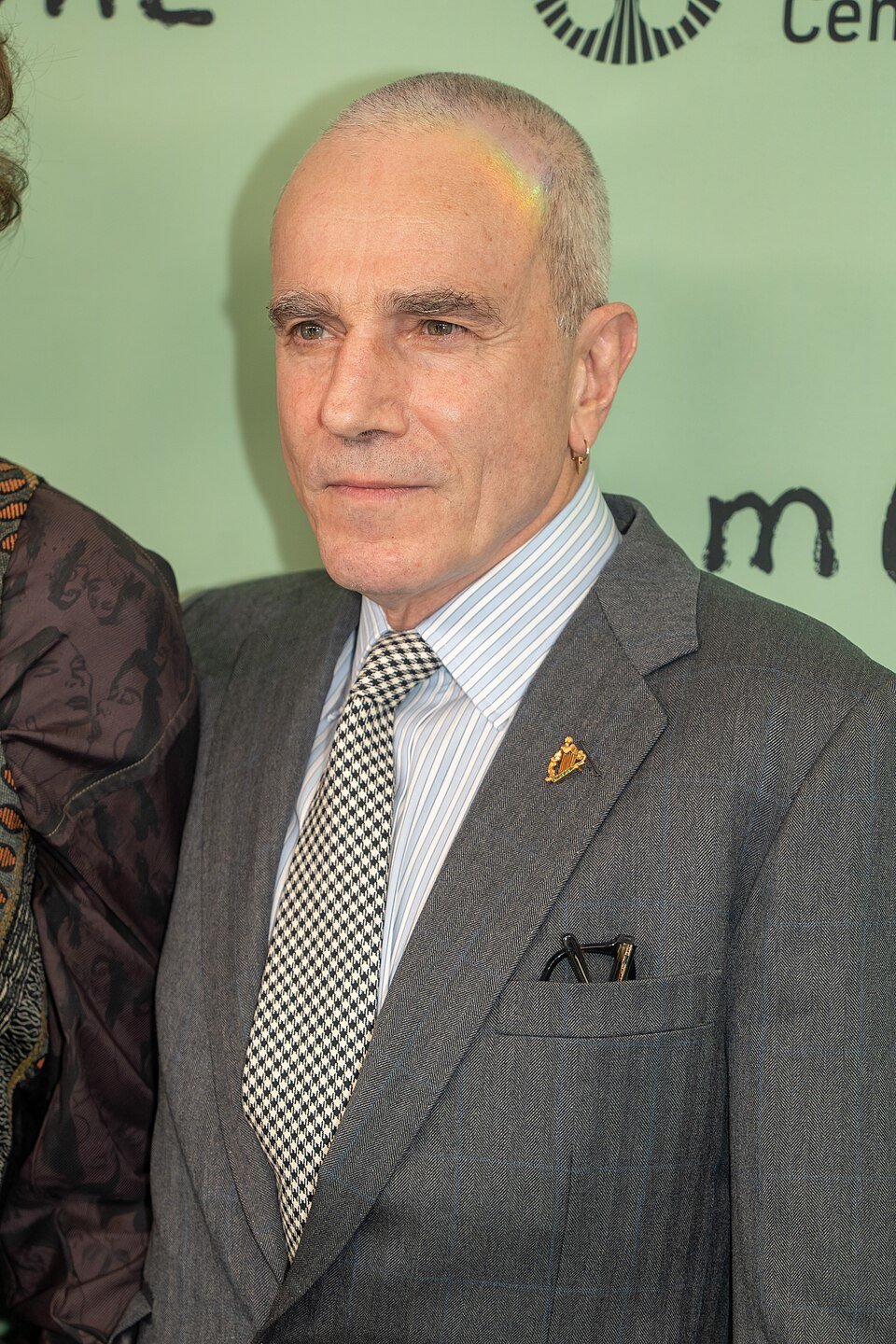
The Money Behind Daniel Day-Lewis: Net Worth, Age and a Career in Years
Meet Daniel Day-Lewis: A Kensington Talent With Staying Power
Daniel Day-Lewis, born in Kensington, London, on 29 April 1957 and now 69 years old, is the most decorated leading actor of his generation: the only man to win the Academy Award for best actor three times, and a performer whose long gaps between pictures became as famous as the pictures themselves. He became known in the 1980s for two contrasting performances released in the same season, and for the next three decades he worked rarely, prepared exhaustively and set the standard by which screen acting was judged.
His fortune is stated up front, with its source attached. Celebrity Net Worth puts Daniel Day-Lewis’s net worth at $40 million, on a page updated on 6 October 2025. That is the figure this profile carries. Trackers outside the sources used here have put the total at $50 million to $60 million; those readings are recorded in the fortune section as noted but not adopted. No Forbes total and no Sunday Times Rich List total for him was found, so neither is quoted anywhere in this profile.
His present-day position has changed in the way his admirers hoped and his own earlier statements seemed to rule out. After announcing his retirement in 2017, he returned to the screen in Anemone, which had its world premiere at the New York Film Festival in 2025 and was released in October 2025, co-written with and directed by his son Ronan. In a September 2025 interview with Rolling Stone he said he had never intended to retire and called his 2017 remarks grandiose. The sections that follow set out the early years, the family record, the career, the facts table and the money.
A Childhood in Kensington That Set the Pattern
Daniel Day-Lewis was born on 29 April 1957 in Kensington, London. Some secondary sources misplace his birth in Greenwich; Greenwich is where he grew up, in south-east London, and the correction is recorded here plainly: Kensington is the birthplace, Greenwich the childhood home ground. He was born into a family where words and performance were the family trades. His father, Cecil Day-Lewis, was a poet of standing; his mother, Jill Balcon, was an actress. The homes of his childhood were literary and theatrical in character, and the expectation that a life might be spent on language or on stage was present from the start.
His father died in 1972, when the son was fifteen, a loss that sits behind the seriousness of the adult career. The young Day-Lewis was restless at school and found his direction in acting, training at the Bristol Old Vic Theatre School and working in theatre and television through the late 1970s and early 1980s. Small screen parts followed, including an uncredited appearance in Gandhi in 1982 and a supporting role in The Bounty in 1984. The pre-fame record is not one of discovery from nowhere: it is a trained actor, from a performing family, serving a long apprenticeship before the two pictures of 1985 made his name.
One further fact of identity belongs in this section, because the facts table carries it and his life explains it. Day-Lewis holds dual British and Irish citizenship; he took Irish citizenship in 1993, honouring his father’s Irish roots and the country where he later made his family home for long periods. Both citizenships are recorded in the facts table, and neither is treated in this profile as cancelling the other.
The Partner and Children Behind Daniel Day-Lewis’s Public Life
Day-Lewis’s wife is Rebecca Miller, the writer and director. They married on 13 November 1996 — verified. The marriage has lasted nearly thirty years and has been conducted, like most of his life, away from publicity; the couple’s homes have been in Ireland and the United States, and their two younger sons were raised largely out of the public eye.
He has three sons. The eldest is Gabriel-Kane Day-Lewis, born on 9 April 1995, whose mother is the actress Isabelle Adjani, with whom Day-Lewis was in a relationship in the years before his marriage. The two younger sons, both with Rebecca Miller, are Ronan Cal Day-Lewis, born on 14 June 1998, and Cashel Blake Day-Lewis, born in May 2002. Ronan’s emergence as a director, and the father’s return to acting in the son’s first feature, is covered in the career section; it is the most public family collaboration of Day-Lewis’s life, and it was undertaken, on the record of their interviews, at the son’s invitation and with the father’s evident pleasure.
His parents are both deceased. Cecil Day-Lewis died in 1972; Jill Balcon died in 2002. Both are recorded in the facts table with their years. The family picture, taken whole, is of a man who inherited a trade from both parents, lost his father young, and built a private family life of unusual durability for his profession — one marriage of nearly three decades, three sons, and a working return, in his late sixties, that came through his own family rather than through any studio’s persuasion.
Anemone and the Return and the Latest Chapter of Daniel Day-Lewis’s Work
1985 — My Beautiful Laundrette and A Room with a View
The breakthrough came as a famous double. In My Beautiful Laundrette, released in 1985, Day-Lewis played a streetwise young Londoner in a drama of race, business and desire in Thatcher’s London. In A Room with a View, released in the same period, he played the priggish, buttoned Cecil Vyse in an Edwardian costume drama. The two performances, seen side by side, announced an actor of unusual range, and casting directors on both sides of the Atlantic took note. Nanou followed in 1986 and The Unbearable Lightness of Being in 1988, in which he played a Prague surgeon, learning Czech for the part in an early sign of the preparation to come.
1989 — My Left Foot
My Left Foot, released in 1989, cast him as Christy Brown, the Irish writer and artist with cerebral palsy who painted and wrote with his left foot. Day-Lewis remained in character through the shoot, to a degree that became industry legend, and the performance won him the Academy Award for best actor, the first of his three. The picture also set the pattern of his career: one role, prepared over months, followed by a long absence.
1992 — The Last of the Mohicans
The Last of the Mohicans, released in 1992, made him a leading man on the largest scale, as Hawkeye in an adventure set during the French and Indian War; he trained in wilderness skills and carried the part with a physical authority that broadened his audience considerably. The Age of Innocence followed in 1993, a study in restraint directed by Martin Scorsese, and the same year brought In the Name of the Father, in which he played Gerry Conlon, wrongly convicted of a bombing, in a performance of contained fury that earned another Academy Award nomination.
1996 — The Crucible and The Boxer
The Crucible, released in 1996, adapted Arthur Miller’s play of the Salem witch trials, with Day-Lewis as John Proctor; Miller became his father-in-law that same year, on his marriage to Rebecca Miller, the playwright’s daughter. The Boxer followed in 1997, reuniting him with director Jim Sheridan for the story of a Belfast boxer released from prison; he trained as a boxer for the part. Then, at the height of his standing, he stepped away from acting altogether.
1997 — The Florence Years
From 1997 to 2000 Day-Lewis lived largely in Florence, Italy, where he apprenticed himself to a shoemaker and learned the trade in earnest, making shoes by hand and declining acting work. On the record it reads as a craftsman testing whether another skilled trade could hold him as acting had. It could not, quite, and the return came through Scorsese.
2002 — Gangs of New York
Gangs of New York, released in 2002, cast him as Bill the Butcher, the nativist gang leader of 1860s New York, in a vast Scorsese production in which he starred alongside Leonardo DiCaprio’s net worth profile — the younger actor playing his protégé turned enemy. The performance, all menace and charisma, earned another Academy Award nomination and re-established him after five years away. The Ballad of Jack and Rose followed in 2005, written and directed by Rebecca Miller, a quieter picture made close to home in every sense.
2007 — There Will Be Blood
There Will Be Blood, released in 2007, is widely ranked among the greatest screen performances ever given. As Daniel Plainview, an oil prospector hollowed out by ambition, Day-Lewis built a character out of a voice, a gait and a terrifying patience, and won his second Academy Award for best actor. Nine followed in 2009, a musical in which he played a director in crisis — a rare excursion into lighter material, and a reminder that the filmography, for all its gravity, was chosen by curiosity as well as by weight.
2012 — Lincoln
Lincoln, released in 2012 and directed by Steven Spielberg, cast him as Abraham Lincoln in the final months of the Civil War and of Lincoln’s life. He won his third Academy Award for best actor — a record for a leading man that still stands — for a performance built on quietness: a soft voice, a storyteller’s timing, a politician’s patience. After Lincoln there was one more picture, and then the announcement that startled the industry.
2017 — Phantom Thread and the Announcement
Phantom Thread, released in 2017, cast him as Reynolds Woodcock, a couturier in 1950s London whose control of his world is undone by love. In June 2017, before its release, his spokeswoman announced that he would no longer work as an actor. The announcement was treated as final, and for eight years it held: no parts, no public campaigning, a private life in Ireland and America while the reputation settled into history.
2025 — Anemone and the Return
Anemone, which had its world premiere at the New York Film Festival in 2025 and was released in October 2025, ended the retirement that, he now says, was never quite intended. The picture is a family drama about fathers and sons, co-written by Day-Lewis with his son Ronan Cal Day-Lewis, who directed it. In a September 2025 interview with Rolling Stone he said he had never intended to retire and described his 2017 remarks as grandiose. The return, at 68, on a small family production rather than a studio epic, fits the whole pattern of the career: the work chose him, through his own family, and he went back to it as a craftsman goes back to a bench.
How Daniel Day-Lewis Built the Fortune
Celebrity Net Worth puts Daniel Day-Lewis’s net worth at $40 million, on a page updated on 6 October 2025. That is the adopted figure in this profile, printed in the opening section and the facts table and attributed at every mention. Trackers outside the sources used here have put his total at $50 million to $60 million. Those readings are recorded here in full and not adopted: this profile carries the named source’s figure and notes the higher range beside it, without resolving a disagreement that the available record cannot settle. No Forbes total and no Sunday Times Rich List total for him was found.
The shape of the fortune is unusual for an actor of his standing, and worth describing accurately. He made, across four decades, fewer than twenty leading screen performances. There were no franchise fees, no sequel escalators and no merchandising participations of the kind that build the largest acting fortunes. What there were, instead, were leading-man salaries on prestige productions — My Left Foot, The Last of the Mohicans, Gangs of New York, There Will Be Blood, Lincoln and Phantom Thread among them — each negotiated from a position of scarcity that he himself created by working so rarely. A salary, it should be said plainly, is earnings and not net worth; the $40 million from Celebrity Net Worth is the tracker’s estimate of what a career of such earnings, conservatively lived, accumulates to.
The Florence years belong in this section too, as evidence of the temperament behind the figure. A man who spends three years making shoes by hand while turning down leading roles is not maximising income, and his fortune’s modest scale beside his reputation is the arithmetic of that choice. The return in Anemone, a small family production, will have added a fee rather than a fortune. This profile’s position is therefore the modest and documented one: $40 million, attributed to Celebrity Net Worth, with the $50 million to $60 million range from outside trackers standing on the record unadopted.
The Kensington File on Daniel Day-Lewis
| The Kensington File on Daniel Day-Lewis | Details |
|---|---|
| Born | 29 April 1957, Kensington, London |
| Age | 69 |
| Net Worth | $40 million — Celebrity Net Worth (page updated 6 October 2025) |
| Height | 6 ft 1 in (1.86 m) |
| Weight | No reliable published figure exists |
| Wife | Rebecca Miller (m. 13 November 1996) |
| Children | Three sons: Gabriel-Kane Day-Lewis (b. 9 April 1995); Ronan Cal Day-Lewis (b. 14 June 1998); Cashel Blake Day-Lewis (b. May 2002) |
| Parents | Cecil Day-Lewis (d. 1972); Jill Balcon (d. 2002) |
| Nationality | British and Irish — dual citizenship (Irish citizenship taken in 1993) |
| No verified personal account |
Why Daniel Day-Lewis’s Career Will Outlast the Headlines
Daniel Day-Lewis’s position, on the verified record, is that of a 69-year-old actor born in Kensington, holding dual British and Irish citizenship, with a net worth of $40 million on Celebrity Net Worth’s estimate, married to Rebecca Miller since 13 November 1996, father of three sons, three Academy Awards for best actor behind him, and a return to the screen in 2025 in a picture co-written with and directed by his son Ronan. That is the whole of the position, stated whole.
The assessment from this desk is that the fortune is the least interesting number in his story and the most instructive. He proved that scarcity is a negotiating position, that craft can be practised at the pace of a shoemaker rather than a studio, and that a retirement announced in earnest can be withdrawn without embarrassment when the right work arrives through the front door of his own family. London, which gave him Kensington for a birthplace and Greenwich for a childhood, keeps the facts table with some pride.