
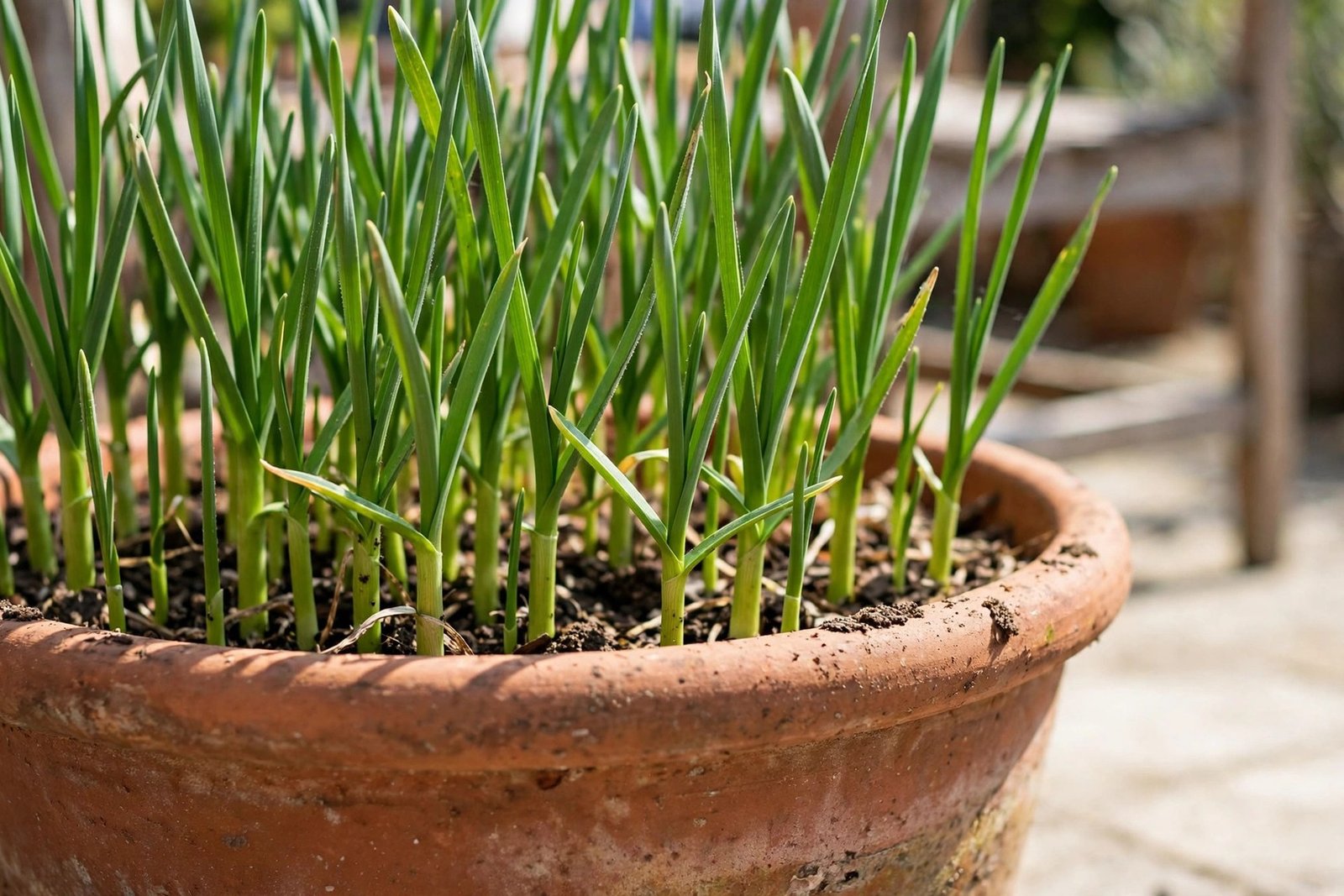
How to Grow Garlic in a Pot: Big Bulbs, Small Space
Garlic has a reputation as a garden-only crop — rows in allotments, braided in sheds. That reputation undersells it badly. Garlic is superbly suited to pots: it needs little space, asks for minimal attention through winter, and rewards a single autumn planting session with bulbs that shame supermarket offerings for flavour. A pot of garlic on a patio is one of gardening's highest returns on effort.
Here is how to grow garlic in a pot successfully — container choice, planting, the winter waiting game, and harvest timing for maximum bulb size.
The Pot and the Cloves
Garlic needs depth more than width: a pot at least 25-30cm deep lets roots develop properly, with 15cm spacing between cloves. A 30cm pot holds four to five cloves comfortably; a trough planter accommodates a row. Drainage is non-negotiable — garlic rots in waterlogged compost — so ensure generous drainage holes and a free-draining mix: multi-purpose compost with added grit or perlite.
Clove selection decides your harvest. Buy seed garlic from a garden supplier, not supermarket bulbs — supermarket garlic is often treated with sprout inhibitors and may carry disease, plus varieties bred for other climates underperform. In the UK, proven varieties include 'Solent Wight', 'Maddock Wight' and 'Germidour' (an early softneck). Choose the fattest outer cloves from each bulb for planting; small inner cloves produce small bulbs. Keep the papery skin on — it protects the clove.
Planting: Autumn Is the Secret
Plant in autumn — October to November in most of the UK — and this timing is the whole game. Garlic needs a cold period (vernalisation) to form proper bulbs; autumn planting gives it naturally, and the cloves establish roots before winter, then surge in spring. Spring planting works but produces noticeably smaller bulbs — autumn-planted garlic can be twice the size.
Push each clove 3-5cm deep, pointed end up, into the compost. Water once to settle, then largely ignore through winter — rain usually suffices; only water in prolonged dry spells. Position the pot in full sun in a sheltered spot; a wall's rain shadow in winter is fine since the pot needs less water then. Cold is not the enemy — garlic tolerates hard frosts happily. The enemy is winter waterlogging, so raise the pot on feet and ensure it drains freely. Then wait: green shoots appear within weeks, and the real growth happens from March.
The full background is available at Defra.
Spring Care: Water and Feed
When spring growth accelerates, garlic gets thirsty and hungry. Water regularly so compost stays evenly moist — bulb swelling demands consistent moisture — but ease off completely once the lower leaves start yellowing in early summer; late watering rots maturing bulbs and ruins storage. This watering curve (generous in spring, dry at the end) is the skill of garlic growing.
Feed monthly from March with a balanced liquid fertiliser or a high-nitrogen feed early shifting to general purpose — garlic is a moderate feeder and pot compost depletes. Remove any flower stalks (scapes) that appear on hardneck varieties — they divert energy from the bulb — and eat them: garlic scapes are a delicacy, superb in stir-fries. Weed the pot; garlic hates competition. Otherwise, stand back: the plant knows what it is doing.
Harvest Timing: The Critical Call
Reading the leaf signals
Harvest timing makes or breaks garlic. Too early and bulbs are small and uncured; too late and the wrappers split, ruining storage. The signal: when the lower third of leaves have yellowed but five or six green leaves remain — typically late June to July in the UK. Test one bulb first: it should be well-formed with tight wrappers.
Curing and storing bulbs
Lift on a dry day, easing bulbs out with a fork rather than pulling. Cure by drying in a warm, airy, shaded spot for two to three weeks — a greenhouse bench, a covered patio, a airy shed — until the necks are papery and tight. Then trim roots, cut stalks (or braid softnecks), and store in a cool, dry, dark place. Well-cured garlic keeps six to eight months. Save your biggest bulbs for replanting — selecting the best each year gradually adapts the variety to your exact conditions.
Braiding and Storing for the Year
Softneck garlic braids beautifully — and braiding is not decoration but the traditional storage method, keeping bulbs aired and accessible for months. To braid: cure bulbs with long supple stalks, start with three and plait in additional bulbs progressively, hanging the finished string in a cool, airy place. Hardnecks do not braid (their stiff stalks snap) — store those in mesh bags or open baskets instead.
Storage conditions decide whether garlic lasts until spring or sprouts by October: cool (around 10-15°C — not the fridge, whose humidity and cold trigger sprouting), dark, dry, and ventilated. Check stored bulbs monthly, using any softening ones first. Save the very best bulbs — biggest, tightest wrappers — for autumn replanting, and eat the rest with pride. A well-grown, well-cured, well-stored crop bridges the whole year: plant in October, eat homegrown garlic the following September, and the cycle becomes one of gardening's most satisfying closed loops.
Worth a look: the Royal Horticultural Society.
Troubleshooting Pot Garlic
Small bulbs usually mean spring planting, overcrowding, or harvesting late after wrappers split — plant in autumn, space properly, watch the leaves. Yellowing leaves in spring suggest waterlogging or nitrogen deficiency; check drainage first, feed second. Rust (orange spots on leaves) is common in wet years — it rarely ruins the bulb if it arrives late; improve air circulation and avoid wetting foliage.
Birds occasionally pull newly planted cloves; a light netting cover for the first month solves it. White rot (fluffy white fungus with tiny black dots at the base) is serious — destroy affected plants, never compost them, and do not grow garlic in that compost again. Fortunately it is rare in fresh potting compost, which is another argument for pots over tired garden soil. Most pot garlic problems trace to water — too much in winter, too little in spring.
Related reading you might enjoy: how much does a garden fence cost per panel in the UK and what is the best lawn feed for UK grass.
Grow garlic in a pot by planting fat outer cloves 3-5cm deep in a 25cm+ deep, free-draining pot in October-November — autumn planting and its cold period are what build big bulbs. Water sparingly through winter, feed and water generously in spring, stop watering as leaves yellow, and lift when the lower third of leaves have died back. Cure two to three weeks in warm air, store cool and dry, and replant your best bulbs. One autumn afternoon's work; summer's finest flavour.
Frequently Asked Questions
Can you grow garlic in pots?
Yes — garlic suits containers well. Use a pot at least 25-30cm deep with free-draining compost, space cloves 15cm apart, and ensure excellent winter drainage.
When should I plant garlic in the UK?
October to November. Autumn planting provides the cold period garlic needs to bulb properly; spring-planted garlic produces much smaller bulbs.
Why are my garlic bulbs so small?
Usually spring planting, overcrowding, insufficient feeding/watering in spring, or harvesting too early or late. Plant in autumn, space 15cm, and lift when the lower third of leaves yellow.
How do you store homegrown garlic?
Cure for 2-3 weeks in a warm, airy, shaded spot until necks are papery, then store cool, dry and dark. Well-cured bulbs keep 6-8 months.