
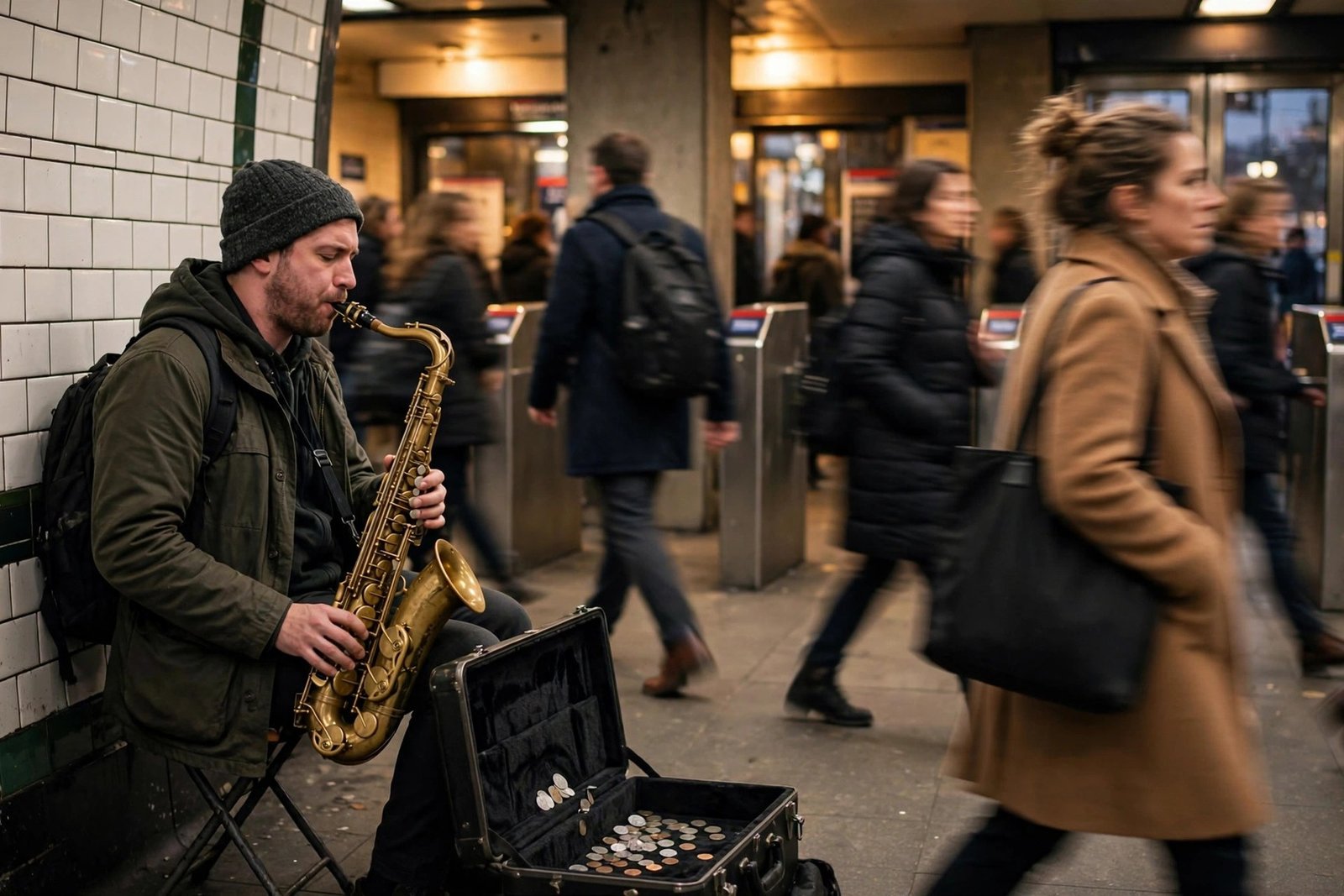
Is Busking on the Tube Actually Legal? The Real Rules
The saxophonist soundtracking your Northern line interchange is not just chancing it — London Underground busking is one of the most organised street-performance systems in the world. Yet myths persist: that anyone can play anywhere, that it is all technically illegal but tolerated, or that the performers you hear simply turned up with a guitar. The reality is a formal licensing scheme with auditions, designated pitches and enforceable rules.
So is busking on the Tube actually legal? Yes — if you are licensed. Here is how Transport for London's busking scheme really works, what it takes to join, and where the legal lines sit.
TfL's Licensed Scheme: How It Works
Busking on the Tube is governed by Transport for London's official busking scheme, which licenses performers to play at designated pitches across the network — from high-footfall interchanges like King's Cross St Pancras to quieter station spots. Performers must pass an audition to earn a licence; auditions assess musical quality and suitability for the Underground environment, and they run periodically through the year.
Licensed buskers book pitches through TfL's system, with rules on duration, amplification levels and pitch rotation to keep things fair. The scheme is genuinely competitive — thousands apply and standards are high, which is why the standard of Tube busking impresses visitors. Playing without a licence, or outside the scheme's terms, is a different matter entirely: it falls under railway byelaws and can lead to being moved on or fined. The performers you hear daily earned their spot.
The Audition: What It Takes
TfL auditions are the gatekeeper, and they are more serious than many expect. Performers typically prepare a short set showcasing range and crowd appeal — the assessors are listening for quality, variety and the ability to hold a transient audience's attention in a challenging acoustic environment. Underground stations are echoing, noisy spaces; acts that work there project clearly and choose material that cuts through.
Practical preparation matters as much as talent: battery-powered amplification within permitted limits, a setlist that works without a soundcheck, and the professionalism to perform reliably in allotted slots. Successful applicants join a roster that has launched genuine careers — several now-established artists started as licensed Tube buskers. Treat the audition like any professional gig opportunity, because that is exactly what it is.
The full background is available at PRS for Music.
Rules, Pitches and Etiquette
Booking pitches and time limits
Licensed busking comes with a rulebook. Pitches are designated spots — not wherever takes your fancy — and performers book slots rather than squatting favourite locations. Time limits and rotation keep turnover fair; volume limits protect staff and passengers; and performers must not obstruct passenger flow, which on a busy Underground station is a safety matter, not mere bureaucracy.
The unwritten etiquette
The unwritten rules matter equally. Regulars know which pitches suit which acts — a classical violinist and a grime MC thrive in different acoustic spots. Respecting fellow buskers' slots, keeping setups compact during rush hour, and reading the room (a mournful ballad at 8am Monday hits differently than at Saturday midday) separate the professionals from the tolerated. TfL can suspend licences for rule-breaking, so the scheme is self-policing in the best way: everyone's livelihood depends on collective good behaviour.
Busking Above Ground: A Different Legal World
Step out of the station and the legal picture changes completely. Street busking in London is governed by individual borough councils, each with its own regime — some require licences, some operate codes of conduct, and enforcement varies enormously. Westminster, Camden and other central boroughs with heavy busking traffic have the strictest systems; outer boroughs may be far more relaxed.
The key legal backdrop is that busking itself is not inherently illegal — it is amplified sound, obstruction, and begging-adjacent behaviour that attract enforcement. Councils use powers around noise nuisance and obstruction rather than banning music per se. Anyone planning a busking life in London needs to research each borough's current rules rather than assuming the Tube licence covers the street — it does not. The savviest buskers work both systems: licensed Tube pitches for reliable footfall, street spots for freedom.
Turning Pitches Into a Career
The best Tube buskers treat the pitch as a business, not just a gig. The mechanics: a visible, scannable tip point (QR codes for contactless tips are now essential — cash is dying and tips with it), a simple sign with your name and socials, and a mailing-list signup for the regulars who pass daily. Many buskers report contactless doubling takings; the friction of 'no cash, sorry' was silently costing them for years.
The career ladder is real: daily performance hones a stagecraft no rehearsal replicates, commuter crowds are A&R scouts' hunting ground, and viral Tube clips have launched recording careers. Diversify sensibly — private events, weddings and corporate gigs pay far better per hour and often come from pitch contacts. Keep the licence, keep the standards, keep showing up: the performers who treat busking as a profession, with its business systems and its craft discipline, are the ones still earning from it years later — and some are the names you now hear on the radio.
Worth a look: Transport for London.
Is It Worth Doing?
Financially, Tube busking is real work, not a hobby with tips. Regular licensed performers at good pitches report earnings that support full-time musicianship, with contactless donations now supplementing cash — many carry QR codes for digital tips. Beyond money, the benefits are artistic: hours of daily performance hone stagecraft faster than any rehearsal room, and the exposure is genuine — talent scouts, producers and festival bookers do ride the Tube.
The costs are honest too: auditions are competitive, pitches must be booked and worked consistently, and performing in public for hours demands resilience to indifference. But as a path for working musicians in one of the world's most expensive cities, the scheme is a remarkable institution — a formal, merit-based stage in the city's arteries. Legal, organised, and genuinely career-making: Tube busking is London's open-air conservatoire.
Keep exploring with how do i cook tofu so it actually tastes good and is it legal to use ai to write my university essay.
Busking on the Tube is legal through TfL's licensed scheme — performers audition, book designated pitches, and follow rules on volume, duration and obstruction. Unlicensed playing falls under railway byelaws and risks enforcement. Above ground, each borough sets its own street-busing rules, so research locally. For musicians, the scheme offers real earnings and career-launching exposure; for passengers, it is the soundtrack of the city, properly organised.
Frequently Asked Questions
Do you need a licence to busk on the London Underground?
Yes — TfL runs an official licensed busking scheme requiring an audition. Licensed performers book designated pitches; unlicensed busking on the network breaches railway byelaws.
How do you audition for Tube busking?
TfL holds periodic auditions assessing musical quality and suitability for the Underground environment. Prepare a short, varied set that projects in noisy, echoing station acoustics.
Can you busk on London streets without a licence?
It depends on the borough — each London council sets its own rules, from licences to codes of conduct. Busking itself is not inherently illegal; enforcement targets noise nuisance and obstruction.
How much do Tube buskers earn?
It varies by pitch and consistency, but regular performers at busy stations earn a genuine living, with contactless and QR-code tips now supplementing cash donations.