
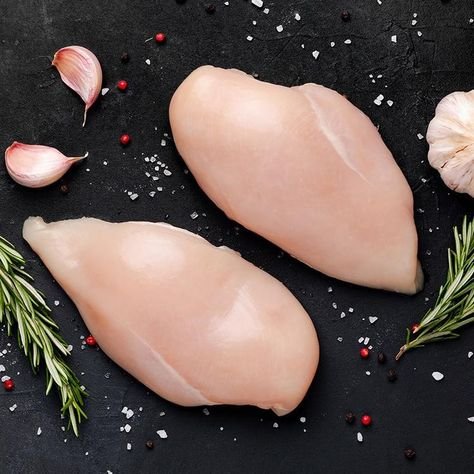
How Many Pounds in 1 Chicken Breast? Complete Answer
Quick answer: One average boneless, skinless chicken breast weighs about 0.5 pounds (roughly 225g). A bone-in, skin-on breast weighs more — typically 0.75 to 1 pound (340–450g). Sizes vary, so weighing is always most accurate for recipes.
Following an American recipe that calls for “1 pound of chicken breast” and wondering how many breasts that actually is? Or converting a UK recipe into pounds? Chicken breast weights vary more than you’d think, so here’s the complete answer with conversion charts and practical tips.
Average Chicken Breast Weights
| Type | Average weight | In grams |
|---|---|---|
| Boneless, skinless (standard) | 0.5 lb | ~225g |
| Boneless, skinless (large) | 0.65–0.75 lb | ~300–340g |
| Bone-in, skin-on | 0.75–1 lb | ~340–450g |
| Mini fillets / strips | 0.1–0.15 lb each | ~50–70g each |
So as a rule of thumb: 2 average boneless chicken breasts = about 1 pound.
Why the Weight Varies So Much
- Chicken size: Modern broiler chickens are bred larger than they used to be — breasts keep getting bigger. A “large” breast today can be nearly double a small one.
- Bone and skin: Bone adds roughly 20–30% to the weight, skin a little more. If a recipe means boneless and doesn’t say so, assume boneless.
- Free-range vs standard: Free-range birds are often slightly smaller with proportionally smaller breasts.
- Water content: Some supermarket chicken is plumped with added water (check the label — it must be declared in the UK). This affects both weight and cooking.
UK Supermarket Weights (What You’ll Actually Buy)
In the UK, chicken is sold in grams, not pounds. Here’s what typical packs contain:
- Tesco / Sainsbury’s / Asda standard pack: 4–5 breasts, ~650–750g total (about 1.5 lb)
- Large pack / family pack: ~1kg (2.2 lb), usually 5–6 breasts
- Single large breast: Often 250–300g+ in supermarkets — bigger than the “average” quoted in US recipes
- Mini fillets pack: ~400–500g of small strips
UK food labelling rules require the weight to be clearly shown, so always check the pack — it’s more reliable than any chart. The gov.uk food labelling guidance explains what must appear on packaging.
Quick Conversion Chart
| Pounds | Grams | ≈ Chicken breasts |
|---|---|---|
| 0.5 lb | 225g | 1 average breast |
| 1 lb | 450g | 2 average breasts |
| 1.5 lb | 680g | 3 average breasts |
| 2 lb | 900g | 4 average breasts |
Portion Guide: How Much Per Person?
- Main meal: 150–200g (5–7 oz) cooked chicken per adult — roughly one small breast or two-thirds of a large one.
- Remember: Chicken loses about 25% of its weight during cooking. So 200g raw becomes ~150g cooked.
- For a family of four: About 800g–1kg raw boneless breast (roughly 4 large breasts).
Buying Chicken Breast in the UK: What to Look For
A few practical tips when you’re at the shops:
- Check for added water. Some chicken is enhanced with up to 10–15% added water, which must be declared on UK labels. It looks plumper but shrinks more during cooking and can make marinades watery.
- Look at the shape. Evenly thick breasts cook more evenly. Very tapered breasts (thick one end, thin the other) benefit from butterflying or pounding to an even thickness.
- Higher welfare usually means better texture. Free-range and organic chicken tends to have firmer texture and better flavour, though it’s pricier.
- Use-by dates matter. Fresh chicken should be cooked or frozen by its use-by date. You can freeze it on the day of purchase for up to 3 months.
Tips for Recipe Success
- Weigh it. Kitchen scales are cheap and eliminate all guesswork — especially important for marinades and cooking times.
- Butterfly large breasts. Supermarket breasts are often very thick on one end. Slicing them horizontally into two thinner pieces helps them cook evenly.
- Adjust cooking time by weight, not by “number of breasts.” A 300g breast needs longer than a 180g one.
- Check it’s cooked: Chicken must reach 75°C internally (use a meat thermometer), with juices running clear and no pink meat. The Food Standards Agency has clear guidance on cooking poultry safely at home.
FAQs
How many chicken breasts are in a pound?
About 2 average boneless, skinless breasts make 1 pound (450g). If they’re large supermarket breasts, it might be just 1½.
How much does a chicken breast from Tesco weigh?
Typically 150–300g each, with most around 200g. Check the pack weight and divide by the number of breasts for the exact figure.
Is a chicken breast the same as a chicken fillet?
In the UK, “chicken fillets” often means the small tenderloin strips underneath the breast (sometimes called mini fillets), while “chicken breast” means the whole breast. American recipes saying “chicken fillets” usually mean whole breasts.
How many calories in one chicken breast?
A 150g cooked skinless breast has roughly 160–170 calories and about 45g of protein — which is why it’s a fitness staple.
Conclusion
One average boneless chicken breast is about half a pound (225g) — so two make a pound. But sizes vary widely, especially with today’s larger supermarket birds, so when it matters, weigh your chicken. Your recipes will thank you.