
What Can Londoners Actually Recycle in 2026? The Definitive List
Quick: can you recycle a crisp packet in London in 2026? A coffee cup? A Tetra Pak? The yoghurt pot lid? If you hesitated, you’re normal — but the answers changed this year, and mostly for the better. England’s Simpler Recycling scheme, in force from 31 March 2026, standardised what councils must collect, ending years of borough-by-borough guesswork. This is the definitive, practical guide to what Londoners can actually put in each bin now — the yes list, the no list, and the tricky items that still catch people out.
The four streams: your new bin map
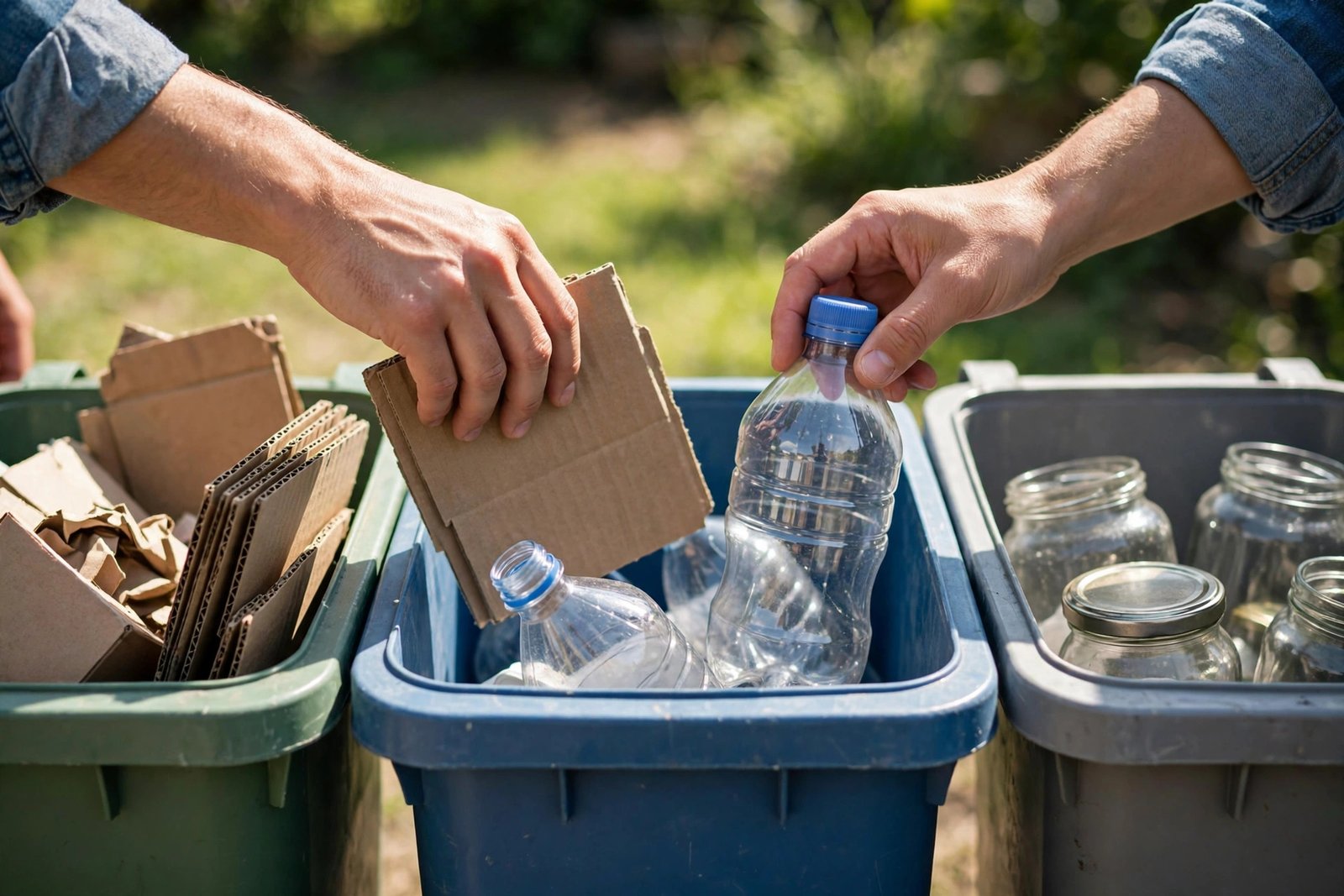
Under Simpler Recycling, English councils collect four streams by default. Memorise these and you’ve solved 95% of bin decisions:
1. Food and garden waste — collected weekly. All food scraps (including meat, fish, dairy, bones, tea bags, coffee grounds), plus garden waste like grass cuttings, leaves, and small prunings. This is the stream that changes most lives: food waste is heavy, smelly, and was rotting in general waste — now it goes to anaerobic digestion or composting instead of landfill.
2. Paper and card — newspapers, magazines, cardboard boxes (flattened), envelopes, wrapping paper (non-metallic, non-glitter — do the scrunch test: if it stays scrunched, it’s recyclable). Keep it dry; soggy card is rejected.
3. Dry recyclables — glass bottles and jars, metal cans and tins, aerosols, aluminium foil (clean), plastic bottles, pots, tubs and trays, and — new for many — cartons (Tetra Paks) and soft plastics including crisp packets, bread bags, and cling film. This is the big expansion: flexible plastics, the number-one confusion item for a decade, are now in.
4. Residual (general) waste — everything else: nappies, sanitary products, pet waste, broken crockery, crisp… no wait, crisp packets are in now. Residual is genuinely non-recyclable stuff: used tissues, cigarette butts, condoms, vacuum cleaner contents. The government’s Simpler Recycling announcement sets out the full default requirements and the 65%-by-2035 ambition behind them.
The tricky items, definitively answered
Coffee cups: still NO in most kerbside streams — the plastic lining defeats standard paper recycling. Some high-street chains collect them in-store. Best fix: reusable cup.
Pizza boxes: YES if not too greasy — tear off the greasy base (food waste) and recycle the clean lid. A little grease is fine; a soaked box isn’t.
Batteries: NEVER in any bin — fire risk in collection trucks. Take them to supermarket or council collection points.
Electronics and cables: NEVER in bins. Small electrics go to council recycling centres or retailer take-back; see how to recycle old electronics in the UK for the full routes, including the free options.
Textiles and clothes: not in the recycling bin — donate wearable items (donating clothes to charity shops), and use textile banks or council collections for worn-out fabric.
Light bulbs: old-style incandescents go in general waste (wrapped); energy-saving and LED bulbs go to recycling centres, not the bin.
Nappies, wipes, sanitary products: general waste, always — they’re the top contaminant in recycling streams.
Plastic bags: now YES in the dry recyclables stream under Simpler Recycling (previously supermarket-only). Bundle soft plastics together so they don’t escape at the sorting plant.
Shredded paper: tricky — loose shreds fall through sorting machinery. Put shredded paper in a paper bag or envelope, stapled shut, in the paper stream.
The golden rules that never change
Rinse, don’t wash. Containers need to be empty and roughly clean — a quick rinse, not a dishwasher cycle. Leftover food contaminates paper and card streams.
Lids on. Bottle tops, jar lids, and caps are recyclable — leave them on so they don’t fall through sorting screens. (This reversed the old advice; the new rule is lids on.)
Flatten cardboard. It saves space in your bin and at the plant, and unflattened boxes jam machinery.
No bagged recyclables. Don’t bag your recycling in plastic sacks (unless your council specifically says to) — loose in the bin, so sorters can see and separate it. The one exception: bundle soft plastics together as above.
When in doubt, check. Your borough’s website has the final word on local arrangements — bin colours, collection days, and any transitional quirks. Council A–Z guides like Reading’s what-goes-in-each-bin list show the format to look for on your own borough’s site.
What about flats?
Simpler Recycling applies to flats too, but the logistics differ: communal bin stores, chutes, and managing-agent arrangements. If your block’s recycling provision is poor — one overflowing mixed bin, no food waste caddy — that’s now something to raise, because the standards apply to all homes. Talk to your managing agent or borough; many London blocks are being retrofitted with proper four-stream provision through 2026. And be extra careful about contamination in communal bins — one neighbour’s black sacks in the recycling can condemn the whole container.
Coming in 2027: the Deposit Return Scheme
One more change is on the horizon that’ll affect your bin habits: from October 2027, the UK-wide Deposit Return Scheme goes live. Every PET plastic bottle, aluminium can and steel drinks container will carry a deposit — expected to be around 20p — refunded when you return the empty to a reverse vending machine or collection point. Scotland, England, Wales and Northern Ireland are running aligned schemes, so the rules will be consistent whether you’re in London or Loch Lomond.
What does this mean for your bins? Drinks containers — some of the highest-value recyclables in your dry stream — will increasingly bypass the kerbside system entirely, returned directly for high-quality recycling. Countries with DRS consistently achieve 90%+ return rates, versus roughly 70% for kerbside collection of the same materials. Expect reverse vending machines in supermarkets to become as normal as self-checkouts. Start building the habit now: rinse drinks containers and keep them separate, and you’ll be DRS-ready on day one. It’s the rare environmental policy that’s both effective and mildly profitable — 20p a bottle adds up faster than you’d think.
Frequently asked questions
Can I recycle crisp packets at the kerbside now?
Yes — under Simpler Recycling, soft/flexible plastics including crisp packets are collected in the dry recyclables stream. Bundle them together so they don’t escape during sorting.
Do I need to wash everything before recycling?
No — just empty and give a quick rinse. You’re removing food residue, not sterilising. Save the water; the reprocessing plant handles the rest.
Why can’t I recycle coffee cups?
The waterproof plastic lining bonded to the paperboard defeats standard paper recycling — separating the two needs specialist plants most councils don’t use. Reusable cups are the real answer.
What happens if I put the wrong thing in?
Minor mistakes get sorted out at the plant. Systematic contamination — food, nappies, electronics — can mean whole loads rejected to incineration, and some boroughs now tag and refuse badly contaminated bins. When in doubt, check rather than guess.
Is London’s recycling rate actually improving?
London has historically lagged the national average (flats, transience, and the old patchwork all hurt). Simpler Recycling plus weekly food waste collections are designed to change that — but the early data will take a year or two to show. Your bin habits are literally the dataset.
The bottom line
In 2026, Londoners can recycle more, more consistently, than ever before: four streams, soft plastics and cartons in, weekly food waste out. Learn the four streams, rinse and flatten, lids on, batteries and electronics never in the bin, and check your borough’s page for local logistics. The postcode lottery is over — the only thing left is the habit. And that’s the easy part, now that the rules finally make sense.