
How to Be Mindful During a Busy London Day
How to be mindful during a busy London day: micro-practices for the commute, workday triggers, evening wind-downs — no extra time needed, just moments.
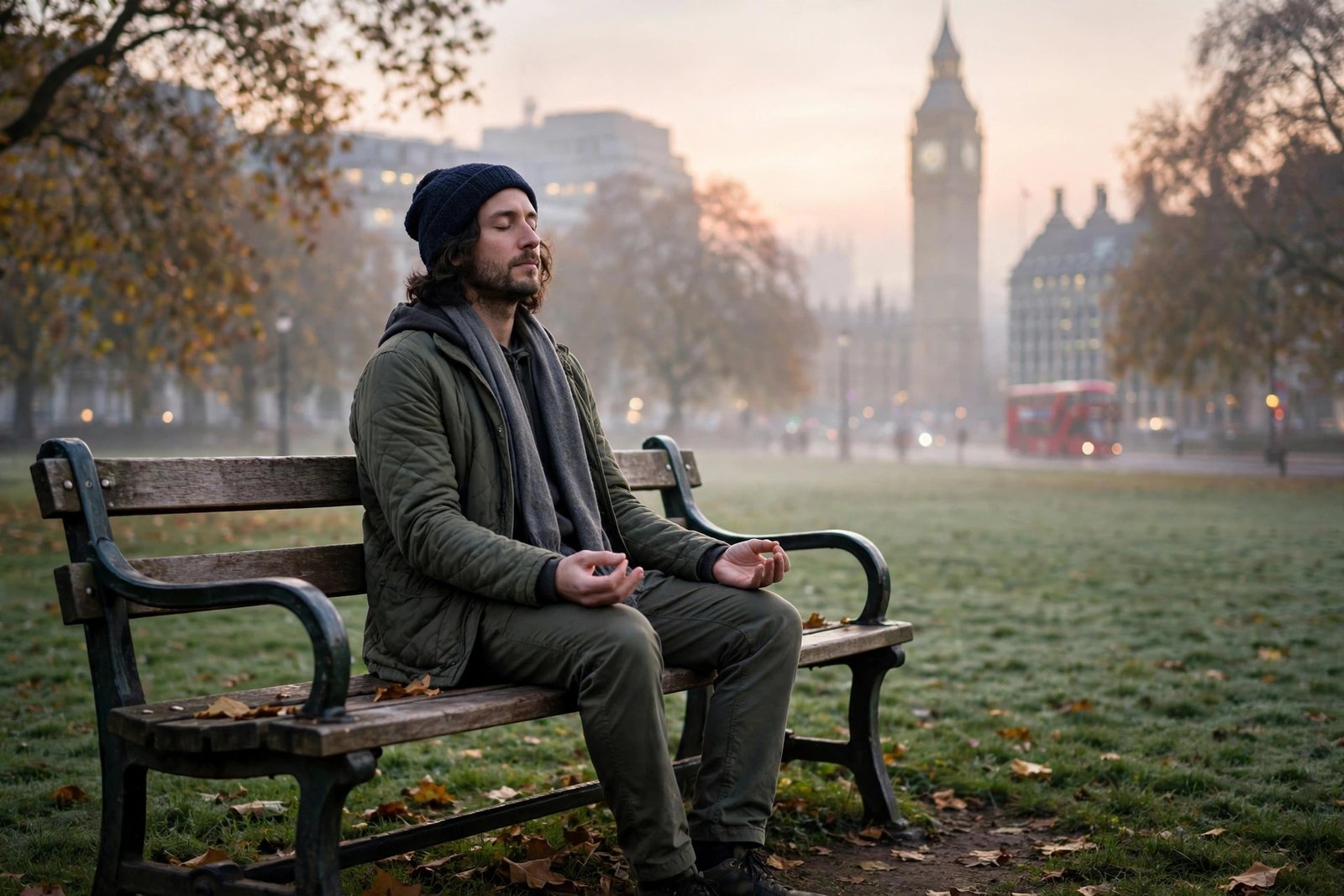
Mindfulness advice usually assumes a life of leisure: twenty minutes of meditation at dawn, a silent retreat, a yoga studio. Then there is the actual London day — the 7:42 cancelled, the inbox at 200, the meeting that could have been an email, the commute home standing nose-to-armpit on the Northern line. Who has time to be mindful in that?
You do — because mindfulness is not a separate activity competing for calendar space. It is a way of inhabiting the activities already filling your day. This guide shows how to weave genuine mindfulness into a busy London routine without adding a single appointment: micro-practices for the commute, the workday and the evening, plus the science of why small moments outperform occasional long sessions.
What mindfulness actually is (and isn’t)
Strip away the branding: mindfulness is paying attention to the present moment, deliberately and without judgement. That is it. It is not emptying your mind (impossible), achieving bliss (occasional), or becoming a calmer person overnight (gradual). It is the trainable skill of noticing where your attention is and gently returning it to now.
The evidence base is solid: randomised trials link regular mindfulness practice to reduced anxiety, lower perceived stress, improved focus and better emotional regulation. Crucially, the benefits accrue from frequency, not duration — five one-minute practices through the day outperform one weekly half-hour session for most people. That finding is the busy Londoner’s charter: you do not need more time, you need more moments.
The commute: your daily mindfulness laboratory
The average London commute is 74 minutes round trip — dead time most people fill with doomscrolling. Reclaim it. Try the “sense inventory”: for two minutes, notice five things you can see, four you can hear, three you can feel (the handrail’s texture, your feet on the floor), two you can smell, one you can taste. On a packed Tube this is oddly absorbing, and it yanks attention out of rumination.
Walking portions of the commute are gold: feel each footstep, notice the rhythm of your breath, observe the street without narrating it. If you cycle or drive, use red lights and station stops as mindfulness bells — three conscious breaths, shoulders dropping, jaw unclenching. Even the mindfulness of annoyance counts: noticing “I am furious at this delay” without fuelling it is the practice working. For the screen habit that colonises commutes, cutting down screen time without feeling bored frees the attention mindfulness needs.
Micro-practices for the workday
Anchor tiny practices to existing triggers. The kettle boiling: stand, breathe, feel your feet — one minute of presence while it heats. Before opening the laptop: three slow breaths and one clear intention for the next hour. Between meetings: sixty seconds of noticing your body in the chair rather than grabbing the phone. Walking to the printer or kitchen: feel the movement, unclench your hands.
The “single-tasking” experiment is transformative for knowledge workers: choose one 25-minute block to do exactly one thing with full attention — no tabs, no phone, no half-listening. Notice how much calmer and more effective it feels than fragmented multitasking. Email is the great mindfulness thief; batch it into two or three sessions rather than living in the inbox, and notice the background anxiety drop.
Lunch deserves special mention: eat one meal a week mindfully — no screen, tasting each bite, noticing textures and flavours. Most people discover they have never actually tasted their Pret sandwich. It is a small revelation that ripples into the afternoon’s energy.
Evening wind-down: transitioning out of the day
London days bleed into evenings — the phone keeps buzzing, the mind keeps rehearsing. Create a threshold ritual: changing clothes, a short walk, five minutes of journaling the day’s events. Starting a journaling practice for mental clarity pairs beautifully with mindfulness — writing externalises the mental loop so attention can rest.
The body scan is the classic evening practice and takes ten minutes lying in bed: move attention slowly from toes to head, noticing sensation without trying to change anything. Most people fall asleep halfway — which, frankly, is also a result. Screens before bed wreck both mindfulness and sleep; an hour’s digital sunset is the single highest-leverage evening habit.
When busy becomes too much
Mindfulness is a wellness practice, not a treatment. If busyness has tipped into persistent anxiety, low mood, panic or burnout, self-help has limits — and reaching for support is strength, not failure. Free mental health support available in the UK includes NHS talking therapies (self-referral, no GP needed), Samaritans, and Mind’s resources. Mindfulness complements professional support; it does not replace it.
Watch for the signs that “busy” has become harmful: dread on Sunday evenings, physical symptoms with no medical cause, irritability that strains relationships, or using alcohol to switch off. These deserve proper attention, not just deeper breathing.
Building the habit that sticks
Start absurdly small: one mindful minute daily, attached to an existing habit (after brushing teeth, while the kettle boils). Habit research is clear — tiny and consistent beats ambitious and abandoned. Use phone reminders initially, then let the routine carry itself. Track streaks if that motivates you, but do not punish misses; the practice is returning, not perfection.
After a month, most people notice the real payoff is not calm — it is choice: the pause between stimulus and reaction where you get to decide. In a city engineered to hijack attention, that pause is a superpower. The NHS’s Every Mind Matters resources offer further free, evidence-based techniques.
Conclusion
Being mindful during a busy London day is not about finding an extra hour — it is about inhabiting the hours you already have. Sense inventories on the commute, breathing triggers through the workday, mindful meals, evening wind-downs: small, frequent moments of presence that compound into a genuinely different relationship with your days. Start with one minute tomorrow. The city will still be hectic; you do not have to be. And once you taste that pause between stimulus and reaction, you will find yourself reaching for it everywhere — which is exactly the point.
Frequently Asked Questions
What is the difference between mindfulness and meditation?
Meditation is a formal practice — sitting to train attention. Mindfulness is the skill itself: present-moment awareness, usable anywhere. Meditation builds the muscle; mindfulness is using it in daily life. You can be mindful without ever meditating formally.
Can mindfulness work if I only have a few minutes a day?
Yes — research shows frequent brief practices outperform occasional long ones. Five one-minute mindful pauses daily produce measurable stress reduction within weeks.
Do I need to meditate to be mindful?
No. Formal meditation is one vehicle, but mindful commuting, eating, walking and working all count. The skill is present-moment attention, whatever the activity.
What is the easiest mindfulness exercise for beginners?
Three conscious breaths: feel the air enter and leave, notice the pause between. Attach it to an existing trigger like the kettle boiling or a red light.
How long before mindfulness makes a difference?
Most people notice subtle shifts in 2–4 weeks of daily micro-practice: less reactivity, better focus, easier sleep. Deeper changes build over months.
Is mindfulness a replacement for therapy?
No. It is a valuable wellness practice and complement to treatment, but persistent anxiety, depression or burnout deserve professional support — freely available through the NHS.