
How to Moisturize Hair: Step-by-Step Guide (2026)
How to Moisturize Hair: Step-by-Step Guide (2026)
Dry, brittle hair that snaps when you brush it is crying out for moisture. The simplest answer to how to moisturize hair is this: wash with a gentle, sulphate-light shampoo, follow with a deep conditioner for 10-20 minutes, then lock it all in with a leave-in conditioner and a light oil. If your hair drinks up products and still feels rough by evening, the layering order probably needs fixing — oil seals moisture in, it does not add it. This guide walks you through the whole routine with products you can pick up at Boots or Superdrug, plus extra advice for curly, coily, dry and damaged hair types.
Moisturised hair means hair with enough water inside the strand. Frizzy ends, dull colour and breakage are the classic signs the moisture balance is off. The good news is that you can fix it at home in under half an hour, and keep it fixed with a simple weekly habit. Understanding how to properly wash your hair first makes every moisturising step work harder.
Step 1: Start with a gentle wash
Shampoo removes the build-up that stops moisture getting in. Use lukewarm water — hot water strips natural oils and roughens the cuticle. Massage a sulphate-light or sulphate-free shampoo into your scalp only, not the lengths. The suds running down are enough to clean the mid-lengths and ends. Rinse well. If you wash daily, consider alternating with a co-wash or just conditioner on some days.
Step 2: Deep condition for 10-20 minutes
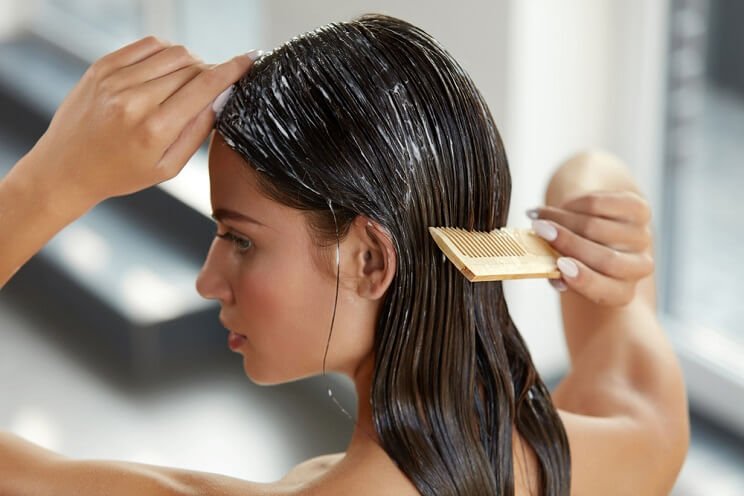
This is the heart of the routine. After shampooing, squeeze excess water from your hair and work a deep conditioning mask from mid-lengths to ends. Cover your hair with a shower cap — the trapped heat opens the cuticle so the mask sinks in. Leave it on for 10-20 minutes, then rinse with cool water to seal the cuticle. Do this once a week for normal hair, twice a week if your hair is very dry, bleached or heat-damaged.
Step 3: Apply a leave-in conditioner
On damp, towel-dried hair, apply a leave-in conditioner or cream from mid-lengths to ends. This layer keeps feeding moisture into the hair between washes and makes detangling far gentler. Comb through with a wide-tooth comb, starting at the ends and working up to the roots. Never rake a brush through wet, fragile hair from the top down.
Step 4: Seal it with the LOC or LCO method
LOC stands for Liquid, Oil, Cream — the order in which you layer products. After your leave-in (the “liquid”), smooth a few drops of oil over your hair to seal the moisture in, then finish with a styling cream if you like. If your hair is fine or low-porosity and gets weighed down easily, try LCO instead: liquid, cream, then just a whisper of oil on the ends. The oil goes last because it locks things in — putting oil on dry hair alone will not moisturise it.
Step 5: Choose the right oil for your hair type
A little oil goes a long way. Warm 2-4 drops between your palms and smooth over the lengths and ends. The classics work for a reason:
- Argan oil — light, fast-absorbing, brilliant for frizz and a good all-rounder for most hair types.
- Jojoba oil — the closest match to your scalp’s natural oils, great for dry scalps without heaviness.
- Coconut oil — rich and penetrating, best as a pre-wash treatment on thick, dry or coily hair; it can be too heavy for fine hair.
- Sweet almond oil — cheap, light and easy to find, a solid budget pick for everyday ends.
For more on oiling as a standalone treatment, see our guide to how to apply oil to hair.
How often should you moisturize your hair?
Most people need a deep moisture session once a week. If your hair is curly or coily, chemically treated, bleached, or you use heat tools daily, bump it to twice a week. Fine, straight hair can usually get away with a lighter leave-in after each wash and a mask every week or two. The test is simple: if your hair feels rough, looks dull, or snaps easily a day after washing, it wants more moisture.
Tips
- Sleep on a satin or silk pillowcase — cotton drags moisture out of your hair overnight.
- Trim split ends every 8-12 weeks; no product can repair a split, and splits travel upward.
- Cut back on heat styling. When you do use heat, always apply a heat protectant first.
- Drink water and eat well — hair is built from the inside, and crash diets show up in your strands.
- Protect hair from sun and chlorine: rinse before swimming and wear a hat in strong sun.
- For curly and coily hair, refresh between washes with a water-based spray rather than piling on more oil.
- If you are trying to grow longer hair, pair your moisture routine with our tips on how to make your hair grow thicker.
FAQs
Can I moisturize my hair without buying new products?
Yes. A warm towel wrapped over your regular conditioner for 15 minutes turns it into a decent deep treatment, and a tiny amount of kitchen olive oil smoothed over damp ends works as an emergency sealant. You do not need a £30 mask to start.
What is the difference between moisturising and conditioning?
Moisture means water inside the hair strand; conditioning means smoothing the outside (the cuticle). You need both: water-based products and deep treatments add moisture, while oils and silicones condition by sealing the cuticle so the moisture stays put.
Why does my hair still feel dry after oiling it?
Because oil seals rather than hydrates. If you put oil on dry hair, you are locking out moisture instead of locking it in. Always apply oil after a water-based product — leave-in conditioner on damp hair — so there is moisture to seal.
Is coconut oil good for all hair types?
Not quite. It is excellent for thick, dry or coily hair, especially as a pre-wash treatment. But on fine or low-porosity hair it can build up and leave hair feeling stiff or straw-like. If that happens, switch to lighter argan or jojoba oil.
Should I do a patch test before using a new hair mask?
It is sensible if you have sensitive skin or allergies. Dab a little behind your ear or on your inner arm and wait 24 hours. The NHS advises patch testing before any new cosmetic product if you have a history of skin reactions.
Keeping your hair moisturised is not complicated — it is just a habit. Wash gently, deep condition weekly, layer leave-in then oil, and protect your hair while you sleep. Do that consistently and most hair types turn noticeably softer and shinier within three to four weeks. Your hair does not need expensive miracles; it needs water, a seal, and a routine you will actually stick to.