
Damp Proofing Cost UK 2026: Prices for Every Type
Damp Proofing Cost UK 2026: Prices for Every Type
Damp proofing quotes range from a few hundred to tens of thousands — and the industry has a reputation problem, with unnecessary work sold to worried homeowners. Here’s how much damp proofing costs in the UK, what each treatment actually does, and how to avoid paying for work you don’t need.
Typical costs by treatment
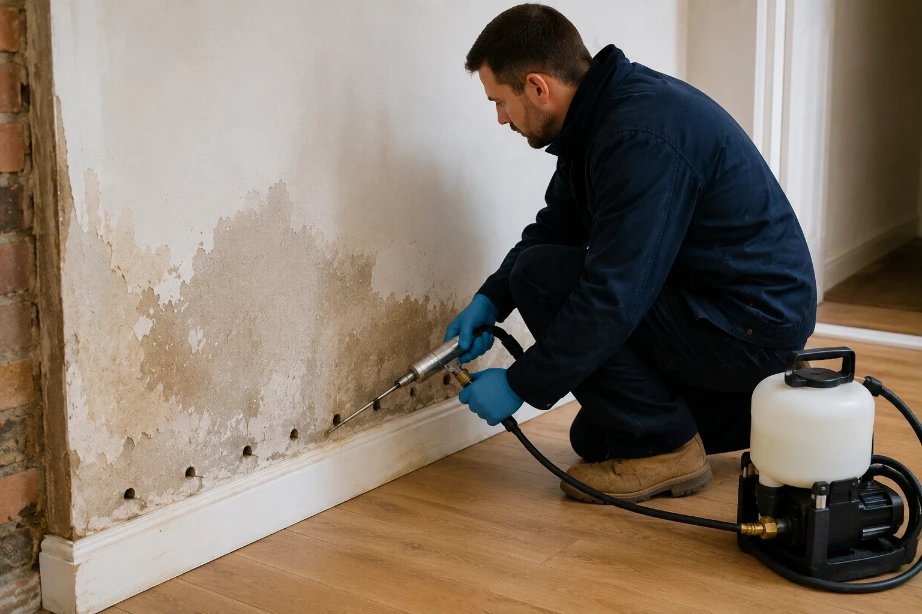
- Chemical DPC injection (rising damp): £250–£450 per wall / £2,000–£4,000 for a whole house
- Damp-proof membrane (tanking a cellar): £3,000–£8,000 depending on size
- External waterproofing / render repair: £1,500–£5,000
- Repointing (failed mortar letting water in): £30–£60/sqm
- Cavity wall tie replacement (if ties are the issue): £1,500–£3,000
- Positive input ventilation (PIV) for condensation: £400–£800 fitted
- Independent damp survey: £200–£400 — the best money you’ll spend
CRITICAL: diagnose before you spend
Here’s what the damp-proofing industry doesn’t advertise: most “rising damp” diagnoses are wrong. Studies and independent surveyors consistently find that the majority of damp in UK homes is condensation or penetrating damp — neither of which is fixed by chemical DPC injection.
Before agreeing to any damp-proofing:
- Get an independent survey — from a surveyor who doesn’t sell remedial work. A PCA-qualified surveyor or RICS surveyor, £200–£400.
- Be suspicious if the “surveyor” works for the company quoting the work and diagnoses rising damp within 10 minutes using only a moisture meter pressed to the wall.
- Check the simple stuff first: gutters, downpipes, ground levels (soil/patios above the DPC bridge it), ventilation, leaks.
- Rising damp is rare in houses with an existing DPC — true rising damp requires DPC failure and specific conditions. Condensation is 10x more common.
What each treatment actually fixes
- Chemical DPC injection: only for genuine rising damp (failed/absent DPC). Useless for condensation or penetrating damp — yet routinely sold for both.
- Tanking/membranes: for below-ground spaces (cellars, basements) — legitimate and effective when done properly.
- Repointing/render repair: for penetrating damp through failed mortar or cracked render — often the actual fix for “damp” walls.
- PIV ventilation: for condensation-driven mould — often the correct answer when you’ve been quoted £3,000 of chemical injection.
- Gutter/downpipe repair: £100–£400 — fixes a remarkable amount of “damp”. Always check this first.
Red flags: cowboy damp-proofers
- Free “survey” that finds £5,000 of urgent work
- Diagnosis based solely on a surface moisture meter (these read condensation as “damp”)
- Pressure to sign today (“the damp is spreading”)
- No mention of ventilation, gutters or external causes
- Quotes that bundle replastering with the injection (often unnecessary)
- No independent guarantee (look for PCA membership and insurance-backed guarantees)
What about guarantees?
Reputable firms offer insurance-backed guarantees (10–30 years). A guarantee from a company that might not exist in 3 years is worthless — check how long they’ve traded and whether the guarantee is underwritten by a third party. PCA (Property Care Association) members must offer proper guarantees.
The bottom line
Spend £200–£400 on an independent damp survey before spending thousands on treatment. Most UK damp is condensation (fix ventilation: £400–£800) or penetrating damp (fix gutters/pointing: £100–£1,500) — not rising damp. Chemical DPC injection has its place for genuine rising damp, but it’s the most oversold treatment in British home improvement. Diagnose independently, fix the actual cause, and you’ll usually spend hundreds, not thousands. For mould cleanup afterwards, see getting rid of mould permanently.
The “rising damp” myth: what surveyors actually find
Worth dwelling on, because it saves people thousands. Genuine rising damp — groundwater wicking up through masonry past a failed DPC — exists, but it’s rare in houses with a functioning damp-proof course (virtually all houses built after ~1900 have one). What presents as “rising damp” (damp patches low on walls, tide marks, salt deposits) is far more often: condensation (cold wall + warm moist air — the tide mark is where the wall is coldest), penetrating damp (water entering from outside via failed pointing/gutters), or bridged DPC (soil, patios or render spanning the damp-proof course — fixable by lowering ground levels, not injection).
The tell-tale test: genuine rising damp rarely rises above 1 metre and shows a characteristic tide mark with salt banding. Condensation appears as patchy mould, often behind furniture. Penetrating damp follows rain patterns and appears higher up or in patches. A competent independent surveyor distinguishes these in minutes — a salesperson with a moisture meter and a quote pad often doesn’t bother. BRE (Building Research Establishment) research has repeatedly shown rising damp is over-diagnosed — yet it remains the industry’s favourite diagnosis because the treatment is expensive.
Damp proofing FAQs
How do I find an honest damp surveyor? Look for independent surveyors who don’t sell remedial work — RICS chartered surveyors, or PCA-qualified surveyors operating independently. Avoid “free surveys” from companies that then quote for the work — the conflict of interest is total. Expect to pay £200–£400; it’s the best money in this entire process.
Will damp proofing disrupt my home? Chemical injection: moderate — drilling, then usually re-plastering of affected walls (add £1,000–£3,000). Tanking: major — the room is unusable for weeks. PIV: minimal — a day’s work, one unit in the loft. Repointing: external only, noisy but not disruptive inside.
Can I claim on home insurance? Usually no — gradual damp is classed as wear and tear / maintenance, which buildings insurance excludes. Sudden water damage (burst pipe, storm damage) is typically covered — which is why fixing gutters and pipes promptly matters: a leak left for months becomes “gradual” and unclaimable.
How long do chemical DPCs last? Manufacturers claim 20–30 years; independent evidence is thinner. The CIGA/PCA guarantee (10–30 years, insurance-backed) is what matters practically — it’s transferable to new owners and mortgage-lender-accepted. Keep the certificate safe.
What about “damp-proof paint”? Waterproof tanking slurries (Sika, KA) have legitimate uses on below-ground walls. “Damp-proof paint” marketed as a rising-damp cure for above-ground walls is cosmetic — it traps moisture behind the paint film, which eventually blows. It’s decorating, not damp-proofing. Diagnose and fix the source instead.
Case study: the £3,000 quote that should have been £150
A composite of real cases: homeowner notices damp patches and black mould low on the bedroom wall. Calls a damp-proofing company (free survey). Surveyor spends 15 minutes with a moisture meter, diagnoses “rising damp”, quotes £3,200 for chemical DPC injection + replastering. Homeowner gets a second opinion from an independent surveyor (£250). Diagnosis: condensation — the bed is pushed against a cold external wall, the room has no trickle vents, and clothes are dried on the radiator. The “tide mark” is the cold line where the external wall meets the floor.
Actual fix: move the bed 10cm from the wall (free), open trickle vents (free), stop drying clothes in the bedroom (free), run a dehumidifier for two weeks (£150). Total: £150. Mould treated, problem solved, £3,050 saved. This pattern — condensation misdiagnosed as rising damp, expensive injection sold for a ventilation problem — is the damp industry’s open secret. It’s why the independent survey (£200–£400) is the highest-ROI spend in home maintenance. If you’ve been quoted thousands for injection, pause and get independence — the second opinion routinely saves ten times its cost.
Related reading
For the aftermath, see getting rid of mould permanently and the RICS guidance on damp in buildings.