
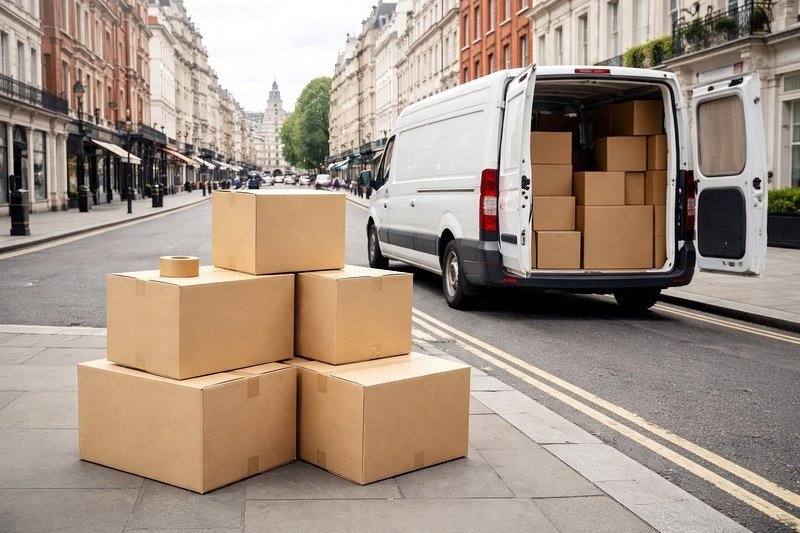
How Much Does It Cost to Move House Within London?
How Much Does It Cost to Move House Within London?
Moving within London has a special talent for costing twice what you budgeted. The quote looks reasonable, then comes the parking suspension, the “extra flight of stairs” charge, the boxes you forgot to buy, and the takeaway on night one because the kitchen’s still in boxes. I’ve moved six times in London — from DIY disasters to seamless professional moves — and here’s what it actually costs in 2026. This guide breaks down how much it costs to move house within London — professional movers, DIY, and the hidden costs everyone forgets.
Professional Movers: What You’ll Pay
- 1-bed flat, local move: £300–£600 (2 movers, half day)
- 2-bed flat: £500–£900 (2–3 movers, full day)
- 3-bed house: £800–£1,500+ (3–4 movers, full day)
- Packing service add-on: £200–£500 extra — worth it if you hate packing or have fragile items
These are weekday rates; weekends and month-ends cost 10–20% more. Always get 3 quotes, check reviews (not just stars — read the 1-star ones), and confirm what’s included: insurance level, dismantling/reassembly, and mileage. The cheapest quote with no insurance is the most expensive move you’ll ever have.
DIY: Van Hire and the Real Cost
- Van hire: £60–£120/day for a Luton/transit from the big hire firms; £40–£80/day from peer-to-peer options. Add fuel (£20–£40) and congestion charge/ULEZ if applicable (£15/£12.50).
- Boxes and materials: £30–£80 (or free from supermarkets, Freecycle and Facebook Marketplace — start collecting weeks ahead).
- Helpers: pizza and beer for friends (£40–£60), or hire hourly help via Airtasker (£15–£25/hour).
- Parking suspension: £50–£100+ per bay per day from the council — needed if the van can’t legally park outside. Book 2+ weeks ahead.
DIY total for a 1-bed: £150–£300. But factor in your time, your back, and the risk — our movers vs DIY guide helps you decide honestly.
The Hidden Costs Everyone Forgets
- Cleaning: end-of-tenancy clean £150–£350 (deposit protection — see getting your deposit back in full)
- Overlap rent: a week’s overlap between tenancies for a sane move: £300–£600. Worth it if you can afford it.
- New home setup: curtains, lightbulbs, cleaning supplies, immediate essentials: £100–£200
- Mail redirection: £30–£40/year with Royal Mail
- Takeaways and chaos food: budget £50 for the first disorganised days
- Storage: if there’s a gap between moves, £80–£200/month for a small unit in London
How Much You Can Save Moving House Within London
- Declutter first. Every box you don’t move saves money — our decluttering guide is step one.
- Move mid-week, mid-month. Avoid month-end and weekends when demand (and prices) peak.
- Get 3+ quotes and negotiate. Movers expect it; the first quote is rarely the best.
- Pack yourself. Full packing services double the bill. Pack over two weeks, not one panicked weekend.
- Disassemble furniture yourself — movers charge for the time.
- Book parking suspensions early — fines for an illegally parked van dwarf the suspension fee.
Don’t Forget the Admin
Budget an evening for the paperwork: our address change checklist covers banks, HMRC, DVLA, council tax and everything else. And before signing the new place, run through what to check in a tenancy agreement — moving is expensive enough without signing a bad contract.
Moving With Pets and Kids: The Extra Layer
Pets
Moving day is stressful for animals — the chaos, the strangers, the smells changing. The plan: keep pets with a friend or in one closed “safe room” (with food, water, bed, litter tray) while movers work, with a big “DO NOT OPEN” sign. Transport them yourself in the car, not the van. At the new place, set up one room first with familiar items before letting them explore. Update microchip details and vet registration in the first week — it’s legally required for dogs. Our dog cost guide and cat flat guide cover the ongoing side.
Kids
Give children a job (labelling their box, carrying the soft toys), keep their essentials accessible (the “first night” box: pyjamas, favourite toy, snacks, nightlight), and stick to routines as much as chaos allows — same bedtime, same breakfast. Visit the new area beforehand if possible; unfamiliarity is the main stressor. And update schools/nurseries promptly — see our address change checklist.
The First Week in the New Place: Priority Order
- Beds and bedding — sleep first, everything else second.
- Bathroom essentials — shower curtain, towels, toiletries, toilet paper (pack it accessibly!).
- Kitchen basics — kettle, mugs, a few plates, one pan. Takeaway for night one is traditional and fine.
- Connectivity — broadband sorted (arrange before moving!), phone chargers, TV licence at the new address (see TV licence costs).
- Security — change the locks (you don’t know who has keys), check smoke alarms, locate the fuse box and stopcock.
- Admin — council tax registration, electoral roll, GP — our full checklist.
- Everything else — unpack room by room, starting with the kitchen. Give yourself permission to take two weeks; the boxes aren’t an emergency.
Common Moving Day Disasters (and Prevention)
- Van can’t park: prevented by booking the parking suspension 2+ weeks ahead. The £70 fine plus the stress isn’t worth skipping it.
- Movers arrive, you’re not packed: they charge waiting time (£40–£70/hour). Finish packing the night before. All of it.
- Keys don’t work / handover delayed: have the agent’s mobile, not just the office number. Fridays after 4pm are the danger zone.
- Furniture doesn’t fit: measure the new place’s doorways, stairwells and the furniture before moving day. The sofa that barely fit out may not fit in.
- No essentials box: pack a “first night” box (kettle, mugs, toilet paper, phone chargers, bedding, snacks, basic tools, cleaning supplies) and move it yourself. Future-you will weep with gratitude.
Getting Proper Quotes: What to Ask
The difference between a good move and a disaster is often the quoting process. When contacting removal firms:
- Get a video or in-person survey for anything bigger than a 1-bed — phone estimates based on “about 20 boxes” are fiction. Reputable firms (look for British Association of Removers membership) survey properly.
- Ask what’s included: dismantling/reassembly, packing materials, insurance level (goods-in-transit cover vs limited liability), mileage, congestion charge, parking suspensions.
- Confirm the crew size and timings: 2 movers for a 1-bed, 3–4 for larger. Ask what happens if it overruns — hourly rate or fixed quote?
- Check reviews across platforms: Google, Trustpilot, Checkatrade. Read the bad ones — how the company responds tells you everything.
- Never pay in full upfront: a small deposit (£50–£100) is normal; full payment before the move is a red flag.
A proper quote takes 15 minutes of your time and saves hundreds in surprises. The cheapest quote without insurance, with vague terms and cash-only payment, is the most expensive move you’ll ever have — remember that when the numbers tempt you.
The Practical Takeaway
Moving within London costs £300–£600 for a professional 1-bed move or £150–£300 DIY, plus £300–£600 in hidden costs (cleaning, overlap, setup, admin). Declutter first, move mid-week, get multiple quotes, and pack yourself to keep it sane. All in, budget £800–£1,500 for a typical 1–2 bed London move — and start collecting free boxes now. Future you, eating takeaway on the floor of the new flat, will be glad past you planned ahead.