
Is It Worth Paying More for Leather Shoes?
Is It Worth Paying More for Leather Shoes?
The leather shoe question divides people sharply: one camp swears their £300 Church’s will outlive us all; the other points out that £60 shoes look fine and they’d rather buy five pairs. I’ve owned both — the cheap pairs that died in eighteen months and the good pair that’s on year nine and looks better than ever. The truth, as usual, is in the maths and the details. Wondering “is it worth paying more for leather shoes”? You’re not alone — and the real answer is more straightforward than most guides make it sound.
Here’s the honest breakdown: what extra money buys in leather shoes, the cost-per-wear calculation, when cheap is fine, and how to spot quality at any price.
What more money actually buys
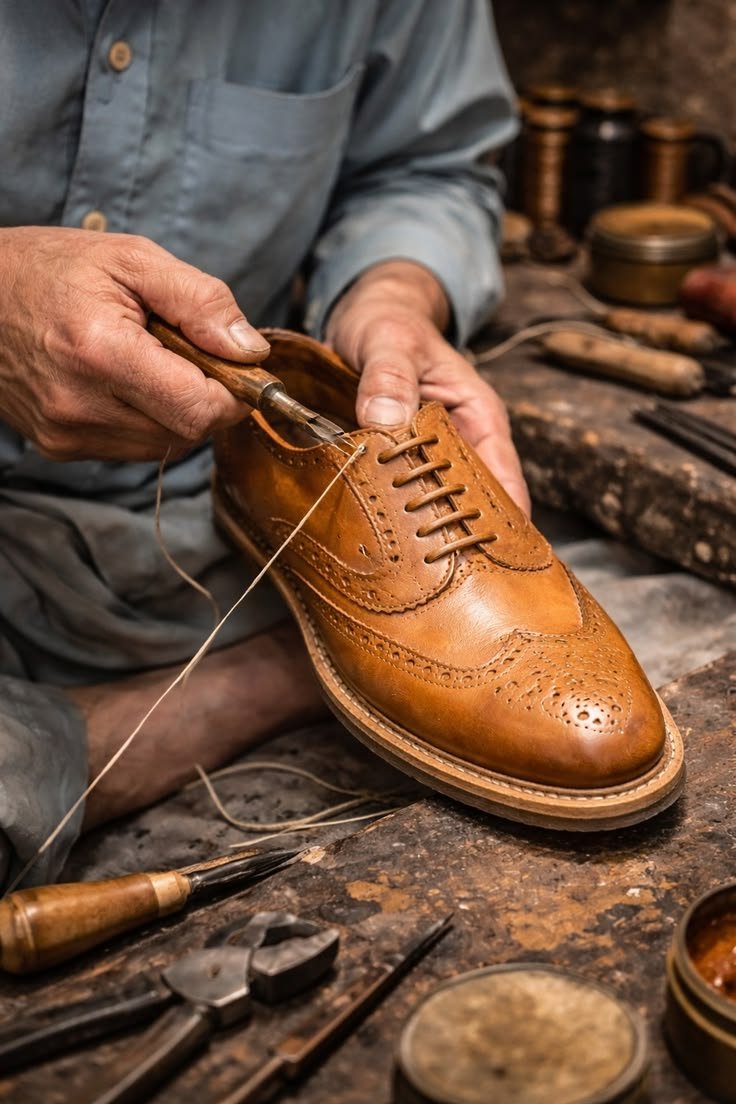
Construction is the big one. Cheap shoes (£40–£80) are usually cemented (glued) — the sole is stuck on, and when it wears or detaches, the shoe is dead. Mid-range (£100–£200) often uses Blake stitching (sole stitched to upper — resoleable, sleeker profile). Premium (£200–£400+: Church’s, Cheaney, Crockett & Jones, Tricker’s) typically uses Goodyear welting — the sole is stitched to a welt strip, making the shoe resoleable multiple times, more water-resistant, and longer-lasting. A Goodyear-welted shoe can be resoled (£50–£90) for decades of wear.
Materials: full-grain leather (the top layer, with natural grain) ages beautifully and lasts; “genuine leather” is actually a low grade (the marketing term is deliberately misleading — it’s the leftover layers); bonded leather is basically leather-flavoured plastic and falls apart. More expensive shoes use better hides, properly tanned — the difference is visible after a year of wear. Insoles, shanks, and linings are better too: leather linings breathe, cheap synthetics don’t (which is why cheap shoes smell).
Comfort and fit: pricier shoes come in multiple widths and are built on better lasts (the foot-shaped forms) — they fit more foot shapes properly. Cheap shoes come in one width and rely on soft padding that compresses flat within weeks. If you have wide, narrow, or awkward feet, spending more is often the only way to get shoes that don’t hurt.
- Under £80: cemented, “genuine”/bonded leather, one width, 1–2 year life
- £100–£200: Blake-stitched, better leather, resoleable, 3–5+ years
- £200–£400+: Goodyear-welted, full-grain, multiple widths, decades with resoling
- Key terms: full-grain good, “genuine leather” misleading, bonded leather avoid
The cost-per-wear maths
A £60 pair worn 100 times before dying: 60p per wear. A £250 Goodyear-welted pair worn 1,000 times over ten years (with one £70 resole): 32p per wear. The expensive shoe is literally cheaper — plus better-looking, more comfortable, and out of landfill. This maths only works if you actually wear them for years and maintain them, but for classic styles (Oxfords, Derbies, loafers, Chelsea boots) that’s entirely realistic.
Where the maths breaks: trend-driven shoes (that weird toe shape won’t survive a decade of fashion), shoes for rarely-worn occasions, and growing feet (children’s shoes — buy cheap, they outgrow them). Also, the first pair is the expensive learning curve: buy your first quality pair in a classic style you’ll wear constantly, not an exotic one.
Care is what unlocks the value: shoe trees (£15–£25, cedar) after every wear, rest days between wears (leather needs 24 hours to dry), regular polishing, and resoling before the welt is damaged. A £250 shoe neglected dies nearly as fast as a cheap one; a £250 shoe maintained outlives three cheap pairs. For boot-specific care, see looking after leather boots, and for the repair question, repair vs replace.
When cheap shoes are the right call
Kids’ shoes: buy cheap, replace often — feet grow, shoes get destroyed, quality is wasted. Trend pieces: the neon trainer or statement heel you’ll wear for one season — don’t invest. Muddy/wet-beater pairs: keep a cheap pair for festivals, gardening, and grim commutes so your good shoes stay good. Very occasional occasion shoes: the silver heels for one wedding — though consider renting or second-hand instead.
Also, fit trumps price: a £70 shoe that fits your foot perfectly beats a £200 shoe that doesn’t. And ethics matter to some buyers: if you avoid leather, the “invest in leather” advice doesn’t apply — though the same cost-per-wear logic works for quality vegan alternatives (which have improved enormously, if still not matching leather’s longevity).
The smart strategy most well-dressed people use: invest in the daily drivers (work shoes, classic boots — the pairs you wear 100+ times a year) and go cheap on the rarely-worn and trendy. Two great pairs in rotation beat five mediocre pairs, because rotation itself extends life — shoes need rest days. For the minimalist version of this logic, see how many shoes a minimalist wardrobe needs.
Spotting quality at any price
Even on a budget, you can choose better: check the sole attachment (stitched edges visible = better than pure glue), bend the shoe (quality shoes flex at the ball of the foot, not in the middle), smell it (real leather smells like leather; plastic smells like plastic), check the insole (removable is fine; leather-lined better), and look at the stitching (even, tight, no loose threads).
Second-hand is the quality hack: barely-worn Church’s or Loakes for £60–£100 on eBay are common — men’s quality shoes are resold constantly in excellent condition. Check soles (plenty of life left?), uppers (creases are fine; cracks are not), and insides (worn-through lining is a no). A £80 second-hand Goodyear-welted pair plus £60 resole gives you a £400-quality shoe for £140. That’s the best value in footwear, full stop.
The 10-minute weekly shoe care ritual
This is what separates decade-long shoes from two-year shoes: a weekly ten-minute ritual. You’ll need: a horsehair brush (£8), cream polish in your shoe colour (£8), wax polish for toe caps (£8), and cedar shoe trees (£15–£25 — the single most important purchase). Total kit: under £50, lasts years.
The routine: brush off dust and dirt (always brush before polishing — polishing over dirt grinds it in). Apply cream polish sparingly with a cloth, working into the leather — this nourishes and recolours scuffs. Let dry five minutes, brush vigorously to raise a shine. For toe caps and heels, add a thin layer of wax polish for protection and gloss. Insert shoe trees and rest the shoes 24 hours. Done — ten minutes while listening to something.
Frequency: polish every 4–6 wears, brush after every wear, trees every time. Condition (leather conditioner, not polish) every few months to keep leather supple — polish protects, conditioner feeds. Never tumble-dry wet shoes; stuff with newspaper and dry slowly. This ritual is the difference between shoes that age beautifully and shoes that just age. The leather rewards consistency far more than expensive products.
Is It Worth Paying More for Leather Shoes: The Short Answer
For classic styles you’ll wear constantly, £150–£300 for Goodyear-welted or Blake-stitched full-grain leather is worth it on cost-per-wear — go cheap for kids, trends, and beaters. Related reading: MoneySavingExpert money-saving guides.
One thought on “Is It Worth Paying More for Leather Shoes?”