
How to Render Pork Fat: Step-by-Step Guide (2026)
To render pork fat, cut it into small pieces, heat it gently at around 110–120°C for 2–4 hours until the liquid fat separates from the solid bits, strain the hot liquid through muslin or cheesecloth, and pour it into clean jars. That liquid is lard — and once cooled it sets into a creamy white fat that’s brilliant for roast potatoes, pastry, and frying.
Rendering is one of the simplest kitchen projects there is — it turns cheap trimmings into a superb cooking fat. Here’s how, including where to buy pork fat in the UK.
What Is Rendering?
Rendering simply means melting solid animal fat slowly so the pure fat separates from water, protein, and connective tissue. The clear liquid you strain off is called lard. Leaf lard (from around the kidneys) is the finest, mildest-flavoured type, prized for pastry; back fat and belly trimmings make a good all-round cooking lard with a slightly porkier flavour.
Where to Get Pork Fat in the UK
Ask your local butcher — they often sell pork fat trimmings cheaply. You can also trim fat from a pork belly joint bought at the supermarket. Start with about 1–1.5kg, which renders down to roughly 1 litre of lard.
Method 1: Slow Cooker (Easiest)
1. Prep the fat. Cut it into small cubes, about 2cm across — smaller pieces render faster and more evenly. Trim off any large bits of meat, though small flecks are fine. For even easier rendering, ask your butcher to mince it, or pulse it in a food processor.
2. Add a splash of water. Put the fat in the slow cooker with 60–120ml of water. This stops the fat catching before it starts melting.
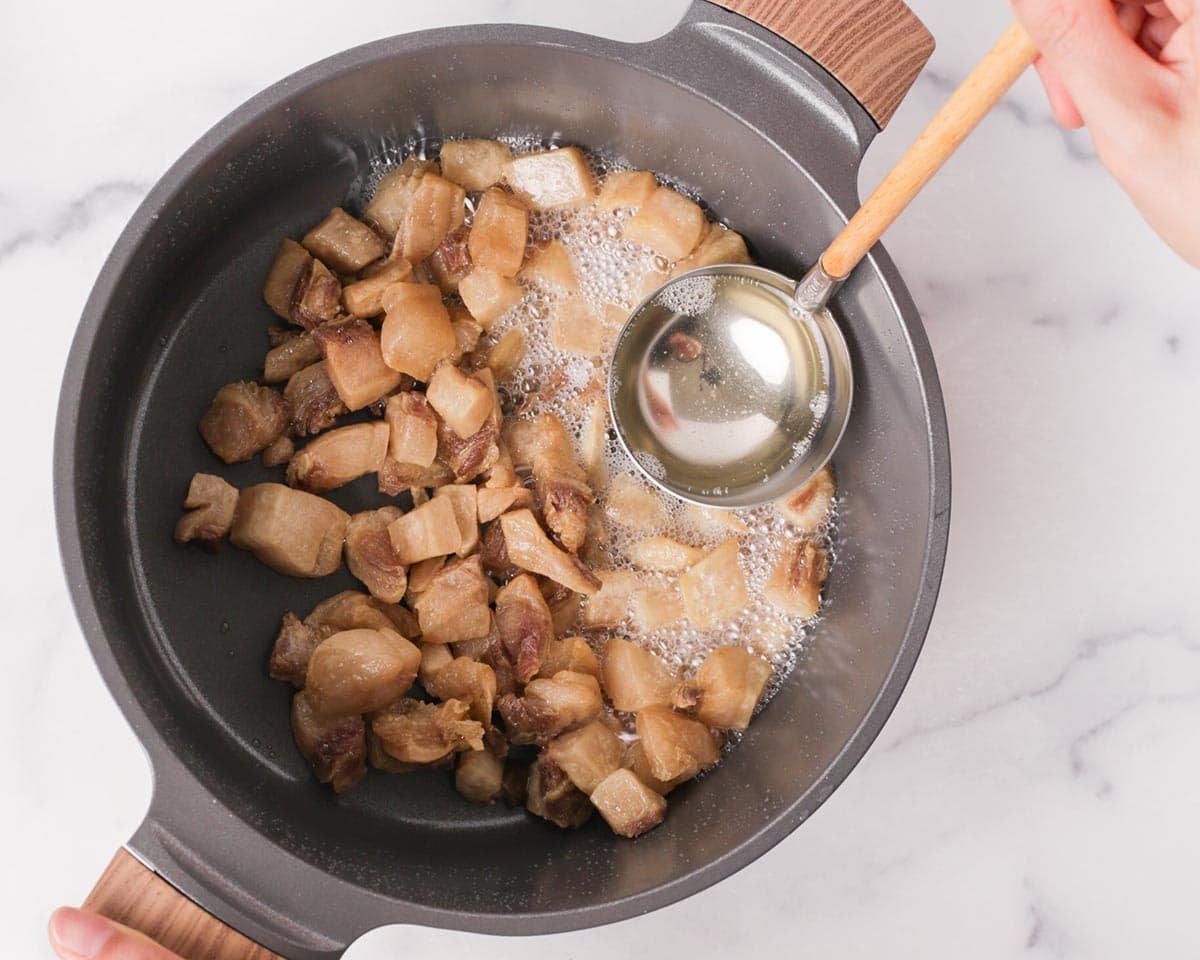
3. Cook low and slow. Set the slow cooker to LOW and leave the lid slightly ajar so steam escapes. Leave it for 3–5 hours, stirring occasionally. It’s done when the liquid is clear and the remaining solids (called cracklings) sink and turn golden.
4. Strain. Let it cool for 10–15 minutes, then pour through a sieve lined with muslin or several layers of cheesecloth into a heatproof jug.
5. Jar it up. Pour the strained liquid into clean, sterilised jars. Screw the lids on once it’s warm rather than hot, then leave to set. It turns creamy white as it cools.
Method 2: Oven or Stovetop (Faster)
1. Prep as above — small cubes, splash of water, heavy-bottomed pot or roasting tin.
2. Heat gently. In the oven, set it to 110–120°C (Gas Mark ¼–½) and leave for 2–4 hours. On the stovetop, use the very lowest heat your hob allows and stir every 15 minutes or so. Never let it smoke — if it smells sharp or starts browning quickly, the heat is too high.
3. Strain and jar exactly as in the slow cooker method. Remove the cracklings with a slotted spoon first — they’re a tasty snack with a pinch of salt while still warm.
The Food Standards Agency has guidance on safe food handling at home, and it’s worth a read if you’re new to preserving fats.
Safety: Hot Fat Is Serious
Rendering involves litres of very hot liquid, so take it seriously:
Never leave it unattended on the stovetop. Keep children and pets out of the kitchen while it renders and cools. Handle hot jars with oven gloves, and wipe up any spills straight away — liquid fat on a hot hob can ignite. Let the lard cool until it’s comfortable to handle before pouring it into jars.
How to Store Rendered Lard
Sterilise your jars by washing them in hot soapy water, rinsing, and heating in a 140°C oven for 15 minutes. Fill them while the lard is warm, leave to cool, then refrigerate.
In the fridge, homemade lard keeps for 3–6 months. For longer storage, freeze it — lard freezes beautifully for up to a year. Pour it into ice-cube trays for handy portion-sized blocks, then bag them up once frozen. Always check before use: if it smells off, sour, or rancid, throw it away. General advice on safe storage of homemade food can be found on the Food Standards Agency website.
How to Use Your Lard
Roast potatoes. This is lard’s greatest hit — hotter and crisper than oil, with a deep savoury flavour. Heat a tray of lard until smoking, toss in parboiled potatoes, and roast until deeply golden.
Pastry. Leaf lard makes the flakiest shortcrust and pie pastry you’ve ever tasted. Use half lard, half butter for the best flavour and texture.
Frying. Use it anywhere you’d use oil for shallow frying — chips, fried eggs, taco meat, or anything that benefits from a rich base flavour.
Yorkshire puddings and roast veg. A spoonful in the tin before the batter, or tossed through root vegetables before roasting.
For serving ideas, our guide to how to warm corn tortillas pairs well with lard-fried fillings, and if you’re weighing up meat portions, see how many pounds are in 1 chicken breast for a handy reference.
Tips
- The smaller you cut the fat, the faster and cleaner it renders — minced fat renders in about half the time.
- Keep the temperature low. High heat darkens the lard and gives it a strong porky taste.
- Don’t throw away the cracklings — salt them and eat them warm, or crumble them into salads and soups.
- Label jars with the date so you always know how long they’ve been in the fridge or freezer.
- If the lard sets with a slightly grainy texture, it’s still perfectly fine to cook with.
FAQs
How long does it take to render pork fat?
Expect 2–4 hours in the oven at 110–120°C or on the stovetop over very low heat, and 3–5 hours in a slow cooker on LOW. Smaller pieces render noticeably faster, so take the time to dice the fat well.
Is homemade lard the same as shop-bought lard?
Essentially, yes — but homemade is usually fresher and you control the quality of the fat. Shop-bought lard is often hydrogenated for shelf stability; homemade lard needs refrigerating or freezing because it isn’t.
Can I render pork fat in the microwave?
It’s not recommended. The microwave heats unevenly, which risks hot spots and dangerous spitting, and you can’t control the temperature properly. Low-and-slow in the oven or slow cooker gives far better results.
How do I know when the fat is fully rendered?
The liquid will be clear (not cloudy or foamy), bubbling will have mostly stopped, and the solid cracklings will have sunk to the bottom and turned golden brown. If there’s still foam or milkiness, give it more time.
What temperature is safe for rendering?
Keep it between 100°C and 130°C. Above that, the fat starts to smoke and the lard picks up a burnt, bitter flavour. Low and slow is the whole secret to clean-tasting lard.
Rendering pork fat is a small effort for a big reward: one afternoon’s gentle cooking gives you months of superb cooking fat for pennies. Start with the slow cooker method — it’s the most forgiving — and you’ll have creamy white lard ready for the crispiest roast potatoes of your life.