
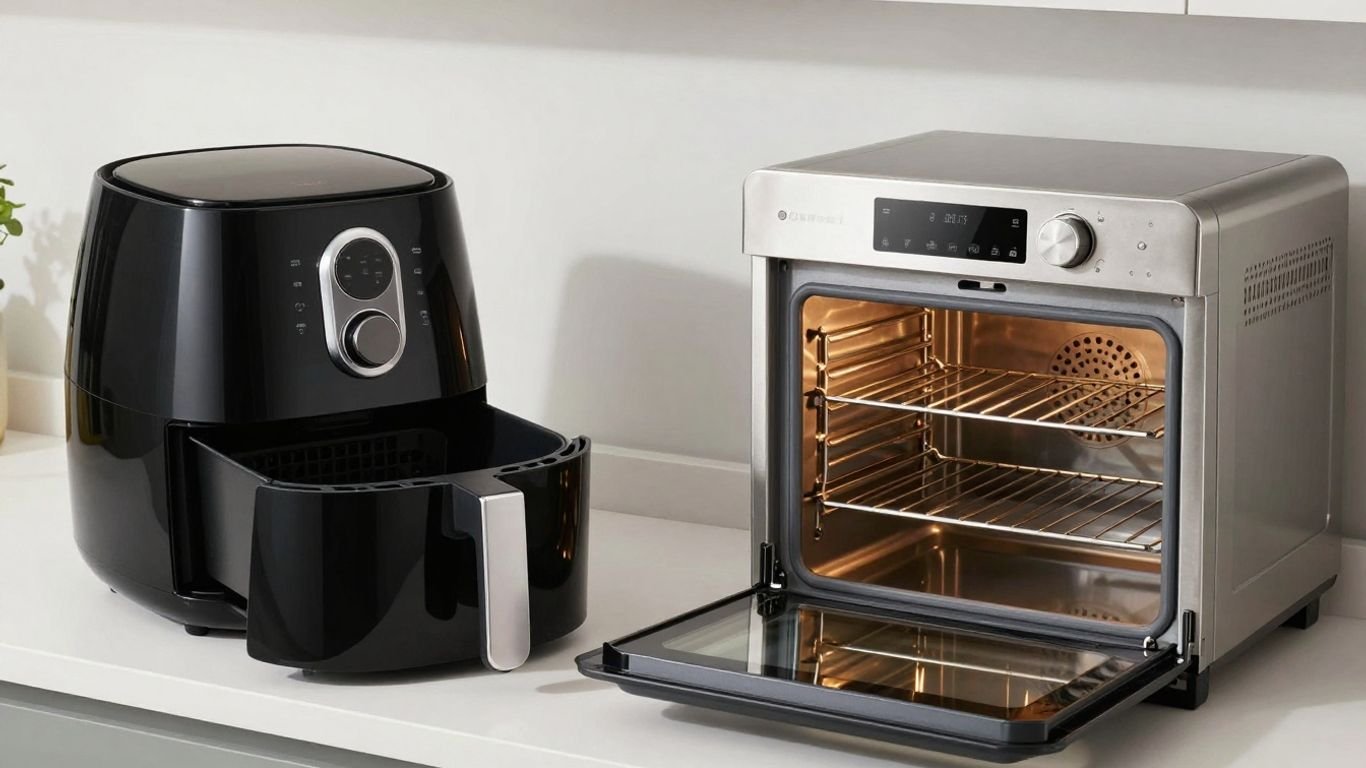
Are Air Fryers Cheaper to Run Than Ovens? (Real Cost Comparison)
With energy bills still painful, everyone’s asking the same question: are air fryers cheaper to run than ovens? The marketing says yes — but marketing also said the same about every kitchen gadget ever. So let’s look at the actual numbers, because the answer is yes, but with some important nuances.
The maths: air fryer vs oven
Running cost depends on two things: the appliance’s power rating and how long it’s on. Using the UK price cap of roughly 24-26p per kWh (check your tariff — it varies):
- Typical electric oven: 2,000-3,000W. Roast chicken dinner: 60-75 minutes including 10-15 min preheat. Cost: ~60-95p per meal.
- Typical air fryer: 1,500-2,400W. Same chicken pieces: 20-30 minutes, minimal preheat. Cost: ~12-25p per meal.
That’s a saving of roughly 50-75% per meal. Cook five oven-style meals a week in the air fryer instead, and you’re saving £2-£4 a week — £100-£200 a year. Not life-changing, but real money, especially when the air fryer itself costs £100-£200 and pays for itself within a year or two.
Why the air fryer wins
- Smaller space to heat. Heating a 5-litre drawer takes far less energy than heating a 70-litre oven cavity — most of which is empty air.
- Faster cooking. Concentrated circulating heat cooks food 20-40% faster than a conventional oven.
- Minimal preheating. 2-3 minutes versus 10-15. Those preheat minutes are pure wasted energy.
- No heating the kitchen. Less ambient heat loss, which matters in summer.
When the oven still wins
Let’s be honest about the limits:
- Big batch cooking. Roasting for 6-8 people, or cooking multiple trays at once — a full oven used efficiently beats running an air fryer in four batches.
- Large single items. A big turkey, a large joint — most air fryers can’t fit them.
- Baking. Cakes, bread and pastries generally do better in an oven’s even, gentle heat. (Though small bakes work in larger air fryers.)
- Already-hot oven. If the oven’s on anyway for something else, adding another tray costs almost nothing extra.
The rule of thumb: air fryer for everyday meals for 1-4 people; oven for big roasts, batch bakes, and when it’s already hot.
The bigger picture: total kitchen energy
Cooking is typically 4-6% of a household’s energy bill — so even halving it saves maybe £50-£100 a year for most families. Worth doing, but it’s not where the big money is (that’s heating and hot water). The air fryer’s real value is the combination: lower running costs plus faster cooking plus genuinely good results. If any one of those were missing, it wouldn’t have taken over Britain’s kitchens.
For the full per-hour breakdown, see how to batch cook healthy lunches for work — batch cooking multiplies these savings, since one efficient cooking session covers five days of meals. And if you’re kitting out an energy-conscious kitchen generally, our guide to the best budget coffee machine for home in the UK covers another daily energy (and money) decision.
For independent appliance running-cost data, Which? publishes lab-tested energy figures, and MoneySavingExpert’s utilities section tracks the current price cap.
Are air fryers cheaper to run than ovens? The full-year calculation
Let’s model a realistic family year. The average UK family uses the oven (or its replacement) about 5 times a week for main meals. An oven meal costs ~75p in energy (60-75 minutes at 2.5kW, including preheat, at 25p/kWh). An air fryer meal costs ~20p (25 minutes at 2kW, minimal preheat). That’s a 55p saving per meal.
Five meals a week × 52 weeks = 260 meals. At 55p saved each: £143 a year. Against a £150-£200 air fryer purchase, the appliance pays for itself in 12-16 months on energy alone — before counting the time saved (25 minutes vs an hour, five times a week, is 160 hours a year back) or the food (faster cooking = less temptation to order takeaway on tired evenings).
How do other appliances compare? The microwave is the cheapest cooker per minute (~15p/hour to run) but can’t crisp or roast — it’s a reheater, not an oven replacement. The slow cooker is the real efficiency champion: 200W for 8 hours costs ~40p total, and it’s unbeatable for stews, curries and pulled meats. But it’s slow by design — no good for “dinner in 25 minutes.” The honest hierarchy for a typical family meal:
- Slow cooker: cheapest per meal (~15-40p), but 6-8 hours — plan ahead
- Air fryer: ~15-25p per meal, 20-30 minutes — the everyday winner
- Microwave: ~5-10p per meal, but limited to reheating and simple cooking
- Oven: ~60-95p per meal — best for big batches, roasts and baking
- Hob: ~10-20p per meal for a single pan — excellent for stir-fries, pasta, curries
The smart kitchen uses all of them: slow cooker for the weekend stew, air fryer for weeknight proteins and roast veg, hob for pasta and stir-fries, microwave for reheating, oven for the Sunday roast and baking. No single appliance wins everything — but if you’re buying one thing to cut the bills, the air fryer covers the most everyday cooking for the least money. For current energy unit rates to plug into your own maths, check MoneySavingExpert’s utilities section (linked above) — worth checking before you run the numbers for your tariff.
Don’t forget the kettle and the microwave
While we’re auditing kitchen energy: the kettle is the silent budget-killer. Boiling a full kettle (1.7L) costs ~8-10p; most people need a quarter of that. Only boil what you need — a £5 measuring habit that saves £20-£30 a year for heavy tea drinkers. And the microwave, at ~15p/hour to run, is the cheapest way to reheat anything: 3 minutes to reheat dinner costs about 1p. The hierarchy for reheating is microwave first, air fryer second (for things that need crisping), oven last. Small habits, but the kitchen is one of the few household areas where behaviour change shows up on the bill within weeks.
The takeaway
Yes — air fryers are 50-75% cheaper to run than ovens for typical family meals, saving roughly £100-£200 a year for regular users. Use the air fryer for everyday cooking, keep the oven for big roasts and bakes, and batch-cook to multiply the savings. The numbers hold up.